Federal Reserve pause sparks debate: rate cuts coming, or more pain
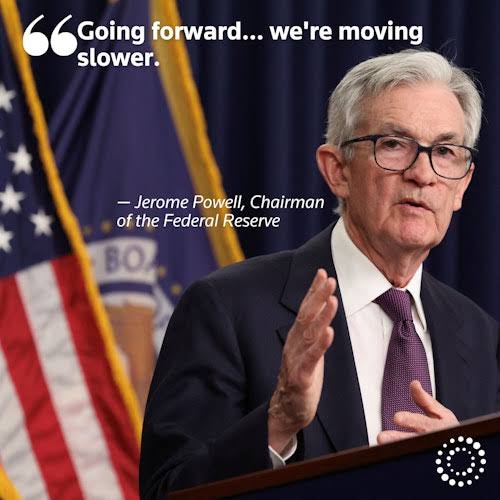
Fed’s pause runs contrary to market expectations for future rate cuts Economic data gaps due to government shutdown affect policy outlook. Today we will discuss about Federal Reserve pause sparks debate: rate cuts coming, or more pain
Federal Reserve pause sparks debate: rate cuts coming, or more pain
The U.S. Federal Reserve’s recent decision to pause after a series of interest-rate cuts has ignited a sharp debate across financial markets, political circles, and economic think tanks. After years of aggressive tightening to control runaway inflation, the central bank now finds itself at a crossroads. Some believe the pause is a temporary stop before further rate cuts that could support growth. Others warn that inflation risks and structural weaknesses could mean more economic pain ahead.
This moment represents a critical turning point for U.S. monetary policy. The choices made in the coming months will shape not only the domestic economy but also global financial conditions. As investors, businesses, and households attempt to read the Fed’s next move, uncertainty dominates the outlook.
From Aggressive Tightening to a Delicate Pause
To understand why the Fed’s pause has sparked such intense debate, it is essential to look at how the central bank arrived here.
Following the pandemic, inflation surged to levels not seen in decades. In response, the Federal Reserve launched one of the fastest and most aggressive rate-hiking cycles in its history. Interest rates climbed steadily, raising borrowing costs across the economy in an effort to cool demand and bring prices under control.
By late 2024 and into 2025, these efforts began to show results. Inflation eased from its peak, supply chains stabilized, and consumer demand slowed. Recognizing the changing conditions, the Fed initiated a gradual shift toward easing, delivering multiple rate cuts over the year.
The most recent cut lowered rates by a modest margin, but it was followed by a clear signal: policymakers are prepared to pause and reassess. This cautious tone reflects a growing concern that the fight against inflation may not yet be fully won — even as signs of economic strain become more visible.
Why Many Expect More Rate Cuts
Cooling Labor Market Raises Red Flags
One of the strongest arguments for further rate cuts lies in the labor market. While employment remains relatively strong compared to historical standards, momentum has slowed. Job creation has softened, hiring plans have become more conservative, and unemployment has edged higher.
A weakening labor market often serves as an early warning sign of broader economic slowdown. Supporters of additional rate cuts argue that the Fed must act preemptively to avoid pushing the economy into unnecessary hardship. Lower rates, they say, could help sustain employment and prevent a sharper downturn.
Inflation Is Easing — Even If It’s Not Perfect
Inflation has declined significantly from its highs, offering policymakers some breathing room. While price pressures have not yet returned to the Fed’s long-term target, the overall trend has been downward.
Many economists believe that inflation dynamics now favor gradual easing. Wage growth has moderated, consumer demand has cooled, and businesses appear less able to pass higher costs onto customers. If inflation continues to trend lower, supporters argue, maintaining high interest rates could do more harm than good.
Global Monetary Policy Is Shifting
The Federal Reserve does not operate in isolation. Central banks around the world are also reassessing their policy stances as global growth slows. Several have already moved toward pauses or rate cuts to support fragile economies.
Advocates of further easing argue that maintaining relatively high U.S. rates could tighten global financial conditions unnecessarily, strengthen the dollar, and strain emerging markets. A more accommodative Fed, they contend, would help stabilize global growth.
Markets Are Pricing in Easing
Financial markets have increasingly reflected expectations of future rate cuts. Equity investors, bond traders, and currency markets have adjusted positions based on the assumption that the Fed will eventually lower rates further.
Supporters of continued easing argue that ignoring these signals could risk financial volatility. By clearly signaling a path toward gradual cuts, the Fed could reduce uncertainty and support orderly market functioning.
The Argument for Caution — or Even Tougher Conditions
Inflation Remains Above Target
Despite progress, inflation has not yet returned to the Fed’s preferred level. Some policymakers fear that easing too quickly could reignite price pressures, particularly if demand rebounds or supply constraints reemerge.
These officials argue that inflation’s final descent is often the hardest. Cutting rates prematurely could undo years of hard-won credibility and force the Fed to reverse course later — a scenario that could be even more damaging to economic stability.
Divisions Inside the Federal Reserve
The Fed’s most recent decisions have exposed internal divisions. Some policymakers supported the latest cut, while others favored holding rates steady. This split reflects fundamentally different interpretations of the economic data and differing risk priorities.
Such disagreement underscores the uncertainty surrounding the outlook. It also suggests that consensus for aggressive rate cuts does not yet exist, making a cautious pause more likely than a rapid easing cycle.
Risk of a Policy Mistake
Critics of further cuts warn that the Fed faces a narrow path. If it cuts rates too soon and inflation resurges, credibility could be damaged. If it waits too long, economic weakness could deepen.
Some economists argue that the pause itself is risky. Prolonged inaction in the face of deteriorating conditions could amplify stress in interest-sensitive sectors such as housing, commercial real estate, and small business lending.
Political Pressure Complicates the Picture
The Fed’s independence has come under renewed scrutiny as political leaders weigh in on monetary policy. Calls for more aggressive cuts have grown louder, especially amid concerns about growth and employment.
However, many economists caution that political influence can distort decision-making. Preserving the Fed’s independence is widely viewed as essential to maintaining long-term price stability and market confidence.
Economic Data Holds the Key
The Federal Reserve has repeatedly emphasized that future decisions will depend on incoming data. Several indicators are particularly critical:
Employment trends and unemployment rates
Inflation measures and price expectations
Consumer spending and household confidence
Business investment and productivity
Wage growth and labor participation
Recent data has been mixed. Inflation continues to moderate, but progress has been uneven. Job growth has slowed, yet layoffs remain limited. Consumer spending shows signs of fatigue but has not collapsed.
This ambiguity explains the Fed’s hesitation. Clear evidence of either accelerating inflation or significant economic deterioration would likely force a decisive response. Until then, policymakers appear inclined to wait.
What Happens Next? Possible Scenarios
1. Gradual Return to Rate Cuts
In this scenario, the Fed resumes cutting rates slowly in the coming year as inflation trends lower and economic growth softens further. This approach would aim to support the economy without risking a resurgence in inflation.
2. Extended Pause With Limited Adjustments
Here, the Fed keeps rates near current levels for an extended period, making only small adjustments if conditions worsen. This strategy prioritizes caution and inflation control but could prolong economic strain.
3. Economic Pain Forces Faster Easing
If the labor market weakens sharply or financial stress intensifies, the Fed could be forced into faster and deeper cuts than currently expected. While this could stabilize growth, it might also signal that the economy is in worse shape than anticipated.
4. Inflation Resurgence Changes Everything
Though less likely, a renewed surge in inflation could halt easing altogether. In such a scenario, the Fed might be forced to maintain or even raise rates again — a move that would likely shock markets.
Impact on Everyday Americans
The Fed’s decisions ripple through the economy in tangible ways:
Households feel the effects through mortgage rates, credit card interest, and auto loans.
Businesses adjust hiring and investment plans based on borrowing costs.
Investors reposition portfolios in response to changing rate expectations.
Global economies react to shifts in capital flows and currency values.
For many Americans, the debate over rate cuts versus caution is not abstract. It directly affects affordability, job security, and financial planning.
Conclusion: A Defining Moment for the Fed
The Federal Reserve’s pause has opened a defining chapter in U.S. monetary policy. With inflation easing but not conquered, and growth slowing but not collapsing, policymakers face a complex and high-stakes decision.
Whether the Fed ultimately resumes rate cuts or maintains a cautious stance will depend on how the data evolves in the months ahead. What is certain is that the margin for error is small. A misstep could either reignite inflation or deepen economic pain.
As markets and households watch closely, the Fed’s challenge is clear: strike the right balance between supporting growth and safeguarding price stability — in an environment where certainty is in short supply.
How useful was this post?
Click on a star to rate it!
Average rating 0 / 5. Vote count: 0
No votes so far! Be the first to rate this post.
About the Author

usa5911.com
Administrator
Hi, I’m Gurdeep Singh, a professional content writer from India with over 3 years of experience in the field. I specialize in covering U.S. politics, delivering timely and engaging content tailored specifically for an American audience. Along with my dedicated team, we track and report on all the latest political trends, news, and in-depth analysis shaping the United States today. Our goal is to provide clear, factual, and compelling content that keeps readers informed and engaged with the ever-changing political landscape.