F-15 : US Air Dominance, Middle East Tension, Strike Power Surge
You said
The F-15 Eagle and F-15E Strike Eagle series represent one of the cornerstones of US airpower — combining unmatched air dominance, precision strike capabilities, and a proven combat record that continues to shape global military strategy. From its inception in the 1970s as a purpose-built air supremacy fighter to its ongoing role in the Middle East, the F-15 legacy underscores how legacy systems adapt to modern high-intensity conflicts.
Recent events in the Middle East — including active combat operations and heightened regional tensions — have once again placed the F-15 at the center of air campaign strategies and geopolitical dynamics. This article explores the fighter’s evolution, technological edge, operational achievements, and its resurgence in modern conflicts.
1. Birth of an Air Dominance Icon
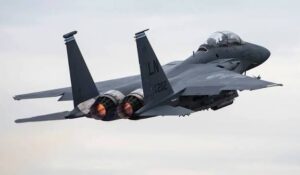
The McDonnell Douglas F-15 Eagle, later produced by Boeing Defense, entered service with the United States Air Force in 1976 as a high-performance air superiority fighter designed to dominate the skies. From the outset, the aircraft was engineered for unparalleled maneuverability, thrust-to-weight ratio, and weapons capability — allowing US pilots to engage and defeat enemy aircraft effectively.
Key design features included twin engines generating massive thrust, cutting-edge radar systems, and a lightweight yet robust airframe — creating a platform capable of sustained high-speed performance and lethal air-to-air engagements.
The result? An air superiority fighter capable of outclassing any contemporary threat — and a force multiplier for allied air forces worldwide.
Combat Record
The F-15 established a remarkable reputation through decades of operations, credited with an air-to-air combat record unmatched by most combat aircraft. It served as the backbone of US and allied air forces through the late Cold War and into the 21st century.
2. F-15 Variants: Eagle to Strike Eagle to F-15EX
While the original F-15 focused on air-to-air dominance, the evolution of modern warfare demanded flexibility.
F-15E Strike Eagle
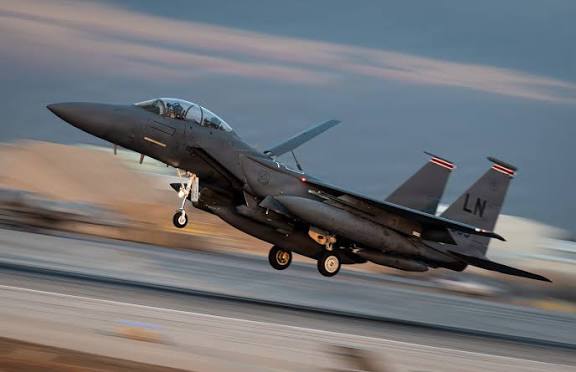
Introduced in 1989, the F-15E Strike Eagle became a dual-role fighter — combining air-to-air capability with potent deep-strike power. It added a second crew member and advanced avionics for precision targeting, making it capable of striking enemy ground targets with high accuracy while still defending itself in contested airspace.
Equipped with advanced targeting pods like LANTIRN, Sniper, and modern radar systems, the Strike Eagle can deliver precision munitions and perform complex missions in all weather conditions.
F-15EX Eagle II
The most modern variant — the F-15EX Eagle II — expands this legacy into the future, featuring enhanced avionics, digital cockpits, and scalable payloads — positioning it not just as a fighter but as a command and control partner in networked battlefields.
3. Operational Impact: Air Superiority and Precision Strike
Air Superiority
The original F-15 variants achieved air supremacy during conflicts like Desert Storm, where they dominated the skies and protected coalition aircraft. In that campaign alone, F-15C fighters accounted for the vast majority of air-to-air victories, underscoring the design’s success.
These victories were not just symbolic: air dominance enables freedom of maneuver for an entire air campaign, allowing strike aircraft and support assets to operate with greater safety and effectiveness.
Precision Ground Strike
With the Strike Eagle variant, the F-15 family expanded its role significantly. F-15E aircraft have performed precision strikes against enemy infrastructure, command and control targets, and even high-value individuals. During operations against ISIS, Egyptian militants in Libya, and other theaters, F-15Es showed their lethal precision and adaptability.
4. F-15 in the Modern Middle East
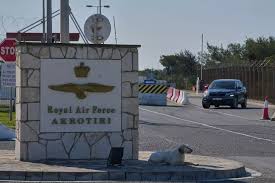
In recent years, the presence of F-15 fighter jets has been a strategic signal of US military intent, as well as a practical force capable of responding to threats across the region. Deployments to forward bases, including key locations in Jordan and the Gulf, underscore how America projects airpower where tensions are highest.
First-Responders in Air Conflict
In the 2026 Middle East conflict, multiple F-15E Strike Eagles were actively deployed in missions — demonstrating both their flexibility and the enduring reliance on this platform. However, intense combat can carry risk: recent reports indicate friendly-fire incidents involving F-15s and allied air defenses amid chaotic engagements — a stark reminder of the fog of war.
Deterrence and Show of Force
Alongside other US fighters like F-22s, F-35s, and F-16s, F-15s contribute to a collective show of force aimed at deterring escalation from adversaries and reinforcing commitments to regional security partners.
5. Technological Edge: Radar, Weapons, and Avionics
The F-15’s success lies not just in speed and maneuverability, but in its avionics suite, weapons integration, and advanced sensors.
Advanced Radar
From early APG-63 radars to modern AESA systems, the F-15’s radar can detect, track, and engage multiple targets simultaneously — a requirement for modern air combat.
Weapons Integration
Whether equipped with air-to-air missiles like AIM-9 Sidewinders and AIM-120 AMRAAMs or precision ground weapons on the Strike Eagle, the F-15 family can tailor payloads to mission needs — making it effective across air dominance and strike roles.
6. Challenges and Critiques
Despite its strengths, the F-15 is not without challenges:
Aging Fleet: Many older airframes are approaching service limits, prompting retirements or upgrades.
Modern Threats: Advances in anti-access/area denial (A2/AD) systems and emerging combat domains require new strategies and technologies.
Friendly Fire Risks: Complex conflict environments increase the risk of misidentification and accidental engagements.
Yet, continuous upgrades and integration with modern networking and targeting systems ensure the F-15 remains relevant.
7. Future of F-15 Airpower
As fourth-generation platforms age and new systems like sixth-generation fighters emerge, the F-15’s role is evolving rather than ending. The introduction of the F-15EX Eagle II and ongoing modernization programs aim to extend the platform’s usefulness through the 2050s and beyond.
From its earliest flights in the 1970s to high-stakes missions in the Middle East, the F-15 family symbolizes American air dominance — flexible, adaptive, and enduring.
Frequently Asked Questions (FAQs)
Q1: What makes the F-15 unique in air combat?
The F-15’s combination of thrust-to-weight performance, advanced radar, and weapons integration has allowed it to achieve unrivaled air superiority, with a combat record demonstrating effectiveness against enemy aircraft across multiple wars.
Q2: How does the F-15E Strike Eagle differ from the original F-15?
The F-15E Strike Eagle adds ground-strike capability, a second crew member, and advanced precision targeting systems. It can engage both airborne and ground targets, expanding its mission profile beyond pure air superiority.
Q3: Why is the F-15 active in the Middle East now?
Ongoing regional tensions and conflicts require forward airpower to deter adversaries, reassure allies, and provide rapid strike capability. Recent deployments enhance US and coalition readiness across key theaters.
Q4: What is the future of the F-15 fleet?
Modernized variants like the F-15EX extend the life and capability of the platform. With upgrades in avionics and combat systems, the F-15 family will continue to serve alongside next-generation fighters for years to come.
Q5: Has the F-15 ever been lost in combat?
Historically, the F-15 air superiority variants have achieved a near-perfect kill-to-loss ratio, underscoring its effectiveness. However, recent conflicts illustrate that even advanced platforms can face risks in complex battle environments.
How useful was this post?
Click on a star to rate it!
Average rating 0 / 5. Vote count: 0
No votes so far! Be the first to rate this post.
About the Author

usa5911.com
Administrator
Hi, I’m Gurdeep Singh, a professional content writer from India with over 3 years of experience in the field. I specialize in covering U.S. politics, delivering timely and engaging content tailored specifically for an American audience. Along with my dedicated team, we track and report on all the latest political trends, news, and in-depth analysis shaping the United States today. Our goal is to provide clear, factual, and compelling content that keeps readers informed and engaged with the ever-changing political landscape.