Epstein Files Clash : Democrats Freeze Senate Nominations
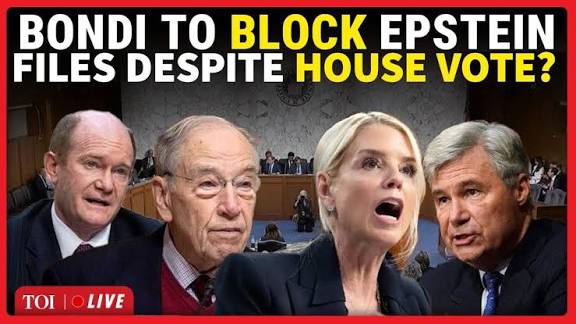
Democrats to block Senate nomination over Bondi’s ‘failure’ on Epstein files. Senate pair condemn Trump administration. Today we will discuss about Epstein Files Clash : Democrats Freeze Senate Nominations
Epstein Files Clash : Democrats Freeze Senate Nominations
In a dramatic escalation of political confrontation on Capitol Hill, Senate Democrats have moved to freeze key Senate nominations in protest over the handling of the Jeffrey Epstein files, intensifying an already heated debate over transparency, accountability, and justice. The clash has quickly become one of the most politically charged controversies in Washington, exposing deep divisions between the Democratic Party and the Trump administration.
At the heart of the dispute is the federal government’s responsibility to release long-promised Epstein-related documents — records many Americans believe could shed light on how one of the most notorious sex trafficking networks operated and whether powerful figures were protected from scrutiny. As deadlines approach and tensions rise, Democrats are using procedural power to force action, while Republicans accuse them of political gamesmanship.
The Background: Why the Epstein Files Matter
Jeffrey Epstein, a wealthy financier, was arrested in 2019 on federal charges related to sex trafficking minors. His death in jail later that year prevented a full criminal trial and left many unanswered questions. Over time, Epstein’s associations with politicians, business leaders, celebrities, and royalty fueled widespread suspicion that critical information had been withheld from the public.
Public outrage continued to grow, driven by victims seeking justice and citizens demanding transparency. In response, Congress passed a bipartisan law mandating the release of all unclassified Epstein-related government records. Lawmakers from both parties publicly agreed that secrecy had damaged public trust and that disclosure was necessary to restore confidence in federal institutions.
However, despite the law’s passage and presidential approval, the expected release of files has been delayed — reigniting skepticism and political anger.
Democrats’ Response: Freezing Senate Nominations
Frustrated by the lack of progress, Senate Democrats announced they would block the confirmation of civilian nominees across multiple federal agencies until the administration provides a clear explanation and timeline for releasing the Epstein files.
This procedural tactic effectively slows the functioning of the federal government, as Senate approval is required for many leadership roles, including ambassadors, agency directors, and senior officials. Democrats argue the move is justified, stating that Congress cannot continue “business as usual” while a legally mandated disclosure is ignored.
Key Democratic senators leading the effort have accused the Department of Justice of failing to brief lawmakers despite repeated requests. They insist the nomination freeze is not political theater but a necessary tool to enforce the law and protect democratic accountability.
A Rare and Powerful Political Strategy
Freezing Senate nominations is an aggressive maneuver rarely used at this scale. While individual senators have historically placed “holds” on nominations to advance specific concerns, a coordinated freeze signals deep institutional frustration.
Democrats view this approach as one of the few remaining levers available to force compliance from the executive branch. By targeting nominations rather than legislation, they apply pressure without needing Republican cooperation in the House.
Critics, however, argue that the tactic risks undermining government operations and could set a dangerous precedent. Republicans warn that routine confirmations should not be held hostage to political disputes, regardless of their seriousness.
Transparency vs. Power: The Political Fallout
The Epstein files dispute has placed the Trump administration in an uncomfortable position. During earlier campaigns, Trump publicly supported releasing Epstein-related documents, promising openness and accountability. Democrats now argue the administration is failing to live up to those promises — and breaking federal law in the process.
On the Senate floor, Democratic leaders have framed the issue as a moral obligation rather than a partisan fight. They argue the files are not about embarrassing political figures but about restoring faith in the justice system and delivering long-overdue transparency to the public and Epstein’s victims.
Republicans counter that Democrats are weaponizing a sensitive issue for political gain, particularly with midterm elections on the horizon. Some GOP lawmakers claim the files contain little new information and that further delays are necessary to protect privacy and prevent misinformation.
The Legal Deadline and Looming Court Battle
Under the transparency law, the Department of Justice was given a strict deadline to release all required Epstein-related documents. As that deadline draws closer, Democrats have warned that failure to comply could result in immediate legal action.
Several senators have openly stated they are prepared to take the matter to federal court if the administration misses the deadline. Legal experts suggest such a lawsuit could force a judge to order document disclosure, potentially creating a landmark ruling on congressional oversight and executive accountability.
If the court becomes involved, the issue could extend well into the next year, prolonging political uncertainty and keeping the Epstein controversy firmly in the public spotlight.
Public Pressure and Media Attention
Outside Washington, public interest in the Epstein files remains intense. The case continues to symbolize broader concerns about elite privilege, institutional failure, and unequal justice. Many Americans believe Epstein’s wealth and connections allowed him to evade accountability for years.
Recent releases of photos and previously unseen materials linked to Epstein’s social circles have further fueled public curiosity. Although not all materials imply wrongdoing, they reinforce the perception that Epstein moved freely among powerful individuals — a fact that deepens demands for full disclosure.
Social media discussions, investigative journalism, and advocacy from victims’ groups have kept pressure on lawmakers, ensuring the controversy does not fade quietly.
Republican Divisions and Internal Tensions
While Republicans have largely pushed back against Democrats’ nomination freeze, the party is not entirely unified. Some GOP lawmakers support releasing the files, arguing transparency aligns with conservative principles of accountability and limited government secrecy.
Others worry that uncontrolled disclosure could unfairly damage reputations or expose sensitive personal information. These internal disagreements complicate the administration’s response and raise questions about how aggressively Republicans will defend continued delays.
The lack of consensus increases the likelihood that the issue will be resolved not politically, but legally.
What the Epstein Files Could Reveal
Supporters of full disclosure believe the Epstein files could clarify several critical issues:
How government agencies handled investigations into Epstein
Whether warnings were ignored or suppressed
The extent of Epstein’s network and financial operations
Failures that allowed abuse to continue for years
Even if the files contain no explosive revelations, transparency advocates argue that public access itself is essential. They insist secrecy only fuels conspiracy theories and erodes trust in democratic institutions.
Opponents stress the importance of protecting victims’ identities and preventing misinterpretation of incomplete information — a challenge that complicates how disclosure should be handled.
Possible Outcomes Ahead
Several scenarios could emerge in the coming days:
1. Full Compliance
The administration releases the files before the deadline, potentially ending the nomination freeze and easing political tensions.
2. Partial Release
Documents are released with heavy redactions, triggering further backlash and prolonging the standoff.
3. Missed Deadline
Democrats file a lawsuit, shifting the battle from Congress to the courts.
4. Political Escalation
The issue becomes a major campaign topic ahead of elections, reshaping narratives around transparency and accountability.
Each outcome carries significant implications for governance, public trust, and the balance of power between Congress and the executive branch.
Conclusion: A Defining Moment for Accountability
The clash over the Epstein files is more than a procedural fight — it is a defining test of whether the U.S. government can enforce transparency laws when powerful interests are involved. By freezing Senate nominations, Democrats have signaled they are willing to use every available tool to demand compliance.
As deadlines approach and pressure mounts, the outcome will shape not only how the Epstein case is remembered, but also how future transparency battles are fought in Washington. Whether through disclosure, legal action, or political compromise, the resolution of this conflict will leave a lasting impact on American democracy.
How useful was this post?
Click on a star to rate it!
Average rating 0 / 5. Vote count: 0
No votes so far! Be the first to rate this post.
About the Author

usa5911.com
Administrator
Hi, I’m Gurdeep Singh, a professional content writer from India with over 3 years of experience in the field. I specialize in covering U.S. politics, delivering timely and engaging content tailored specifically for an American audience. Along with my dedicated team, we track and report on all the latest political trends, news, and in-depth analysis shaping the United States today. Our goal is to provide clear, factual, and compelling content that keeps readers informed and engaged with the ever-changing political landscape.