Deutsche Bank: Police Raid,Money Laundering Probe,Shares Plunge
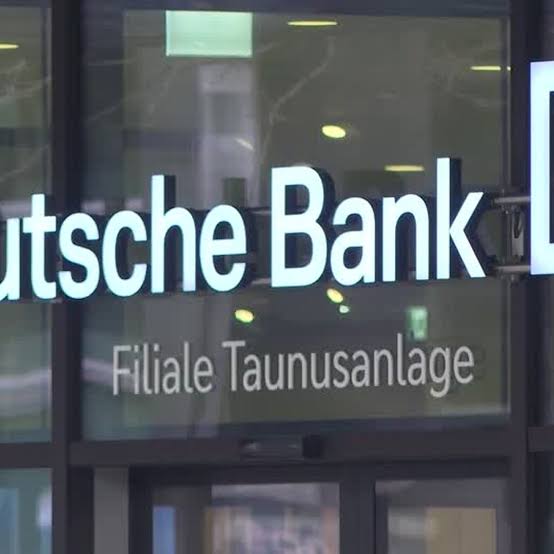
German police raid Deutsche Bank headquarters in massive money laundering investigation, two EU supervisors hit with €40 million AML fine. Today we will discuss about Deutsche Bank: Police Raid,Money Laundering Probe,Shares Plunge
Deutsche Bank: Police Raid,Money Laundering Probe,Shares Plunge
Deutsche Bank, Germany’s largest and most internationally significant financial institution, has once again found itself in the crosshairs of law enforcement and financial regulators. On January 28, 2026, German federal police carried out coordinated raids on Deutsche Bank offices in Frankfurt and Berlin as part of a major money laundering investigation. The action triggered a sharp reaction in global financial markets, with the bank’s shares plummeting on renewed regulatory fears.
This article investigates the details of the raid, the money laundering allegations, the broader regulatory context, market reactions, historical precedents, and what this means for Deutsche Bank’s future.
Setting the Scene: Deutsche Bank at a Crossroads

For decades, Deutsche Bank has played a central role in European and global finance. As Germany’s largest bank, it handles everything from corporate banking and investment services to retail banking and wealth management. Its performance is closely watched by investors, regulators, and policymakers alike.
However, the institution’s reputation has been repeatedly challenged by regulatory scrutiny, fines, and past investigations. The latest raid underscores the lasting vulnerabilities financial institutions face when their compliance and control systems are perceived as inadequate in detecting and preventing financial crime.
The January 2026 raids mark another chapter in a long history of compliance pitfalls and regulatory enforcement at Deutsche Bank.
The January 28, 2026 Police Raids: What Happened?
On January 28, 2026, German authorities executed searches at Deutsche Bank’s Frankfurt headquarters and its Berlin offices as part of a money laundering probe led by Frankfurt prosecutors and the Federal Criminal Police Office (BKA). Approximately 30 plainclothes investigators were reported entering the premises to collect documents, electronic data, and evidence connected to the investigation.
Scope of the Investigation
The probe focuses on suspicious transactions and business relationships the bank maintained with foreign entities. Authorities are specifically investigating unidentified individuals and certain employees of the bank on suspicion of involvement in transactions that may have aided the laundering of illicit funds.
Officials have stressed that no detailed information has been released yet about the exact nature, size, or timeline of the suspected transactions. However, reporting indicates that activity under investigation may date back to between 2013 and 2018 — a period during which various regulatory and compliance frameworks were under scrutiny across the European banking sector.
Timing Matters
The timing of the raids was significant: they occurred just one day before Deutsche Bank was scheduled to announce its 2025 financial results, which were expected to show the bank’s strongest earnings in nearly two decades. This juxtaposition highlights both the legal pressures facing the bank and its improving financial performance.
Details Emerging from Reports
Multiple international news outlets confirmed the raid and investigation:
The search focused on potential money laundering activities involving foreign entities and unidentified employees.
The probe may involve business ties to high-profile clients, whose companies were reportedly clients of the bank and whose assets were affected by sanctions.
The bank confirmed cooperation with the investigation while declining to provide detailed comment.
While authorities have not publicly confirmed specific client links, some media reports indicated that high-profile international clients could be central to the probe — particularly whether Deutsche Bank failed to timely report suspicious transactions involving sanctioned individuals or entities.
Immediate Market Reaction: Shares Slide
The news of the raid had an immediate negative impact on Deutsche Bank’s share price. On the day of the announcement, the bank’s stock fell sharply, reacting to investor fears that renewed regulatory scrutiny could dampen confidence and introduce legal risk.
The stock drop occurred despite expectations of strong financial results — underlining how regulatory headlines can outweigh even positive earnings stories in the short term.
Historical Context: Past Scandals and Compliance Issues
To fully understand the implications, it’s essential to place the latest investigation within the bank’s long history of regulatory challenges.
1. 2017 Russian Money Laundering Lapses
In 2017, Deutsche Bank faced heavy fines in the United States and the United Kingdom — amounting to **hundreds of millions of dollars — for failing to detect and prevent the laundering of approximately $10 billion in funds connected to Russian clients.
Regulators in New York and London penalized the bank for weak anti‑money laundering (AML) systems and poor enforcement of transaction monitoring requirements.
2. 2018 Panama Papers Raid
In 2018, German police conducted a high-profile raid on the bank’s Frankfurt offices in connection with the Panama Papers scandal, which had exposed how global elites used offshore structures to hide assets. Deutsche Bank was fined for its failure to timely report suspicious activity, and the episode contributed to concerns about internal controls.
3. Subsequent Regulatory Scrutiny
Since then, Deutsche Bank has been scrutinized by multiple regulators, including Germany’s financial authority BaFin — which at times even placed a special representative within the bank to oversee compliance improvements after earlier lapses.
Money Laundering: What It Means and Why It Matters
Money laundering refers to financial activities that aim to disguise the origins of illegally obtained funds so that they appear legitimate. Banks play a critical role in preventing money laundering by detecting and reporting suspicious activities to regulators.
Failure to do so can result in criminal investigations, significant fines, and damage to reputation. In some jurisdictions, bank executives can even face personal legal consequences.
Given Deutsche Bank’s size and international reach, allegations of money laundering — even indirectly through business relationships — draw heightened scrutiny from international watchdogs, policymakers, and investors.
Regulatory Environment and Compliance Challenges
Deutsche Bank operates in a complex regulatory environment. Financial institutions in the European Union must comply with strict AML regulations, including timely reporting of suspicious activity under the EU Anti‑Money Laundering Directive and German national laws.
Despite reforms and investments in compliance infrastructure, the persistence of allegations suggests that systemic weaknesses or historical gaps may still be under investigation. Regulators have increasingly emphasized the need for robust transaction monitoring systems, enhanced Know-Your-Customer (KYC) protocols, and stronger internal controls — especially for global banks handling large cross-border payments.
High-Profile Client Links and Sanctions
One of the most talked-about aspects of the latest probe involves potential connections with high-profile clients under sanctions.
Reports suggest that part of the investigation focuses on whether Deutsche Bank delayed reporting suspicious transactions involving sanctioned companies — which, if true, could represent violations of sanctions and anti-money laundering laws.
Sanctioned individuals and entities present special compliance obligations for banks. Failure to act hastily and transparently can trigger both criminal inquiry and further regulatory enforcement.
Deutsche Bank’s Response
In response to the raids, Deutsche Bank confirmed that law enforcement authorities were present at its offices and that the bank was cooperating fully with the investigation. The bank declined to provide substantive comment on the specifics of the probe, citing ongoing legal procedures.
The statement emphasized cooperation but did not attempt to rebut or dispel the allegations — a measured approach often recommended when investigations are active.
Investor and Market Perspective
The decline in the bank’s share price reflects investors’ sensitivity to legal and regulatory risk.
1. Short-Term Sell-Off
News of police raids and money laundering probes tend to trigger short-term sell-offs as traders react to uncertainty. Deutsche Bank’s shares fell significantly shortly after the announcement, despite strong fundamental earnings prospects.
2. Long-Term Confidence
Longer-term investor confidence will depend on how the investigation unfolds. Should the bank face fines, enforcement action, or reputational damage, the financial and strategic impact could be substantial.
However, if Deutsche Bank successfully addresses the issues and strengthens compliance, confidence could recover.
Global and Sector Implications
Deutsche Bank’s troubles are not isolated. Other global banks have faced similar money laundering and compliance investigations, leading regulators worldwide to tighten AML standards.
This trend reflects broader concerns about protecting the integrity of the financial system, particularly in an era of complex cross-border payments, digital assets, and heightened geopolitical tensions.
Outlook: What Comes Next
As of now, the investigation is ongoing. Key areas to watch include:
Regulatory announcements or charges related to the probe.
Deutsche Bank’s official responses and compliance disclosures.
Market reaction in the coming weeks, particularly around earnings releases.
Any additional links to sanctions or international money laundering schemes.
The bank’s ability to manage legal risk and strengthen internal controls will be critical in determining its reputation and financial standing.
Conclusion
The January 2026 Deutsche Bank police raids highlight ongoing concerns about money laundering and regulatory compliance in the global banking sector. While the full details of the investigation remain under wraps, the response from authorities and markets underscores the seriousness of the allegations.
Deutsche Bank’s history of regulatory issues — including past fines and probes — adds context to current events, and the potential involvement of high-profile clients amplifies scrutiny. The stock market reaction shows how investors weigh legal risk heavily, even against strong financial performance.
Going forward, the finance world will be watching how Deutsche Bank navigates this crisis, cooperates with authorities, and implements stronger safeguards to prevent financial crime — not only for its own stability but for the reputation of the entire European banking industry.
How useful was this post?
Click on a star to rate it!
Average rating 0 / 5. Vote count: 0
No votes so far! Be the first to rate this post.
About the Author

usa5911.com
Administrator
Hi, I’m Gurdeep Singh, a professional content writer from India with over 3 years of experience in the field. I specialize in covering U.S. politics, delivering timely and engaging content tailored specifically for an American audience. Along with my dedicated team, we track and report on all the latest political trends, news, and in-depth analysis shaping the United States today. Our goal is to provide clear, factual, and compelling content that keeps readers informed and engaged with the ever-changing political landscape.