Congress Divided Again: Tax Reform Battle Triggers Massive Public Debate

The US Congress is currently facing significant division and public debate over a sweeping tax and spending bill. Today we will discuss about
Congress Divided Again: Tax Reform Battle Triggers Massive Public Debate
In the summer of 2025, Congress found itself once more locked in a fierce showdown — this time over sweeping tax reform. What began as an effort to extend and expand earlier tax cuts has erupted into one of the most contentious political battles of the decade. The debate has laid bare not only the ideological gulf between Republicans and Democrats but also the deep divisions within the Republican Party itself. With trillions of dollars at stake, the outcome promises to shape America’s economy, federal programs, and fiscal policy for generations.
Origins of the New Tax Battle
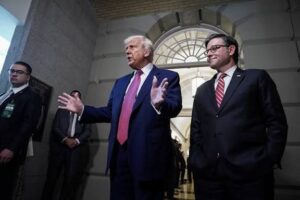
At the center of the fight is President Donald Trump’s ambitious legislative package, popularly branded as the “One Big Beautiful Bill.” The proposal seeks to extend and expand many tax cuts introduced during his first term.
Key elements of the bill include:
Permanent extension of the 2017 Tax Cuts and Jobs Act for individual taxpayers
Elimination of income taxes on tips and overtime
Expanded tax breaks for small businesses, including a larger deduction for pass-through entities
An increased estate tax exemption
Budgetary offsets through spending cuts, particularly in Medicaid and other social programs
Supporters argue that the bill will boost economic growth and simplify the tax code. Critics counter that it disproportionately benefits wealthy Americans and corporations while threatening the stability of social safety nets.
A Republican Party at War with Itself
Even with control of the House and Senate, Republicans are struggling to pass the bill because of internal fractures.
Hardline Conservatives
Members of the party’s most fiscally conservative wing insist that the tax cuts must be paired with deep spending reductions. They argue that extending the cuts without offsets would add trillions to the national debt, threatening long-term fiscal stability.
Moderate Republicans
Lawmakers from high-tax states, including parts of the Northeast and West Coast, oppose reductions to the state and local tax (SALT) deduction cap. They argue that their constituents already shoulder heavy tax burdens and fear political backlash if the cap remains too low.
Fiscal Hawks
Some Republicans are alarmed by recent warnings from credit rating agencies, which have cited the proposed tax cuts as potential contributors to long-term financial instability. These members want to ensure the bill does not further deteriorate the nation’s creditworthiness.
Senate Skepticism
While the Senate passed a version of the bill through reconciliation — a process allowing budget legislation to move forward with a simple majority — several senators voiced concerns about the fiscal ramifications, especially the projected growth of the deficit.
Democrats Launch a Full-Scale Counteroffensive
Democrats are united in their opposition to the tax package. They argue that the bill represents a massive giveaway to the wealthy and multinational corporations, while average Americans see only modest benefits — or worse, reduced access to essential programs.
Prominent Democrats have pushed for using the 2025 tax negotiations as an opportunity to raise revenues from billionaires and corporations. The goal, they say, is to fund public priorities and ease the financial burden on working- and middle-class families.
Progressive think tanks have warned that the Republican plan could cost upward of $5 trillion, widen wealth inequality, and force devastating cuts to Medicaid, SNAP benefits, and other social services.
Public Reaction: A Nation Divided
The debate has prompted intense public attention, sparking protests, town hall arguments, advocacy campaigns, and nonstop media coverage.
Mixed Polling
Polls indicate that many Americans support keeping the 2017 tax cuts in place. Support crosses party lines, with even a significant share of Democrats favoring extensions. However, when voters learn about the potential deficit impact, support declines sharply.
Economic Anxiety
The public is increasingly concerned about the national debt after a major credit rating downgrade. Critics argue that the combination of tax cuts and insufficient offsets will weaken the nation’s financial position and potentially increase borrowing costs.
Grassroots Mobilization
Progressive groups warn that cuts to Medicaid and other programs would harm millions. Labor unions, healthcare advocates, and civil rights organizations are organizing rallies and lobbying efforts to oppose the bill.
Congressional Strategy: A High-Stakes Game
Republican leaders are using every available tactic to keep the tax package alive:
1. Budget Reconciliation
This allows the bill to pass the Senate with a simple majority, bypassing the 60-vote filibuster threshold. However, it also places strict limits on what provisions can be included.
2. Closed-Door Negotiations
Party leaders are engaging in persistent behind-the-scenes talks to win over skeptical lawmakers. Concessions on spending cuts or SALT are potential bargaining chips.
3. Messaging Blitz
Republicans are attempting to sell the bill as a pro-growth, pro-worker package that simplifies the tax system and stimulates investment.
4. Spending Cuts
To address concerns about the deficit, Republicans have proposed reductions in Medicaid and other entitlement programs — though these cuts create further internal conflict.
5. Concessions to High-Tax States
Some versions of the bill include adjustments to the SALT deduction cap to win over moderates from states like New York, California, and New Jersey.
Economic Implications: Who Gains, Who Loses?
The proposed tax bill could reshape the economic landscape for years. Analysts point to clear winners and losers:
Winners
High-Income Individuals: Substantial tax savings from extended and expanded cuts
Corporations: Significant reductions in corporate taxation and regulatory burdens
Small Business Owners: Larger deductions for pass-through income
Wealthy Families: A higher estate tax exemption
Losers
Low- and Middle-Income Families: Potential loss of benefits from cuts to social programs
Future Generations: Increased debts and deficits translating into higher interest costs
State Governments: Potential budget strain due to reduced federal support
Social Programs: Medicaid and other safety nets face major funding cuts
Historical Context: Tax Fights Are a U.S. Tradition
Tax reform battles have been pivotal moments throughout U.S. history:
1993: Major tax increases on the wealthy sparked national controversy
1969: Reforms created mechanisms like the Alternative Minimum Tax to ensure fairness
1964: A major tax cut under President Johnson reshaped federal revenue policy
1990s: The push for a flat tax highlighted long-standing ideological divides
The 2025 fight fits squarely into this tradition — a struggle over national values as much as economic policy.
Why the 2025 Battle Is Especially Polarizing
Several factors make this debate unusually intense:
Massive scale — trillions in tax cuts and potential spending reductions
Slim congressional majorities, leaving no margin for error
Deep Republican divisions over debt and deficits
Unified Democratic opposition
Public uncertainty, especially regarding healthcare and the deficit
Long-term consequences for the national debt and economic inequality
Possible Outcomes
The situation remains fluid, but several scenarios are possible:
1. Full Passage
If Republicans unite, the bill could pass largely intact — a major political win for the party.
2. A Watered-Down Compromise
To secure enough votes, leaders may soften spending cuts or adjust the SALT deduction.
3. Collapse of Reform Efforts
If internal conflicts grow, the bill could stall, forcing a complete rethink.
4. Political Repercussions
Even if it passes, backlash over deficits and cuts to social programs could shape upcoming elections.
5. Long-Term Fiscal Risks
Economists warn that passing large tax cuts without adequate offsets could intensify future economic instability.
Broader Political and Social Implications
This tax reform battle is more than a policy dispute — it’s a national moment of reckoning.
Economic Inequality
The bill’s structure raises questions about fairness and the widening gap between rich and poor.
Government Priorities
The debate highlights opposing visions for the federal government’s role in healthcare, welfare, and economic opportunity.
Political Identity
Republicans are grappling with their own ideological identity: pro-growth tax cutters vs. debt-averse fiscal conservatives.
Civic Engagement
The public is more engaged than in past tax debates, with many fearing the bill’s impacts on healthcare and essential services.
Conclusion: A Defining Moment for Congress
Congress stands at a historic crossroads. The tax reform battle of 2025 is not merely about numbers on a spreadsheet — it’s about competing visions for America’s future. Will lawmakers prioritize growth, even at the cost of higher deficits? Will social programs absorb cuts to make room for lower taxes? Or will the effort collapse under the weight of political division?
The answers remain uncertain. But one thing is clear:
Congress is divided again — and the outcome will shape the nation for decades.
How useful was this post?
Click on a star to rate it!
Average rating 0 / 5. Vote count: 0
No votes so far! Be the first to rate this post.
About the Author

usa5911.com
Administrator
Hi, I’m Gurdeep Singh, a professional content writer from India with over 3 years of experience in the field. I specialize in covering U.S. politics, delivering timely and engaging content tailored specifically for an American audience. Along with my dedicated team, we track and report on all the latest political trends, news, and in-depth analysis shaping the United States today. Our goal is to provide clear, factual, and compelling content that keeps readers informed and engaged with the ever-changing political landscape.