Chad Bianco Ballot Seizure: 650K Votes, Election War, Court Clash, US Democracy Shock
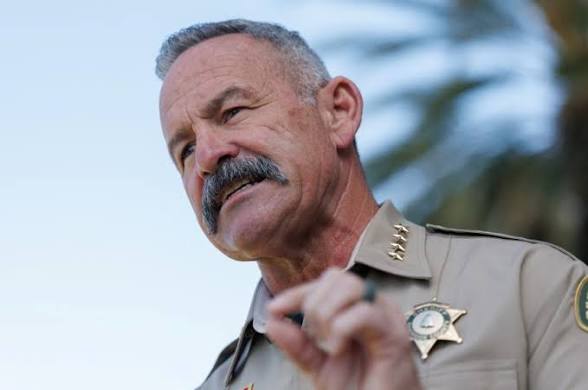
The United States is facing a fresh political storm after Chad Bianco ordered the seizure of more than 650,000 ballots from a recent California election. What began as a local investigation has now escalated into a nationwide debate over election integrity, legal authority, and the future of American democracy.
The controversial move—linked to alleged voting irregularities—has triggered fierce opposition from state officials, legal experts, and political leaders. With courts now involved and the stakes rising, the situation is being described as one of the most dramatic election disputes in recent US history.
What Happened: The 650,000 Ballot Seizure Explained

The controversy centers around ballots from California’s 2025 special election tied to Proposition 50, a redistricting measure that reshaped congressional boundaries.
Sheriff Bianco, who is also running for governor, seized over 650,000 ballots from the Riverside County registrar’s office. His justification: to investigate claims that tens of thousands of votes were improperly counted.
- A local group alleged a discrepancy of 45,000+ votes
- Election officials said the actual variance was just 103 votes
- Authorities insist there is no evidence of widespread voter fraud
Bianco defended his actions as a “fact-finding mission” to physically recount ballots and verify the results.
Why This Matters: A Direct Challenge to Election Authority
The seizure is unprecedented in scope and has raised serious questions:
- Can a sheriff legally take control of ballots?
- Does this undermine certified election results?
- Could this set a national precedent?
California Attorney General Rob Bonta strongly criticized the move, calling it dangerous and politically motivated.
The action “sets a dangerous precedent” and could “sow distrust in elections.”
Election experts warn that breaking the chain of custody of ballots threatens confidence in democratic systems.
The Legal Battle: Courts Step In
Despite heavy criticism, Bianco obtained search warrants approved by a judge to seize the ballots. A court has now appointed a special master to oversee the counting process.
This has turned the issue into a full-scale legal showdown:
- State officials argue the seizure may lack proper legal basis
- Bianco insists he acted within his constitutional duty
- Courts are now mediating the dispute
Legal experts say the outcome could redefine the boundaries of election oversight in the US.
Political Motives? Election Campaign Heats Up
The timing of the seizure is raising eyebrows.
Bianco is a Republican candidate in California’s upcoming gubernatorial race. Political analysts suggest the move could:
- Boost his visibility among conservative voters
- Align with broader election integrity narratives
- Influence the crowded primary race
Some observers believe the controversy is part of a larger political strategy.
At the same time, critics argue it risks weaponizing election systems for political gain.
The Proposition 50 Factor
At the center of the dispute is Proposition 50, a ballot measure designed to redraw congressional districts.
- It passed decisively with a large margin
- It was backed by Democratic leadership
- Republicans have challenged its legitimacy
The measure was part of a broader political battle over gerrymandering, where both parties attempt to influence electoral boundaries.
Bianco’s investigation focuses specifically on whether this vote was accurately counted.
Election Integrity vs. Election Trust
This case highlights a growing divide in American politics:
Argument from Bianco and Supporters
- Elections must be verified thoroughly
- Any discrepancy deserves investigation
- Transparency requires physical recounts
Argument from Critics
- Existing systems already ensure accuracy
- Claims of fraud are unproven
- Seizing ballots undermines trust
Experts emphasize that standard procedures already exist for recounts and audits.
A National Pattern? Echoes of Past Controversies
The situation is drawing comparisons to previous election disputes in the US:
- Ballot investigations following the 2020 presidential election
- Federal involvement in local election offices
- Ongoing debates about voter fraud claims
Experts warn that if such actions become normalized, they could:
- Politicize election administration
- Encourage similar interventions nationwide
- Weaken democratic institutions
Impact on US Democracy
The stakes are enormous.
This is not just a local issue—it touches on core democratic principles:
1. Rule of Law
Can law enforcement independently intervene in elections?
2. Election Security
Does physical ballot seizure enhance or harm integrity?
3. Public Trust
Will voters trust results if processes are disrupted?
Election analysts say trust—not just accuracy—is the foundation of democracy.
Public Reaction: Divided America
The reaction across the United States has been sharply divided:
Supporters Say
- “Finally, someone is investigating irregularities”
- “Transparency matters more than politics”
Critics Say
- “This is election interference”
- “It’s a dangerous abuse of power”
The divide reflects broader political polarization in the country.
What Happens Next? Key Scenarios
Several possible outcomes could shape the future:
1. Court Blocks the Investigation
If courts rule against Bianco, it could reinforce strict election protocols.
2. Ballot Count Proceeds
If allowed, the recount could either validate results—or fuel further disputes.
3. Political Fallout
The controversy may influence the California governor race and beyond.
4. National Ripple Effects
Other states could see similar actions, escalating election conflicts.
Expert Warning: A “Dangerous Precedent”
Election law experts are particularly concerned about precedent.
If local officials can seize ballots based on disputed claims, it may:
- Encourage politically motivated investigations
- Undermine standardized election processes
- Create chaos during future elections
The phrase “dangerous precedent” has become central to the debate.
Conclusion: A Defining Moment for US Elections
The Chad Bianco ballot seizure is more than a legal dispute—it is a defining test of American democracy.
At its core, the issue raises fundamental questions:
- Who controls election processes?
- How should disputes be resolved?
- Can trust survive political conflict?
As courts deliberate and political tensions rise, the outcome of this controversy could shape the future of elections in the United States for years to come.
FAQs
1. Who is Chad Bianco?
Chad Bianco is the Sheriff of Riverside County and a Republican candidate for California governor.
2. Why were 650,000 ballots seized?
The ballots were seized as part of an investigation into alleged discrepancies in vote counts during the 2025 election.
3. Is there evidence of voter fraud?
Officials say there is no evidence of widespread fraud, and discrepancies were minimal.
4. Is the seizure legal?
Bianco obtained court-approved warrants, but state officials are challenging the legality in court.
5. What is Proposition 50?
It is a California ballot measure that redrew congressional districts and became the focus of the investigation.
6. Why is this controversial?
Critics argue it undermines election trust and sets a dangerous precedent for future elections.
7. What could happen next?
Courts will decide whether the investigation continues, which could impact election laws nationwide.
How useful was this post?
Click on a star to rate it!
Average rating 0 / 5. Vote count: 0
No votes so far! Be the first to rate this post.
About the Author

usa5911.com
Administrator
Hi, I’m Gurdeep Singh, a professional content writer from India with over 3 years of experience in the field. I specialize in covering U.S. politics, delivering timely and engaging content tailored specifically for an American audience. Along with my dedicated team, we track and report on all the latest political trends, news, and in-depth analysis shaping the United States today. Our goal is to provide clear, factual, and compelling content that keeps readers informed and engaged with the ever-changing political landscape.