Casey Means : Senate grilling, Surgeon General vote, health controversy

Dr. Casey Means has become one of the most discussed figures in U.S. health policy in 2026.
Nominated by President Donald Trump to serve as the next U.S. Surgeon General, her confirmation process has ignited intense scrutiny from lawmakers, medical experts, and public health advocates. At the center of the controversy are her qualifications, health philosophies, and stances on critical issues such as vaccines and chronic disease prevention.
This comprehensive article breaks down:
Who Casey Means is
Why her nomination matters
Details of her Senate grilling
The outlook for the confirmation vote
Public and expert reactions
Broader implications for U.S. health policy
A detailed FAQ section
Who is Casey Means?
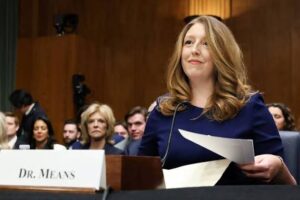
Dr. Casey Means is a Stanford-educated physician-turned wellness entrepreneur. She graduated from Stanford Medical School but did not complete her surgical residency and currently holds an inactive medical license.
After stepping away from clinical medicine, Means focused on wellness advocacy and health technology. She co-founded the app Levels, a platform for metabolic health tracking, and authored the book Good Energy, which promotes lifestyle-based approaches to chronic illness.
Her professional path — from surgeon-trained doctor to health influencer and wellness business leader — is unconventional for a nominee to be the nation’s top public health official, and it has fueled much of the current debate.
Nomination to Surgeon General: A Politically Charged Choice
President Trump nominated Casey Means in May 2025 as his pick for U.S. Surgeon General, following the withdrawal of an earlier nominee.
Unlike most surgeon general nominees, Means has no active medical practice, no board certification, and no traditional public health leadership experience. Her advocacy emphasizes diet, lifestyle, chronic disease prevention, and reduced medical dependency, a stance aligned with the broader “Make America Healthy Again” (MAHA) initiative pushed by Health and Human Services Secretary Robert F. Kennedy Jr.
Her nomination was briefly stalled due to a postponed Senate hearing in October 2025, when she went into labor on the day of the scheduled virtual hearing.
Grilling Before the Senate Health Committee
On February 25, 2026, Dr. Casey Means appeared before the Senate Health, Education, Labor and Pensions (HELP) Committee for her delayed confirmation hearing, marking a pivotal moment in her nomination.
Key Themes from the Hearing
1. Qualifications Under Fire
Several senators questioned whether Means possesses the professional background expected of a surgeon general. Critics highlighted her lack of active licensure and departure from clinical training as significant hurdles.
Senators — including some Republicans — probed her ability to lead the U.S. Public Health Service and issue evidence-based guidance.
2. Vaccine Messaging and Public Health
Perhaps the most contentious issue during the hearing was Means’s stance on vaccines. While she said she supports vaccination and acknowledged the value of immunizations like the measles vaccine, she stopped short of forcefully encouraging them, instead emphasizing parental discussion with pediatricians.
This nuanced position alarmed many public health advocates, especially given her alignment with Secretary Kennedy, who has a controversial history of questioning vaccine safety.
3. Wellness and Chronic Disease Focus
Means repeatedly discussed her vision for combating the chronic disease epidemic — which she describes as a failure of “reactive sick care” in favor of proactive wellness through lifestyle changes.
She emphasized modifiable factors like diet, ultra-processed foods, environmental chemical exposure, stress, and physical inactivity as critical targets for the surgeon general’s agenda.
4. Ethics and Conflicts of Interest
The hearing also touched on Means’s past business interests. Financial disclosures reveal that she profitably endorsed wellness products and health services, sometimes without clearly disclosing financial benefit.
In response, Means pledged to divest stock, resign from corporate roles, and avoid financial conflicts if confirmed.
The Confirmation Vote: What’s at Stake?
The surgeon general nominee must be confirmed by the full Senate after advancing out of committee. Given the split reactions within both major political parties, the vote outlook is uncertain.
Republican Support
Many Republican senators, especially those aligned with the MAHA agenda, appear ready to support Means. Her approach resonates with lawmakers interested in reforming food systems, chronic disease prevention, and alternative public health strategies.
Democratic and Expert Opposition
Democrats and public health experts have largely opposed her nomination. Concerns center on her perceived lack of scientific credibility, anti-establishment health messaging, and insufficient experience to lead the nation’s public health apparatus.
Her confirmation has therefore become a broader referendum on how the U.S. defines public health leadership — whether rooted in traditional medical science or increasingly influenced by lifestyle and wellness advocacy.
Controversy and Public Reaction
The reaction to Casey Means’s nomination extends far beyond Capitol Hill.
Medical and Scientific Community
Groups like the Freedom From Religion Foundation and the Center for Science in the Public Interest have criticized the nomination as a departure from evidence-based medicine, warning that her views blend ideology with health advice.
Some experts argue her lack of standardized public health credentials undermines confidence in the role of surgeon general.
Public Health Advocacy
Organizations such as National Nurses United and Taxpayers Protection Alliance are actively urging senators to oppose her nomination, emphasizing concerns about misinformation and public safety.
Wellness Supporters
Meanwhile, segments of the wellness community and MAHA supporters embrace Means’s focus on preventive health and lifestyle strategies, praising her for challenging conventional medicine and promoting holistic approaches.
What This Means for U.S. Health Policy
The debate over Casey Means’s nomination highlights larger trends and tensions in American health policy, including:
The role of lifestyle and prevention versus clinical medicine
Trust in scientific expertise and evidence-based guidelines
The influence of wellness culture on public health institutions
Partisan divisions shaping key health leadership decisions
If confirmed, Means would likely push initiatives centered on chronic disease prevention, nutrition reform, and reducing environmental health stressors — a departure from traditional surgeon general priorities focused on infectious disease control and medical guideline enforcement.
Frequently Asked Questions (FAQs)
1. Why is Casey Means’s nomination controversial?
Casey Means’s nomination is controversial because she has an inactive medical license, did not complete her surgical residency, and has promoted wellness perspectives that diverge from traditional public health science.
2. What does the surgeon general do?
The U.S. Surgeon General serves as the nation’s chief health communicator, leading public health messaging and advising federal agencies and the public on health risks and best practices.
3. Did Casey Means support vaccines at the Senate hearing?
Means said she supports vaccines but emphasized parental discussion over universal messaging, which raised concern among some senators.
4. Has the Senate already voted on her confirmation?
As of the latest news, Casey Means has appeared before the committee but her full Senate confirmation vote has not yet taken place.
5. What are the main objections to her nomination?
Objectors cite her lack of medical and public health experience, unproven health claims, potential conflicts of interest, and ties to materials some experts consider pseudoscientific.
6. Who supports Casey Means?
Supporters include some Republican lawmakers and advocates of lifestyle-based health reforms who believe her approach could shift national health priorities toward prevention.
7. Will Casey Means practice medicine while surgeon general?
No. Even if confirmed, the surgeon general position does not require an active clinical practice and she has pledged to divest her business interests.
Conclusion
Dr. Casey Means’s nomination for U.S. Surgeon General has become a flashpoint in debates over public health expertise, prevention-focused wellness, and the future direction of health policy in the United States.
Whether she is confirmed will not only impact the next occupant of one of the nation’s most prominent health offices — it may signal how much influence wellness advocacy and alternative health perspectives will have on federal health leadership.
How useful was this post?
Click on a star to rate it!
Average rating 0 / 5. Vote count: 0
No votes so far! Be the first to rate this post.
About the Author

usa5911.com
Administrator
Hi, I’m Gurdeep Singh, a professional content writer from India with over 3 years of experience in the field. I specialize in covering U.S. politics, delivering timely and engaging content tailored specifically for an American audience. Along with my dedicated team, we track and report on all the latest political trends, news, and in-depth analysis shaping the United States today. Our goal is to provide clear, factual, and compelling content that keeps readers informed and engaged with the ever-changing political landscape.