Capitol Shockwave: Federal Crackdown Rising, States Enter Open Resistance
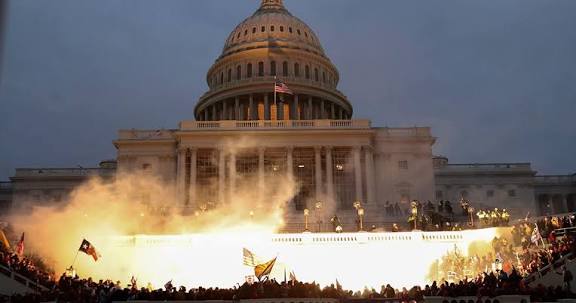
He singled out large, Democratic-run cities as targets for federal action, naming Washington, San Francisco, and Chicago. Today we will discuss about Capitol Shockwave: Federal Crackdown Rising, States Enter Open Resistance
Capitol Shockwave: Federal Crackdown Rising, States Enter Open Resistance
In late 2025, the United States finds itself engulfed in one of the most intense confrontations between federal and state authority in generations. A sweeping federal crackdown — involving militarized policing, aggressive immigration enforcement, and controversial deployments of National Guard units — has sent political shockwaves through the nation. This rapidly escalating tension, widely referred to as the Capitol Shockwave, has triggered widespread resistance across states and cities. Governors, mayors, courts, civil-rights groups, and ordinary citizens are refusing to yield to what they describe as an unprecedented assertion of federal power.
This article provides an in-depth, 2000-word analysis of the unfolding crisis, tracing the roots of the crackdown, exploring why states are rebelling, and examining what these developments suggest about the future of American democracy and federalism.
Section I: The Federal Crackdown — A New Era of Domestic Force

Unprecedented Use of Military and Federal Power
Throughout 2025, the federal government dramatically escalated its direct intervention in domestic law enforcement affairs. The National Guard — historically used sparingly for natural disasters or extreme emergencies — is now being deployed across major U.S. cities under federal authority. These deployments have been justified using statutes that allow federalization of local forces during national emergencies, yet the circumstances cited are often routine public safety challenges rather than true rebellions or insurrections.
One of the most explosive moves occurred when thousands of National Guard troops were deployed into Washington, D.C., and the city’s own police department was placed under federal control. Critics described the action as a hostile takeover of local policing, while supporters framed it as a necessary step to restore order. This event set a precedent for similarly controversial deployments in Los Angeles, Portland, and other cities.
Aggressive Immigration Enforcement
Simultaneously, the administration has launched high-intensity immigration enforcement operations across multiple states. One of the largest occurred in Louisiana, where federal agents carried out mass arrests and detentions. Reports from residents and local leaders indicated that these operations created widespread fear and disrupted daily life, particularly in immigrant communities.
Many of these tactics resemble raids from earlier decades but on a larger and more coordinated scale. Unlike previous enforcement waves, these crackdowns appear intertwined with the administration’s broader political objectives, including targeting sanctuary jurisdictions that oppose federal immigration policies.
Section II: States Push Back — Resistance in Courts and Streets
Legal Challenges to Federal Overreach
State governments are mounting fierce legal resistance. Attorneys general from numerous states have filed lawsuits challenging the legality of troop deployments and mass enforcement operations. Several federal judges have already ruled that specific Guard deployments were illegal or exceeded executive authority.
The central legal argument from states:
The federal government is overstepping its constitutional powers by imposing military force in situations that do not meet the threshold for extraordinary intervention.
Some rulings emphasize that crime or protest activity — unless rising to the level of insurrection — does not justify federal military involvement. This marks one of the most significant judicial pushbacks on federal domestic force in decades.
Sanctuary Cities Defy Orders
Sanctuary states and cities are refusing to comply with federal demands to assist in immigration enforcement. Cities such as Minneapolis, Chicago, and New Orleans have doubled down on their protections for undocumented residents. Their leaders argue that federal crackdowns destabilize communities, undermine local safety strategies, and violate constitutional rights.
Mayors and city councils have passed resolutions condemning federal operations, and some police departments have openly stated they will not participate in immigration raids.
Protests and Civil Resistance
On the ground, mass protests have erupted near courthouses, city halls, and detention centers. Immigrant-rights groups, legal advocates, and community organizations have mobilized rapidly to challenge the crackdown. In some cities, community volunteers have formed rapid-response networks to monitor federal activity and provide legal support to arrested individuals.
This grassroots energy is reminiscent of the civil-rights movements of the 1960s, when states and communities similarly confronted federal policies perceived as unjust.
Section III: Historical Context — A Clash Rooted in America’s DNA
Federalism Under Strain
The United States has always balanced a delicate tension between federal and state power. Federal authority has expanded and contracted across eras — from Reconstruction to the New Deal, from civil rights to the war on drugs. Today’s crackdowns represent another major swing in this balance.
What distinguishes the 2025 crisis is the scale, frequency, and political nature of federal interventions. Deploying federalized National Guard troops for everyday civilian law enforcement is something historically reserved for crises of national survival — not ordinary crime waves or political disorder.
Echoes of Past Conflicts
Historical parallels include:
Reconstruction, when federal troops enforced civil-rights protections in the South.
Desegregation in the 1950s–60s, when presidents used military force to uphold court orders.
The civil unrest of the 1960s, when federal intervention was used sparingly and reluctantly.
But unlike those periods — when federal power was often used to expand rights — critics argue that the current actions restrict rights and concentrate power in the executive branch.
Section IV: Impact on Society — From Civil Liberties to National Identity
Fear and Distrust in Communities
The most immediate impact of the crackdown is the climate of fear in immigrant communities. Families are avoiding public places, workers are skipping shifts, and parents are keeping children home from school. False rumors spread rapidly, worsening the panic. For many, it feels like the federal government has turned their neighborhoods into militarized zones.
Civil-rights organizations warn that such enforcement harms public safety. When people are afraid to report crimes, contact authorities, or appear in court, communities become less safe overall.
Erosion of Democratic Norms
Another troubling consequence is the steady erosion of democratic norms and civilian oversight. Using military forces for routine law enforcement risks blurring the line between civilian policing and martial control — a line the United States has historically protected carefully.
Legal scholars argue that normalizing these deployments could reshape the presidency into a far more powerful office, especially in domestic affairs traditionally controlled by states.
A Nation More Polarized Than Ever
The confrontation is also deepening political divisions. Supporters of the crackdown argue that strong federal action is necessary to combat crime and illegal immigration. Opponents see it as authoritarian overreach. This divide increasingly maps onto geographic lines — with blue states resisting and red states supporting. The nation’s political map is becoming a map of legal conflict.
Section V: What Happens Next — The Battle Lines Are Drawn
Key Court Decisions Expected
Federal appeals courts and possibly the Supreme Court will soon decide cases that could set groundbreaking precedents:
Can the president federalize local police forces for non-insurrection situations?
Does the executive branch have authority to deploy National Guard troops into defiant states without their consent?
Are mass immigration raids lawful when conducted without local cooperation?
The answers will shape American governance for decades.
States Preparing Legislative Countermeasures
Some state legislatures are drafting bills to:
Limit cooperation with federal deployments
Create legal protections for local police from federal takeover
Restrict or prohibit joint operations with federal immigration agencies
If enacted, these laws would intensify the confrontation.
Community Mobilization Likely to Grow
As long as crackdowns continue, community resistance is expected to expand, especially in heavily targeted areas. Legal defense funds, civil-rights coalitions, and grassroots networks are preparing for prolonged struggle.
Section VI: Why the Capitol Shockwave Is a Turning Point
The Capitol Shockwave is not just a news cycle — it is a pivotal moment in modern American history. It represents:
A redefinition of federal power
A revival of state-level resistance unseen in decades
A test of constitutional boundaries
A nationwide debate about the meaning of democracy and freedom
At stake are fundamental questions:
Who controls policing in America?
How far can the federal government go in enforcing its agenda?
How much independence should cities and states have?
What rights do communities possess in resisting federal actions they consider unjust?
The answers will define the next chapter of the American experiment.
Conclusion
The United States stands at a historic crossroads. A sweeping federal crackdown — involving military deployments, aggressive immigration enforcement, and legal confrontations — has triggered a wave of state and local resistance unprecedented in modern times. The Capitol Shockwave is more than a political struggle; it is a battle over the soul of American governance.
Whether this era ultimately strengthens federal power or revitalizes state autonomy depends on the choices made in legislatures, courtrooms, and communities across the nation. But one thing is clear: the shockwave is reshaping the country, and its reverberations will be felt for generations.
How useful was this post?
Click on a star to rate it!
Average rating 0 / 5. Vote count: 0
No votes so far! Be the first to rate this post.
About the Author

usa5911.com
Administrator
Hi, I’m Gurdeep Singh, a professional content writer from India with over 3 years of experience in the field. I specialize in covering U.S. politics, delivering timely and engaging content tailored specifically for an American audience. Along with my dedicated team, we track and report on all the latest political trends, news, and in-depth analysis shaping the United States today. Our goal is to provide clear, factual, and compelling content that keeps readers informed and engaged with the ever-changing political landscape.