Capitol Pressure Rising: Federal Crackdown or State Pushback
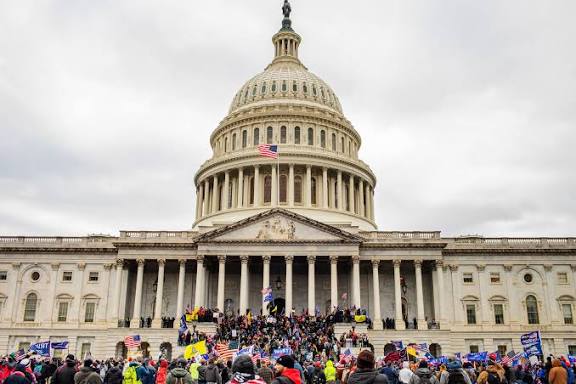
Denver’s city government posted an editorial on its official website this week calling the federal immigration crackdown “a disaster.”. Today we will discuss about Capitol Pressure Rising: Federal Crackdown or State Pushback
Capitol Pressure Rising: Federal Crackdown or State Pushback
In 2025, the heart of American democracy — Washington, D.C. — has become a testbed for a dramatic transformation: the increasing federalization of law enforcement, aggressive prosecutions, and expanded use of military and paramilitary resources to enforce public order. At the same time, many states and local jurisdictions are pushing back — creating a clash between centralized power and decentralized resistance. The result is mounting “capitol pressure” — not just physically in the streets of D.C., but institutionally across the federal-state divide, threatening long-held norms of governance, civil liberties, and democratic representation.
On one side: a federal government asserting sweeping authority under the guise of crime prevention and national security. On the other: states, cities, civil-rights groups, and ordinary citizens raising alarms over civil liberties, local autonomy, and constitutional balance.
This article explores recent developments, the arguments on both sides, key flashpoints, and what might lie ahead.
The Federal Crackdown: What Has Changed in D.C.
Federalization of Policing — A Historic Shift
On August 11, 2025, the federal government invoked a rarely used authority to temporarily take control of law enforcement in Washington, D.C. Under the relevant statute — the home-rule law that normally gives local authorities control over policing — the federal government assumed control of the city’s police force and deployed troops from the D.C. National Guard.
The justification offered by the administration: a rising crime wave, “gang violence,” homelessness, and general “lawlessness.” Officials declared a so-called “crime emergency,” framing the takeover as necessary to “take back” the capital.
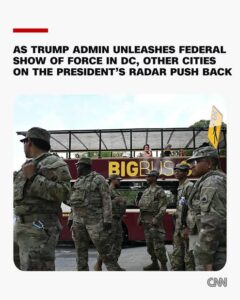
Shortly thereafter, the federal government escalated measures: hundreds of agents from multiple agencies — including the FBI and other federal law enforcement units — were deployed; orders came down for more aggressive criminal prosecutions. Prosecutors were instructed “to charge the highest crime supported by law and evidence.”
Moreover, the deployment of National Guard troops was later authorized to include armed personnel, a significant intensification that blurred traditional lines between civilian law enforcement and militarized policing.
These steps mark one of the most dramatic expansions of federal domestic authority in modern U.S. history. What was once unthinkable — federal takeover of a city’s police — is now a reality.
The Rationale — Crime, Control, and Power
The administration casts these moves as necessary to restore order and safety. Officials argue that only a unified, robust federal response can handle crime, drug trafficking, homelessness, and other social issues that local governments have allegedly failed to address. In the administration’s narrative, Washington, D.C., had become a “death trap” of violence and disorder — and drastic intervention was justified.
But while federal officials stress security and public safety, critics call the move political. They argue that the takeover is less about solving crime and more about consolidating power — centralizing control over a historically symbolic capital city at the heart of American government.
Pushback: Local Resistance, States’ Reactions, and Constitutional Concerns
Local Outrage and Civil Discontent
The response from D.C. residents, civil-rights groups, and many political observers has been swift and vociferous. A large majority of D.C. residents oppose the federal takeover of policing — many “strongly.”
Critics point out that despite the crackdown, D.C. was already seeing crime rates at a 30-year low, raising serious doubts about the narrative of rampant lawlessness that justified the takeover.
Opponents also warn about a lack of accountability and transparency: with federal agents and troops patrolling the streets, detained individuals often face federal charges — harsher sentences, fewer protections. Civil-rights advocates caution that this could disproportionately affect marginalized communities and erode constitutional protections.
Beyond legal concerns, many locals view the presence of armed troops as intimidating — an affront to the idea that D.C. is a civilian city, not a militarized fortress. Protest signs reading “Defend the Constitution from all enemies — foreign and domestic” reflect deep unease about what many perceive as creeping authoritarianism.
States and Localities: A Warning to the Rest
The takeover of D.C. has reverberated far beyond the federal district — many state governments, especially those led by or sympathetic to the opposition, are watching closely. For them, D.C.’s experience is a cautionary tale of federal overreach.
Some states appear to be preparing subtle “pushback insurance,” by reasserting local control over policing, emphasizing state sovereignty, or signaling resistance to any similar takeover efforts. Others — especially blue states — see in D.C.’s takeover a potential threat to their own home-rule rights and local governance structures.
Moreover, activists and civil-rights groups around the country warn that what happens in D.C. may become a template: a testing ground for nationwide expansion of federal policing powers — something that could reshape the federal-state balance for decades.
Broader Context: Why the Federal Push?
Power Consolidation under Executive Ambitions
The transformation in D.C. is not happening in isolation. In 2025, the federal government under Donald J. Trump has taken multiple steps that critics say concentrate power within the executive branch — from restructuring funding for states, slashing or threatening grants to local social and community programs, to reshuffling federal agencies.
By using law enforcement and military resources domestically — and doing so under the banner of public safety — the administration is setting a new precedent: the idea that security concerns can justify extraordinary federal intervention even in places that have long been under local governance.
For supporters, this represents a decisive shift away from “failed liberal cities” and ineffective local governance — towards centralized power that, in their view, can deliver order and accountability. For critics, it harks back to authoritarian centralization, undermining democratic checks and balances.
A Changing Electoral and Political Landscape
Beyond immediate security measures, the growing federal pressure could also play into longer-term political and electoral agendas. With the reconfiguration of enforcement, redistricting fights, and partisan divides over federal vs state authority, shifts in policing and governance may influence who votes, how districts are drawn, and how representation is shaped.
Academic research warns that recent redistricting and electoral map changes across states — compounded with underlying geographic polarization — have already reduced competitive districts and increased partisan bias, shrinking opportunities for fair representation.
In this environment, increased federal presence and influence over state and local matters could tilt the balance of political power further — making local pushback not just a matter of policing, but of democracy itself.
Key Flashpoints — Why So Much Conflict
1. Legitimacy and Constitutional Boundaries
At the heart of the dispute lies a constitutional question: how far can the federal government go in overriding state or local control?
The federal takeover of D.C.’s police under emergency law, the deployment of armed troops, and aggressive federal prosecution strategies mark a radical shift in domestic governance. For many critics, this undermines centuries-old principles of separation of powers, local governance, and limited federalism.
They argue: once you grant the federal executive the power to override local control on grounds as vague as “crime emergency,” the door opens for further expansion — potentially in any state or city that claims disorder. This centralization could marginalize state and local authority, weaken civil liberties, and create a foundation for authoritarian governance.
2. Civil Rights and Social Justice Concerns
The aggressive enforcement tactics raise serious concerns about civil rights: disproportionate targeting of marginalized communities; risk of over-criminalization; militarization of civilian life; erosion of privacy, protest rights, and local self-governance.
Many residents of D.C. already feel their city is being policed by outsiders — federal agents and troops — with little accountability. For them, it is not just about crime: it is about dignity, representation, and democratic inclusion.
3. Political Weaponization of Law Enforcement
In broader political terms, the aggressive federal posture can be used as a tool to influence electoral and legislative outcomes. By controlling enforcement, prosecutions, and public order, federal authorities gain power that could shape public sentiment, affect voter turnout — especially among vulnerable or marginalized communities — and even influence the outcome of future elections or redistricting efforts.
Such conflation of law enforcement and political aims undermines trust in institutions, risks deepening polarization, and may erode the legitimacy of both local and federal governance over time.
Pushback Strategies: What States, Cities, and Citizens Are Doing
Legal Challenges and Institutional Resistance
Several lawsuits and formal objections have been filed against the federal takeover of D.C. policing. Legal experts warn that deploying armed troops for domestic policing may run afoul of laws designed to restrict military involvement in civilian law enforcement — and may violate constitutionally protected rights to local self-governance and due process.
Some local jurisdictions and states are doubling down on home-rule protections, bolstering civil-liberty oversight, and strengthening legal frameworks to prevent similar federal takeovers.
Public Mobilization, Protest, and Political Pressure
Citizens have not remained silent. Across D.C. and other urban centers, protests and civil-rights rallies have surged. Many residents have marched, held public forums, and demanded transparency, accountability, and adherence to constitutional norms.
Advocacy groups and local organizations are working to educate communities about their rights, monitor arrest data, track prosecutions, and push for oversight of federal actions.
Reasserting Federalism and Local Control
In state capitals across the country, lawmakers and civil-rights leaders are closely watching Washington’s trajectory. Some are discussing legislation to reinforce state autonomy, restrict federal overreach, or prevent similar federal takeovers. Others are reconsidering the balance between security and liberty, and how to protect local autonomy in an era of expanding federal power.
The pushback is not only reactive — it’s preventative, aiming to ensure that the D.C. crackdown does not become a blueprint for future federal interventions elsewhere.
What It Means for American Democracy
The unfolding standoff between federal authority and local — or state — autonomy in the United States is more than a policing issue. It is a test of foundational principles: federalism, separation of powers, civil liberties, democratic representation, and the balance between security and freedom.
Risk of Precedent and Power Centralization
If the federal takeover of D.C. becomes normalized, it could set a dangerous precedent. Other cities — particularly ones governed by political opposition — may find themselves vulnerable to similar interventions under the pretext of crime, immigration, or “emergency.” Over time, this could erode the structural autonomy of states and cities, consolidating power in the federal executive branch.
That concentration of power threatens to weaken institutional checks and balances, reduce local accountability, and undermine the pluralistic, decentralized character of American democracy.
Undermining Civil Liberties and Social Trust
Militarized policing, aggressive federal prosecutions, and suppression of dissent could erode public trust in government. Marginalized communities — often already over-policed — may suffer disproportionately. The line between legitimate law enforcement and political repression becomes dangerously thin.
Moreover, when civic order is enforced through force rather than community-based solutions, issues like homelessness, poverty, mental health, and social inequality become securitized, criminalized — rather than addressed through democratic governance, social programs, or community engagement.
A Battleground for Governance Values
What is playing out in Washington may echo for decades: a debate between two visions of governance. One seeks strong, centralized power under the pretext of efficiency and security. The other defends decentralization, local self-determination, civil liberties, and pluralism.
At stake is not just how cities are policed — but what kind of democracy America will be. Whether this moment becomes a turning point or a temporary clash depends heavily on how citizens, states, courts, and institutions respond.
Conclusion — The Crossroads of Capitol Pressure
“Capitol pressure rising” captures more than the physical presence of troops on the streets of Washington, D.C. It signifies mounting institutional strain — between federal ambition and local autonomy; between the promise of safety and the protection of rights; between expedient enforcement and constitutional governance.
The federal crackdown may seem to offer order and control. But the rising tide of opposition — from courts, communities, states, and activists — suggests that many Americans view it as a threat to the foundational principles of democratic self-governance.
As states watch, citizens react, and courts adjudicate, the coming months will likely determine whether this is a temporary experiment — or the beginning of a new chapter in American political life.
The test will not be whether law enforcement succeeds in controlling streets — but whether democracy survives its crackdown.
Key Questions Ahead
Will courts block or limit further federalization of law enforcement beyond Washington, D.C.?
Will states unify to resist similar takeovers — legally and politically?
Can local communities rebuild trust in policing and public safety without resorting to militarized enforcement?
Will federal power continue to expand under security pretexts — and if so, to what end?
Ultimately: can a balance be struck between public safety and democratic governance in a polarized era?
How useful was this post?
Click on a star to rate it!
Average rating 0 / 5. Vote count: 0
No votes so far! Be the first to rate this post.
About the Author

usa5911.com
Administrator
Hi, I’m Gurdeep Singh, a professional content writer from India with over 3 years of experience in the field. I specialize in covering U.S. politics, delivering timely and engaging content tailored specifically for an American audience. Along with my dedicated team, we track and report on all the latest political trends, news, and in-depth analysis shaping the United States today. Our goal is to provide clear, factual, and compelling content that keeps readers informed and engaged with the ever-changing political landscape.