Canada-China shock deal : tariffs slashed, markets jump, global shift
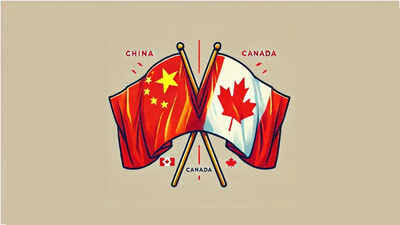
Breaking ties with the United States, Canada has agreed to cut 100% of its tariffs on Chinese electric cars in exchange for lower tariffs on Canadian cars. Today we will discuss about Canada-China shock deal : tariffs slashed, markets jump, global shift
Canada-China shock deal : tariffs slashed, markets jump, global shift
In a move that has stunned global markets and reshaped international trade expectations, Canada and China have reached a landmark trade agreement that sharply reduces tariffs, revives stalled exports, and signals a major geopolitical realignment. The surprise deal, announced after high-level negotiations in Beijing, marks the most dramatic reset in Canada-China relations in more than a decade.
Long defined by diplomatic tensions, trade retaliation, and strategic mistrust, the relationship between Ottawa and Beijing is now entering a new phase driven by economic necessity and global realignment. With tariffs slashed on electric vehicles and agricultural goods, stock markets surging, and supply chains recalibrating, the “Canada-China Shock Deal” is already being described as one of the most consequential trade breakthroughs of the decade.
This agreement not only revives billions of dollars in frozen trade but also reflects a broader global shift away from rigid bloc politics toward pragmatic economic partnerships.
From Diplomatic Freeze to Economic Thaw
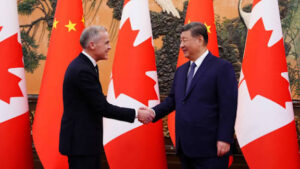
For years, Canada-China relations were burdened by political disputes, security concerns, and retaliatory trade measures. The arrest of a Chinese tech executive in Canada in 2018, followed by the detention of Canadian citizens in China, triggered a prolonged diplomatic chill. Trade soon became a weapon in this standoff.
In 2024, Canada imposed steep tariffs—some exceeding 100 percent—on Chinese electric vehicles and green-tech imports, citing unfair subsidies and national industry protection. China responded by slapping heavy duties on Canadian agricultural exports, particularly canola, peas, seafood, and pork. The fallout devastated Canadian farmers and exporters, cutting them off from one of the world’s largest food markets.
By 2025, billions of dollars in bilateral trade were effectively frozen, supply chains were disrupted, and businesses on both sides were calling for a reset.
Inside the Shock Deal
The new Canada-China agreement represents a strategic compromise with three central pillars:
1. Electric Vehicle Tariff Cuts
Canada has agreed to slash tariffs on Chinese electric vehicles from punitive triple-digit levels to a modest single-digit rate under a quota system. This reopens the Canadian market to affordable Chinese EVs and green-technology products, dramatically lowering costs for consumers and accelerating Canada’s clean-energy transition.
The policy also encourages Chinese automakers and battery manufacturers to consider direct investment in Canadian production facilities, potentially creating thousands of jobs and strengthening North America’s EV supply chain.
2. Agricultural Export Revival
In return, China has removed or sharply reduced retaliatory tariffs on key Canadian agricultural products, including:
Canola seed and oil
Peas and lentils
Lobster, crab, and seafood
Pork and processed foods
Tariffs that once exceeded 80 percent have been cut to commercially viable levels, instantly restoring access to a market worth over $3 billion annually for Canadian farmers.
3. Strategic Dialogue Restart
The agreement also revives high-level economic and diplomatic dialogue mechanisms, suspended for years. This includes cooperation in:
Energy security
Climate technology
Financial services
Education and research exchange
Markets React: A Global Rally
Financial markets responded instantly to the announcement.
The Canadian stock market surged, led by agricultural exporters, logistics firms, and green-energy stocks.
Commodity prices stabilized as traders priced in renewed demand from China.
The Canadian dollar strengthened on optimism over export recovery.
Asian markets rallied on expectations of improved North American-China trade flows.
Investors interpreted the deal as a signal that geopolitical risk premiums may ease and that global trade fragmentation could slow.
Domestic Impact in Canada
Farmers and Exporters
Canadian farmers are among the biggest winners. Canola growers, who lost billions during the tariff war, now regain access to China’s massive edible oil market. Seafood exporters anticipate a revival of premium exports to Chinese cities, boosting coastal economies.
Auto and Clean-Tech Industry
The reopening of the EV market introduces competition but also opportunity. While domestic manufacturers face pressure from lower-priced Chinese models, the deal encourages joint ventures, battery plants, and technology partnerships that could transform Canada into a North American green-manufacturing hub.
Political Debate
The agreement has sparked debate in Ottawa:
Supporters call it a pragmatic economic reset that protects jobs and growth.
Critics warn of over-reliance on China and potential national security risks.
Labor unions demand safeguards to protect domestic manufacturing.
Global Geopolitical Significance
A Shift Away from Trade Blocs
The deal signals a subtle but important shift in global alignment. Canada, traditionally anchored tightly to U.S. trade policy, has demonstrated a willingness to pursue independent economic diplomacy when national interests are at stake.
This could inspire other mid-sized economies to diversify partnerships rather than choosing sides in great-power rivalries.
Implications for the United States
Washington is watching closely. While the agreement does not violate North American trade rules, it highlights growing divergence in how allies manage China. The move may complicate coordinated tariff strategies and reshape future trade negotiations.
China’s Strategic Win
For Beijing, the deal breaks diplomatic isolation efforts and demonstrates its ability to re-engage advanced economies through economic incentives. It also strengthens China’s influence in global clean-energy supply chains.
A New Trade Architecture Emerging
The Canada-China shock deal fits into a broader global pattern:
Nations are prioritizing supply-chain security over ideology.
Climate transition is reshaping trade alliances.
Agricultural security is becoming a strategic asset.
Multipolar trade networks are replacing rigid Cold War-style blocs.
The agreement reflects a world where economic pragmatism increasingly outweighs political confrontation.
Risks and Challenges Ahead
Despite optimism, significant risks remain:
Implementation Uncertainty – Quotas, compliance rules, and verification mechanisms must function smoothly.
Political Volatility – Future leadership changes in either country could reverse course.
Security Concerns – Technology transfer and data governance will require strict safeguards.
U.S. Reaction – Any shift in North American trade dynamics could provoke policy recalibration.
Conclusion: A Defining Moment in Global Trade
The Canada-China shock deal is more than a tariff adjustment—it is a signal of a changing world order. By choosing negotiation over confrontation, market access over isolation, and strategic balance over rigid alignment, both countries have redrawn the map of global trade diplomacy.
With tariffs slashed, markets energized, and supply chains realigning, this agreement may be remembered as the moment when a new era of pragmatic globalization began to replace the fractured trade politics of the early 2020s.
In a world of rising uncertainty, the Canada-China reset stands as proof that economic interdependence, when carefully managed, still has the power to reshape geopolitics.
How useful was this post?
Click on a star to rate it!
Average rating 0 / 5. Vote count: 0
No votes so far! Be the first to rate this post.
About the Author

usa5911.com
Administrator
Hi, I’m Gurdeep Singh, a professional content writer from India with over 3 years of experience in the field. I specialize in covering U.S. politics, delivering timely and engaging content tailored specifically for an American audience. Along with my dedicated team, we track and report on all the latest political trends, news, and in-depth analysis shaping the United States today. Our goal is to provide clear, factual, and compelling content that keeps readers informed and engaged with the ever-changing political landscape.