Budget Talks Collapse: Federal Programs Face Immediate Shutdown Risk
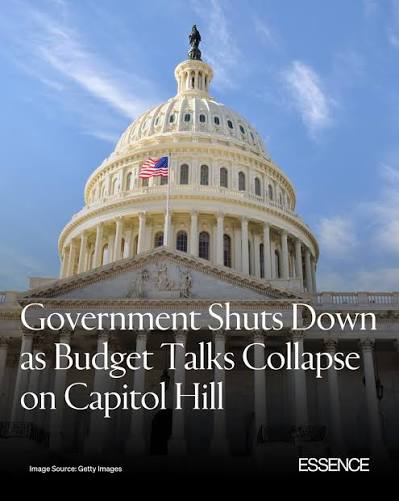
Buoyed by record tariff revenues and changes in benefit payments, the US started the fiscal year in October with a deficit of $284 billion. Today we will discuss about Budget Talks Collapse: Federal Programs Face Immediate Shutdown Risk
Budget Talks Collapse: Federal Programs Face Immediate Shutdown Risk
At the core of the current crisis is a sharp divide over spending priorities — particularly around healthcare subsidies and long-term entitlement structures. Lawmakers on both sides have taken firm positions, seeing the budget as a battleground for larger ideological goals rather than a routine fiscal assignment. With neither side willing to make concessions, negotiations ground to a halt.
This year’s negotiations are different because agencies were unusually instructed to prepare not only for temporary furloughs but also for potential permanent layoffs. This unprecedented directive signals that the shutdown may not just be a temporary inconvenience but could lead to lasting cuts in government capacity.
How a Federal Shutdown Works
A government shutdown occurs when Congress fails to pass any form of budget legislation before funding expires. Without legal authority to spend, federal agencies must suspend most of their operations. Essential functions — such as military operations, law enforcement, and certain emergency services — continue, but millions of federal workers fall into two categories:
1. “Essential” employees
They must continue working, often without pay until funding is restored.
2. “Nonessential” employees
These workers are furloughed, meaning they are sent home without pay until Congress reaches a funding agreement.
Contractors supporting federal operations face an even harsher reality: unlike federal employees, many contract workers do not receive back pay after a shutdown ends, meaning lost income is often permanent.
Immediate Effects of a Shutdown
A government shutdown impacts far more than federal offices. Within hours to days, ripple effects are felt across industries, communities, and households.
Federal Worker Pay Freezes
Hundreds of thousands of federal employees may miss paychecks. For many living paycheck-to-paycheck, this creates immediate financial distress. Rent, utilities, childcare, and credit card bills do not pause just because the government does.
Federal Contractors Lose Income
Contract employees in sectors such as maintenance, cybersecurity, construction, call centers, research, and administrative support suffer sudden income loss. Most do not receive retroactive pay even when the shutdown ends.
Suspension of Federal Programs
Many federal programs halt or scale back dramatically, including:
Small business loans
Federal research grants
Environmental inspections
Food and safety inspections
National park operations
Passport and visa processing
Housing and agriculture programs
Grants for education and community programs
Though essential payments like Social Security and Medicare usually continue, the offices that support them operate with reduced staff, which can lead to delays, processing errors, or longer wait times for assistance.
Travel and Transportation Disruptions
Airports may face shortages in TSA and air traffic control personnel, leading to slower security lines and potential flight delays. Transportation-related regulatory activities may also be suspended.
Impact on States and Local Communities
Regions with high concentrations of federal workers or contractors — often around military bases, research labs, and federal hubs — are especially vulnerable. Local businesses lose revenue quickly when consumers pull back on spending.
The Economic Impact
A government shutdown does not only interrupt government operations; it disrupts the economy at every level. Economists estimate that each week of shutdown can drain billions from national economic output. The effects cascade through nearly every sector of society.
Lost Wages and Spending
When workers miss paychecks, consumer spending drops. Restaurants, grocery stores, childcare providers, small retailers, and services in federal-heavy regions feel the immediate decline.
Delayed Investments
Many businesses rely on federal approvals, permits, or contracts:
Construction projects stall
Technology development pauses
Defense and aerospace projects halt
Pharma and biotech research stops
Environmental and energy projects freeze
Without agency staff to process approvals or monitor compliance, private-sector projects become bottlenecked.
Market Uncertainty
Financial markets react to political instability. Investor confidence declines, borrowing costs rise, and volatility increases. Businesses may delay hiring or expansion until fiscal clarity returns.
Long-Term GDP Drag
History shows that even temporary shutdowns cause permanent economic losses. Past shutdowns delayed billions in output that was never recovered because cancelled projects, delayed research, and lost worker productivity never fully resumed.
Impact on Public Trust and Workforce Morale
Beyond the economic damage, shutdowns weaken public trust in government and erode morale among civil servants.
Loss of Institutional Talent
Repeated shutdown threats discourage talented professionals from pursuing federal careers. Long-time experts may retire early or leave for private-sector opportunities. As morale erodes, the government risks losing the institutional knowledge needed to manage complex programs and respond to crises.
Reduced Public Confidence
Shutdowns reinforce the perception that government is incapable of fulfilling basic responsibilities. This loss of confidence affects everything from voter engagement to social cooperation and acceptance of public policy.
National and Global Implications
The United States is deeply connected to the global economy. Political instability in Washington often triggers ripple effects abroad.
Global Market Reactions
A shutdown signals fiscal dysfunction, causing global investors to pull back. Uncertainty over U.S. economic policy can lead to:
Higher global borrowing costs
Currency volatility
Slower international investment
Reduced confidence in U.S. creditworthiness
Supply Chain Delays
Many global industries depend on U.S. research, regulatory approvals, and trade processing. A shutdown interrupts these functions, which can slow down international manufacturing and logistics.
Impact on International Agreements
Diplomatic efforts, international negotiations, and cooperative research projects may be put on hold as agencies shift to “minimum operations.”
Why This Shutdown Threat Is More Serious
Several factors make the current shutdown risk uniquely dangerous:
1. Permanent Layoff Planning
For the first time in decades, agencies have been asked to prepare for long-term workforce reductions rather than temporary furloughs. This indicates a shift toward structural cutbacks, not a temporary pause.
2. Fragile Economic Conditions
High interest rates, inflationary pressure, and cautious investment mean the U.S. economy is less resilient than in past shutdowns. A disruption now could hit harder and last longer.
3. Essential Programs Under Strain
Many safety-net and community programs are already stretched thin. Disruption or delays in funding could create humanitarian challenges in food security, healthcare access, and emergency assistance.
4. Larger Ideological Divide
This shutdown is rooted in deep disagreement over healthcare and entitlement spending — issues less easily resolved through simple compromise.
Groups Most Affected by a Shutdown
1. Federal Workers and Contractors
The most immediate victims are those who rely on government paychecks. Many will be unable to cover basic expenses if the shutdown lasts more than a week.
2. Low-Income Households
Households relying on federal benefits may face delays in receiving assistance, potentially affecting food access, housing stability, and healthcare.
3. Small Businesses
Companies depending on federal customers, grants, and loans may lose revenue or face delayed payments.
4. Students and Researchers
University grants, scientific studies, and educational programs funded by federal agencies may be suspended.
5. Local Communities
Areas with military bases, federal labs, or government offices will see large reductions in spending almost immediately.
Who Is Least Affected?
While no one is fully insulated, some groups experience fewer direct consequences:
Households with stable private-sector income
Large corporations with diversified funding sources
Retirees receiving direct-deposit Social Security checks
Individuals with strong savings or private insurance
Still, even these groups may feel indirect effects from a slowing economy.
Long-Term Consequences After the Shutdown Ends
A shutdown’s costs do not disappear once funding is restored. Long-term consequences often include:
Permanent Loss of Economic Output
Projects delayed or cancelled may never resume. Research opportunities missed can set back advancements in science, technology, and medicine.
Weakened Government Capacity
When skilled workers leave and agencies operate on skeleton crews, it can take years for federal programs to recover.
Increased Risk of Future Shutdowns
Once shutdowns become normalized as political tactics, they may become recurring events, creating long-term instability.
Public Distrust
Repeated federal dysfunction erodes faith in institutions. Once trust is lost, it is difficult to rebuild.
How the Deadlock Could Be Broken
There are several ways the government could avoid or end a shutdown:
1. Passing a Short-Term Funding Bill
A continuing resolution (CR) would temporarily extend existing funding while negotiations continue. This is the most common solution.
2. Reaching a Bipartisan Compromise
Lawmakers may concede on certain spending priorities or agree to defer contentious issues to later negotiations.
3. Introducing Budget Process Reforms
Many experts advocate structural reforms such as:
Automatic continuing resolutions
Multi-year budgeting
Emergency funding reserves for essential services
Depoliticizing key social programs
These changes could prevent future shutdowns and stabilize federal operations.
Conclusion: A Shutdown Is More Than a Political Event — It’s a National Risk
The collapse of budget negotiations presents an immediate and dangerous threat. A government shutdown would not simply inconvenience federal employees — it would undermine critical services, destabilize the economy, weaken global confidence, and jeopardize the well-being of millions of Americans.
The crisis unfolding is not just about numbers on a spreadsheet. It is about:
Families at risk of losing income
Businesses stuck waiting on approvals
Vulnerable households facing delayed assistance
National security and infrastructure projects stalling
Global markets responding to uncertainty
Public trust deteriorating
Lawmakers must move beyond partisan objectives and recognize the far-reaching consequences of inaction. Until a solution is reached, the risk remains immediate: America stands on the brink of a shutdown that could reshape the economy, government capacity, and citizen confidence for years to come.
How useful was this post?
Click on a star to rate it!
Average rating 0 / 5. Vote count: 0
No votes so far! Be the first to rate this post.
About the Author

usa5911.com
Administrator
Hi, I’m Gurdeep Singh, a professional content writer from India with over 3 years of experience in the field. I specialize in covering U.S. politics, delivering timely and engaging content tailored specifically for an American audience. Along with my dedicated team, we track and report on all the latest political trends, news, and in-depth analysis shaping the United States today. Our goal is to provide clear, factual, and compelling content that keeps readers informed and engaged with the ever-changing political landscape.