Border Surge: Panic Rising or Political Play
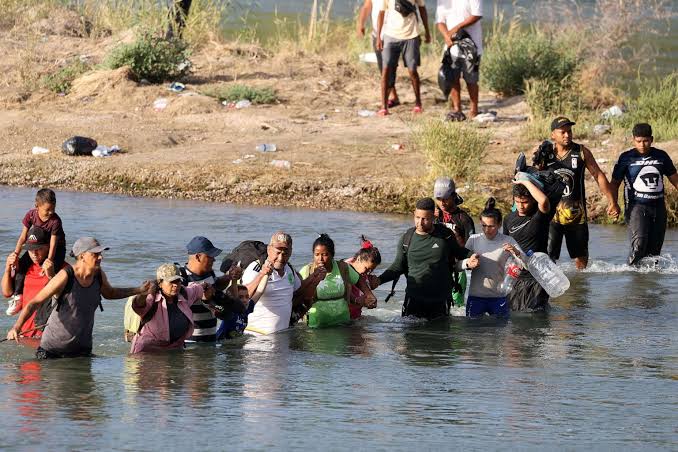
The characterization of “border surge” includes both an increase in migration in the real world and the strategic use of these events in political discourse. Today we will discuss about Border Surge: Panic Rising or Political Play
Border Surge: Panic Rising or Political Play
The phrase “border surge” has become one of the most frequently used terms in recent discussions about national security, particularly in the context of India’s western and northern borders. Reports of drones infiltrating from across borders, increased seizures of narcotics and weapons, damage to fencing during floods, and heightened militant activity have created a perception of a rapidly escalating crisis.
But is the surge real? Is public panic justified? Or is the narrative being amplified for political benefit?
This article takes a deep dive into the complexities of the border surge — the security realities, the psychological impact, and the political narratives that often accompany such crises. We analyze whether the alarm is rooted in fact or driven by strategic agenda-setting and public influence.
Understanding the Border Surge — What Is Actually Happening?
1. Evolution of Infiltration Tactics
For decades, infiltration across borders primarily involved foot soldiers, smugglers, or individuals attempting illegal crossings. This landscape has changed dramatically.
Drones are now the new frontier of cross-border crime.
Unmanned aerial vehicles carrying drugs, weapons, explosives, and ammunition have increasingly crossed into Indian territory. Security officials report dozens of drone sightings each month, many of which are shot down or intercepted. The shift to drones reflects a new phase of covert operations that are faster, harder to detect, and risk-free for perpetrators sitting across the border.
Drone payloads often include:
High-calibre rifles
Pistol kits
Explosives
Bundles of heroin or synthetic drugs
Communication devices
The surge in interceptions is a strong indicator that smuggling networks have embraced drones as a primary tool.
2. Infrastructure Vulnerability and Climate-Driven Damage
Another factor fueling the “surge” is the vulnerability of border infrastructure. Heavy floods in regions like Punjab and Jammu have caused widespread damage to fencing, outposts, and surveillance towers. In some areas, over 100 km of fencing has been compromised, leaving gaps that smugglers and militants may exploit.
Seasonal changes also intensify vulnerability:
Winter snow can damage fencing across high-altitude areas.
Monsoon floods weaken foundations of border pillars and surveillance posts.
Landslides can obstruct patrol routes in mountainous territories.
Even short-term damage can create windows of opportunity for illegal crossings or smuggling operations.
3. Rising Militant Activity and Terror Concerns
Reports of militant infiltration — particularly in Jammu and Kashmir — have further heightened worries. Incidents involving attacks on civilians, police personnel, or tourists have revived concerns that infiltration could be part of a larger destabilization strategy.
Security agencies argue that many infiltrators come trained, equipped, and mission-ready, indicating coordination from across the border rather than spontaneous attempts.
Even if the total number of infiltration attempts remains limited, their lethality and sophistication have increased, making each incident more consequential.
4. Crackdown by Security Forces
In response, the Border Security Force (BSF), state police forces, and other agencies have intensified countermeasures:
Deployment of anti-drone systems and long-range radars
Installation of anti-tunnelling sensors in vulnerable zones
Increased night patrols and surveillance
Use of thermal cameras, motion sensors, and integrated command centers
Establishment of specialized training units for drone warfare
This proactive approach suggests that agencies treat the surge as genuine and evolving.
Why the Border Surge Feels Alarming — A Look at the Public Psychology
1. Media Amplification and Sensationalism
Every drone interception, every seizure of drugs, and every infiltration attempt becomes headline news. While public awareness is vital, constant breaking news creates a sense of ongoing crisis.
Even when security forces successfully stop infiltrations, the very reporting of these events fuels the perception that the border is under continuous attack.
What amplifies panic further:
Repeated visuals of weapons, drones, explosives
Headlines using phrases like “major threat,” “large-scale infiltration,” “border on high alert”
Viral videos and social media reels showing drone shoot-downs
This leads to an atmosphere where isolated incidents feel like part of a huge, unstoppable wave.
2. Fear Among Border Communities
For residents living close to the border, the surge is not a media story — it’s their daily reality. Villagers often report:
Fear of drone drops near fields or homes
Uncertainty during nighttime due to unfamiliar noises
Precautionary harvesting and storing of produce in wartime-style preparedness
Occasional evacuation due to cross-border firing
Even the sight of increased patrols, search operations, or military convoys can heighten anxiety.
3. The “Othering” Effect
Border tensions often produce narratives centered on external enemies. This may inadvertently fuel mistrust and stereotyping. Migrants, refugees, or communities perceived as “outsiders” may face unwanted suspicion or vigilante behaviour.
Such polarisation can destabilize social harmony, leading to communal tension and paranoia far removed from the actual border belt.
4. Psychological Fatigue and Hyper-vigilance
Long-term exposure to a threat — even a perceived threat — creates stress, fatigue, and a sense of instability. Families living near the border often describe:
Sleep disruption
Anxiety during festivals, public gatherings, or late-night events
Fear for children’s safety
Economic stress due to reduced agricultural activity
This emotional toll is seldom discussed, but it shapes how the public interprets the “surge.”
Is the Border Surge Being Used as a Political Tool?
1. Security as a Powerful Political Narrative
Elections — whether local, state, or national — often feature national security as a dominant theme. In this context, the border surge narrative can be politically useful.
It allows political actors to:
Present themselves as protectors of national security
Justify large defence expenditures
Promote strong or hardline policies
Rally nationalist sentiment
Deflect focus from domestic issues like inflation or unemployment
Thus, while the threat may be real, the way it is framed may serve political interests.
2. The Risk of Exaggeration or Selective Highlighting
Seizure statistics, drone counts, and infiltration numbers can be interpreted in multiple ways. For example:
A rise in seizures might reflect improved enforcement — not increased smuggling.
More drones intercepted could mean better detection, not necessarily more attempts.
The number of incidents reported publicly may omit smaller episodes to create a curated narrative.
When numbers are used selectively, they may inflate the perception of crisis beyond the actual scale.
3. Media as an Extension of Political Messaging
Media outlets often align with specific political leanings. As a result, different narratives emerge:
Some exaggerate the threat to support stronger militaristic policies.
Others downplay it to criticize government performance.
This politicization makes it difficult for citizens to discern facts from spin.
4. Panic as a Political Force
Public fear can be a potent tool. When voters perceive a national security threat:
They tend to support stronger, more authoritative leadership.
Opposition voices may be sidelined.
Civil liberties may be accepted as trade-offs for safety.
Surveillance measures become normalized.
This dynamic can shift public opinion dramatically — sometimes without a real security escalation.
Balancing Reality and Perception — What’s True and What’s Magnified?
The Border Surge is Real When Considering:
Increase in drone activity
Growth in narco-terror links
Damage to border infrastructure due to floods
Renewed militant infiltration attempts
Larger quantities of weapons and narcotics intercepted
These are concrete developments supported by on-ground evidence from authorities and security personnel.
But the Border Surge is Amplified When Considering:
Media dramatization
Selective political narratives
Conflation of increased detection with increased incidents
Public panic reinforced by speculation
Lack of context on long-term trends
The fear often exceeds the statistical reality.
Why an Overreaction Can Be Dangerous
1. Civil Liberties at Risk
Escalated surveillance, curfews, and identity checks may expand beyond the border belt into everyday life.
If this becomes normalized, it weakens personal freedoms.
2. Increased Communal Tensions
Associating outsiders or minorities with infiltration or terrorism risks social cohesion.
Communities may face unwarranted suspicion or harassment simply due to political rhetoric.
3. Neglect of Socio-Economic Issues
Smuggling networks often thrive due to poverty or unemployment among locals.
Ignoring these root causes means the problem persists despite heavy policing.
4. Long-Term Militarization
Constant deployment of forces and high-alert operations may militarize civilian zones, affecting daily life, tourism, agriculture, and trade.
The Way Forward — A Balanced Strategy
1. Strengthen Technology-Driven Border Security
Anti-drone systems
High-resolution night-vision systems
Smart fencing
Remote surveillance towers
Integrated command centers
AI-assisted threat detection
These reduce human risk and increase the precision of security operations.
2. Rebuild and Reinforce Climate-Resilient Infrastructure
Climate-proof fencing, better drainage, and elevated outposts minimize seasonal vulnerabilities.
3. Support Border Communities
Better schools, hospitals, roads
Agricultural support schemes
Employment opportunities
Financial assistance during border closures
Empowered communities are less susceptible to exploitation by smuggling networks.
4. Transparent Data Sharing
Governments should publish regular reports on:
Drone interceptions
Infiltration attempts
Seizures
Arrests
Surveillance improvements
Clear data prevents misinformation and panic.
5. Diplomacy and Cross-Border Cooperation
Where possible, diplomatic engagement can help reduce smuggling and infiltration by addressing root causes on both sides.
Conclusion — Panic or Politics? Or a Genuine Wake-Up Call?
The border surge is not a myth — there is an increase in drone-based smuggling, more sophisticated infiltration attempts, and vulnerabilities created by climate-driven infrastructure damage.
But the panic surrounding the surge is amplified by media cycles and political framing.
The truth lies somewhere in between:
There is a real threat — but not always at the apocalyptic scale portrayed.
There is political spin — but not enough to dismiss genuine security concerns.
This moment calls not for panic or polarization, but for sober assessment, technological modernization, community empowerment, and transparent governance.
Handled wisely, the border surge can be a wake-up call that strengthens national security without sacrificing social cohesion or civil liberties.
Handled poorly, it becomes a stage for fear politics and polarization.
How useful was this post?
Click on a star to rate it!
Average rating 0 / 5. Vote count: 0
No votes so far! Be the first to rate this post.
About the Author

usa5911.com
Administrator
Hi, I’m Gurdeep Singh, a professional content writer from India with over 3 years of experience in the field. I specialize in covering U.S. politics, delivering timely and engaging content tailored specifically for an American audience. Along with my dedicated team, we track and report on all the latest political trends, news, and in-depth analysis shaping the United States today. Our goal is to provide clear, factual, and compelling content that keeps readers informed and engaged with the ever-changing political landscape.