Border Panic: DHS Raids Hit Cities, Leaders Demand Answers
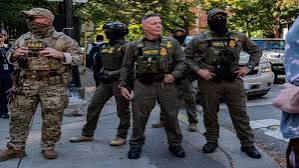
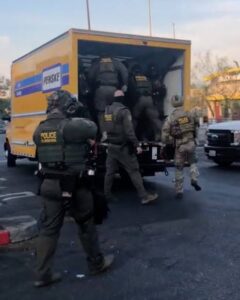
Activists took to the streets of Charlotte on Saturday after federal authorities began immigration raids. Today we will discuss about Border Panic: DHS Raids Hit Cities, Leaders Demand Answers
Border Panic: DHS Raids Hit Cities, Leaders Demand Answers
In 2025, a sweeping federal crackdown has shifted the immigration debate from border politics to a full-scale national panic. The Department of Homeland Security (DHS), along with its agencies such as Immigration and Customs Enforcement (ICE) and Customs and Border Protection (CBP), has launched aggressive multi-city raids that many describe as the most expansive interior enforcement campaign in decades.
Operations—given names like Operation Midway Blitz in Chicago and Operation Charlotte’s Web in North Carolina—have resulted in thousands of arrests, widespread fear, business disruptions, and a political firestorm.
Community leaders, elected officials, and civil-rights advocates are now demanding answers. They want to know who is being targeted, why cities were not notified, and whether these tactics align with constitutional protections and national values.
This article examines how the raids unfolded across different regions, why they’re generating unprecedented panic, and what the political, legal, and human consequences may be.
A New Era of Immigration Enforcement
From Border Operations to Inland Cities
Instead of focusing primarily on recent border crossers, DHS has expanded its reach into major metropolitan centers—many located far from the southern border. Cities with large immigrant populations have become focal points, even in states traditionally considered outside the front lines of immigration enforcement.
The federal government has justified this shift as necessary to apprehend “dangerous individuals,” particularly those with violent criminal histories. However, reports from community organizations, public defenders, and local officials suggest that the majority of those detained do not fit this description. Many have minor infractions or no criminal record at all.
What was once a border-focused policy has transformed into nationwide raids that touch every part of the immigrant experience—from home life and workplaces to schools and public transit.
Operation Midway Blitz: Chicago in Crisis
Launched in early September 2025, Operation Midway Blitz quickly became the most controversial federal immigration action in recent years. Thousands of agents, including personnel from ICE, Border Patrol, the U.S. Marshals Service, and other law enforcement agencies, converged on Chicago and its suburbs.
Targeting vs. Dragnet
Federal officials initially said the operation focused on undocumented immigrants with violent criminal backgrounds. But accounts from lawyers, local officials, and residents painted a different picture:
Individuals with decades-long residence and no criminal history were arrested.
Some detentions reportedly occurred without warrants.
People were picked up from workplaces, homes, and even parking lots.
Questions were raised about racial profiling, particularly against Latino and Black residents.
Numerous families reported that agents arrived in unmarked vans or used nighttime raids—tactics that community members say spread terror through entire neighborhoods.
Human Impact in Chicago
Community organizers documented widespread panic. Parents stopped sending children to school, workers stayed home to avoid being caught in raids, and families began signing powers of attorney to ensure someone could care for their children if they were detained.
A highly publicized incident involved the death of a man during a traffic stop linked to the operation. This escalated tensions between federal agencies and local communities, fueling protests and emergency meetings between city leaders and DHS.
Los Angeles: Intense Raids and Massive Protests
In June 2025, Los Angeles became one of the first major cities to experience the new wave of enforcement. The raids targeted areas with large Latino populations, including retail stores, commercial strips, and industrial workplaces.
Clashes and Deployment of Troops
What made Los Angeles unique was the scale of civil unrest that followed. After reports of aggressive detentions, thousands protested. Demonstrations escalated into violent clashes, prompting the federal government to deploy National Guard troops and even Marines to restore order—an extraordinary move that further inflamed public opinion.
For many Angelenos, the raids were reminiscent of earlier eras of mass deportation and racialized policing. Testimony gathered during a later congressional hearing described severe trauma: children injured during stampedes, families separated without notice, and individuals detained without access to legal representation.
Portland and the Pacific Northwest: A Hub of Resistance
In Portland, Oregon, the federal operations sparked sustained protests. Activists used tactics such as human barricades, civil-disobedience actions, and rapid-response networks to block detentions.
Immigrant-rights organizations in the region developed mobile support systems: volunteers tracked ICE movements, shared alerts via encrypted apps, and coordinated legal teams to respond whenever arrests occurred.
The Pacific Northwest became a symbol of organized, community-based resistance to immigration enforcement—showing that pushback could slow or disrupt federal operations, even if only temporarily.
Charlotte: Operation Charlotte’s Web and the Sudden Shock
In November 2025, Charlotte, North Carolina became the next high-profile target. Hundreds of federal agents poured into immigrant-dense neighborhoods, sparking confusion and fear.
Within the first 48 hours:
Dozens were detained.
Latino-owned businesses closed their doors.
Schools reported spikes in absenteeism.
Rumors spread quickly, heightening the sense of danger.
Local officials complained they were blindsided. The mayor, sheriff, and county commissioners said they received no detailed briefing from DHS. Community leaders accused the federal government of intentionally targeting a city with a growing immigrant population but limited resources to mount resistance.
Why This Is Happening: Policy, Pressure, and Politics
A Shift in Federal Strategy
The current administration broadened the legal and operational definition of “border security,” enabling DHS to treat interior cities as extensions of the border enforcement zone. This gray area has allowed federal agencies to conduct aggressive actions previously deemed outside their jurisdiction.
Enforcement Quotas
Sources within ICE have spoken about daily arrest quotas—sometimes as high as 75 arrests per field office per day. Analysts argue this creates pressure to sweep up as many people as possible, regardless of circumstances or legal status.
Targeting Sanctuary Cities
Cities that limit cooperation with federal immigration authorities have long been political targets. These new raids are widely interpreted as punitive, designed to send a message: no city is beyond the reach of federal enforcement.
Political Messaging
The operations have gained significant national attention, which critics argue is part of the strategy—using high-profile actions to demonstrate toughness on immigration and appeal to certain voter blocs.
Communities Under Siege: Fear and Collapse of Daily Life
Daily Routines Disrupted
In affected cities:
People avoid grocery stores or medical appointments.
Workers with legal status fear being questioned or detained anyway.
School attendance in immigrant-heavy districts plummets.
Street vendors and small businesses lose customers and income.
Whole neighborhoods resemble ghost towns after reports spread of agents patrolling streets.
Grassroots Resistance
Communities have responded with extraordinary creativity:
Whistle networks alert neighborhoods when federal vehicles are spotted.
Volunteer patrols document raids, record videos, and gather evidence.
Know Your Rights workshops educate immigrants on how to respond legally.
Sanctuary groups offer temporary shelter for families at risk.
In Chicago, activists even organized street-vendor “buy-outs,” where residents purchased all goods early in the day so vendors could safely return home.
Political Backlash: Leaders Demand Answers
Local Officials Push Back
Mayors, city councils, governors, and law enforcement leaders across the country are demanding transparency. Many claim federal agencies:
Did not provide notice before operations began.
Refused to share target lists or legal justifications.
Operated with minimal coordination with local police.
Detained residents, including U.S. citizens, without adequate verification.
The intergovernmental friction is reaching a breaking point. City officials say the raids undermine trust between residents and local authorities, making it harder to police neighborhoods or provide public services.
Legal Challenges
Civil-rights groups have filed lawsuits challenging:
Warrantless arrests
Racial profiling
Excessive force
Detention of U.S. citizens
Violations of due process
Several states are considering broader legal actions aimed at restricting how federal agencies conduct operations within their borders.
The Human Toll: Stories Behind the Statistics
Beyond numbers, there are heartbreaking realities:
A mother detained during a workplace sweep left her two toddlers waiting at a daycare with no one to pick them up.
A high-school student in North Carolina stopped attending classes after witnessing ICE agents arrest a neighbor outside his school bus stop.
Street vendors in Chicago described agents cornering individuals based solely on appearance.
A naturalized U.S. citizen in Charlotte said her grandchildren were terrified to leave home because “we look Spanish.”
These stories represent only a fraction of the trauma unfolding across the nation.
Why Many Are Calling This a “Border Panic”
The phrase “border panic” captures the collective anxiety produced by:
sweeping, unpredictable raids
militarized enforcement tactics
ambiguous legal standards
the collapse of daily routines
the fear of wrongful detention
widespread misinformation and community rumors
It is not simply a law-enforcement issue—it is a national psychological crisis.
What Comes Next? Possible Futures
1. Oversight and Legal Restraints
Public pressure could force Congress, courts, or watchdog agencies to impose stricter oversight on DHS.
2. Expanded Federal Enforcement
The administration may double down, making mass raids standard practice in U.S. cities.
3. Immigration Policy Reform
The crisis may reignite calls for comprehensive immigration reform, providing pathways to citizenship and modernizing enforcement practices.
4. Community-Led Protection Networks
Local solidarity networks could grow stronger, filling gaps in support and helping immigrants navigate daily risks.
Conclusion
The DHS raids of 2025 have shaken American cities and exposed deep tensions between federal power, local governance, and community rights. While the government insists the operations target dangerous offenders, thousands of residents—many with no criminal history—have been swept up in the chaos.
Communities are living in a state of fear, leaders are demanding answers, and civil-rights organizations are sounding alarms about the erosion of constitutional protections.
The “border panic” unfolding across the country is more than a debate over immigration policy—it is a test of national values. How the U.S. responds in the months ahead will shape the identity, unity, and moral direction of the nation for years to come.
How useful was this post?
Click on a star to rate it!
Average rating 0 / 5. Vote count: 0
No votes so far! Be the first to rate this post.
About the Author

usa5911.com
Administrator
Hi, I’m Gurdeep Singh, a professional content writer from India with over 3 years of experience in the field. I specialize in covering U.S. politics, delivering timely and engaging content tailored specifically for an American audience. Along with my dedicated team, we track and report on all the latest political trends, news, and in-depth analysis shaping the United States today. Our goal is to provide clear, factual, and compelling content that keeps readers informed and engaged with the ever-changing political landscape.