Bahrain : Gulf Tensions, US Navy Base, Oil Shock, Middle East Power Shift
In the ever-volatile arena of Middle Eastern geopolitics, the tiny archipelago nation of Bahrain occupies a disproportionately large strategic footprint. Nestled in the Arabian Gulf, Bahrain’s geopolitical clout stems from its pivotal location, its role as a host of US military assets, and its proximity to global energy arteries such as the Strait of Hormuz. In recent years, surging Gulf tensions, fluctuations in oil markets, and a power shift in Middle East diplomacy and security have intensified Bahrain’s relevance in global strategic calculations.
This article examines Bahrain’s complex role within the Gulf, assesses the implications of regional tensions, evaluates the presence of the US Navy base, and explores how oil shocks and shifting power balances are reshaping the Middle East landscape.
🧭 Section 1: Bahrain’s Strategic Geography
Bahrain’s location in the Persian Gulf makes it critical to global energy and security interests. The Gulf region holds an estimated nearly one-third of the world’s proven oil reserves, and its narrow waterways — especially the Strait of Hormuz — channel around 20% of global oil and gas trade daily.
This geography places Bahrain near critical chokepoints and global energy flows, attracting not only regional powers but also global great powers keen on securing shipping lanes and energy exports. As such, the country sits squarely within the nexus of regional security concerns and international strategic planning.
🚢 Section 2: The US Navy Base in Bahrain — A Strategic Anchor
Perhaps the most globally recognizable element of Bahrain’s geopolitical profile is its role as the host of the US Navy’s Fifth Fleet — one of the most significant forward-deployed naval forces in the world.
🪖 The Fifth Fleet and Its Mission
The US Navy Fifth Fleet, headquartered in Bahrain, plays a vital role in American and allied efforts to maintain stability in the Persian Gulf, the Gulf of Oman, the Arabian Sea, and adjacent waters. Its tasks include:
Protecting maritime trade routes
Ensuring freedom of navigation
Deterring hostile naval activity
Providing rapid response to military contingencies
This presence underscores the United States’ commitment to Gulf security and reflects Bahrain’s importance as a strategic hub in the region.
⛴️ Recent Developments and Strategic Questions
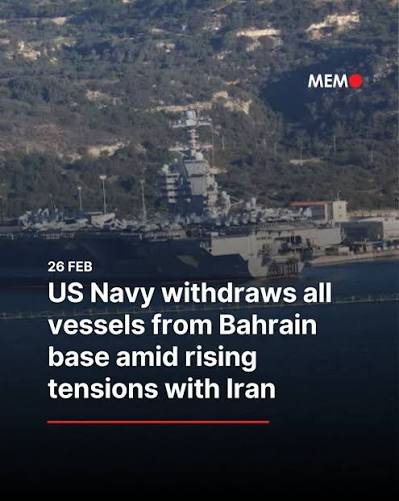
In recent months, an unanticipated movement of US naval assets from Bahrain raised questions about the future of this strategic deployment. Reports indicated that all American naval vessels temporarily left the base without prior official explanation, igniting debate over possible shifts in US defense posture or reevaluations of regional priorities.
Experts reacted with a range of interpretations: some saw this as part of conventional force rotations, while others speculated about deeper strategic recalibrations in response to evolving Middle Eastern dynamics — including pressures from Iran and changing US military commitments globally.
🔥 Section 3: Gulf Tensions and Regional Security
🚨 Escalating US-Iran Dynamics
The Gulf region has witnessed heightened tensions between the United States and Iran, especially after incidents involving military engagements and strategic provocations. Gulf state capitals, including Manama, have initiated emergency preparedness measures in response to fears that regional conflict could escalate.
In these circumstances, Bahrain’s strategic location — and the presence of the US base — places it in the eye of the storm. Tehran has previously threatened to target US bases throughout the Gulf in the event of broader hostilities.
🛡️ Regional Military Readiness
Bahrain and its Gulf neighbors have taken substantial precautionary steps amid these tensions. Measures have included:
Civil defense preparations and shelter activations
Remote work policies to minimize movement in high-risk scenarios
Testing of emergency alarms and readiness infrastructure
Such moves illustrate the degree to which Gulf states are bracing for potential spillover effects from regional conflicts.
🛢️ Section 4: Oil Shock and Economic Significance
⚖️ Oil as the Lifeblood of the Gulf
Oil remains the linchpin of the Gulf’s economic and political power. When geopolitical risks escalate — especially those involving shipping lanes such as the Strait of Hormuz — markets react swiftly, often pushing oil prices upward.
Historically, even the perception of conflict has led to “risk premiums” on oil prices, due to concerns over supply disruptions.
📈 Economic Impact of Oil Price Fluctuations
For Bahrain and its Gulf neighbors:
Rising oil prices can boost government revenue
However, shocks can also lead to inflationary pressures
Economic uncertainty may deter foreign capital and investment
Global energy markets remain vulnerable to geopolitical flashpoints, and Bahrain — despite having comparatively modest oil reserves — is directly influenced by the volatility of Gulf energy markets.
🌍 Section 5: The Shift in Middle East Power Balances
🤝 Diplomatic Realignments
The Middle East is undergoing significant diplomatic evolution, with shifting relations between Gulf Arab states and regional actors such as Iran and Turkey. These reshufflings reflect broader trends:
Gulf states are reassessing traditional security dependencies
New forms of economic cooperation are emerging, including East-to-East energy linkages
Non-Western powers — particularly China and Russia — are deepening ties within the region
These shifts matter because they influence how countries like Bahrain navigate their strategic alliances. For example, engagement with China over infrastructure or security can serve as a counterbalance to longstanding Western influence.
🛠️ The Role of Regional Organizations
Bahrain, as a member of the Gulf Cooperation Council (GCC), plays a role in collective responses to security risks, economic challenges, and political transformations. However, divergent GCC member interests — particularly in relations with Iran — can create divisions that complicate unified policy responses.
📉 Section 6: Challenges and Opportunities for Bahrain
⛔ Key Challenges
Security Vulnerability: Bahrain’s strategic role makes it a potential flashpoint during regional disputes.
Economic Dependence: Heavy reliance on energy markets exposes Bahrain to price volatility.
Political Complexity: Navigating relationships with global powers entails delicate diplomacy and risk.
🚀 Growth Opportunities
Despite these challenges, Bahrain has opportunities to diversify and enhance its regional influence:
Expansion of financial services and logistics sectors
Promoting regional diplomacy and conflict-resolution roles
Leveraging its strategic position for economic partnerships
Bahrain’s adaptability will be crucial in determining whether it can thrive amid rising regional competition.
❓ Frequently Asked Questions (FAQs)
Q1. Why is Bahrain strategically important in the Middle East?
Answer: Bahrain’s location near the Strait of Hormuz — a global energy chokepoint — and its hosting of the US Navy’s Fifth Fleet make it a key player in regional security and international energy stability.
Q2. What does the US Navy base in Bahrain do?
Answer: The base serves as the headquarters of the US Fifth Fleet, overseeing maritime security operations, ensuring freedom of navigation, and supporting allied military activities across the Gulf and Indian Ocean.
Q3. How do Gulf tensions affect global oil prices?
Answer: Geopolitical strife increases market uncertainty, potentially disrupting supply routes or leading to speculation, which can drive oil prices higher even without physical supply disruptions.
Q4. Are shifts occurring in Middle East power dynamics?
Answer: Yes — Gulf states are diversifying strategic partnerships, balancing relations with Western powers and emerging non-Western partners while adjusting policies based on national interests, economic leverage, and security priorities.
Q5. What economic challenges does Bahrain face?
Answer: Bahrain’s economy, while diversifying, still feels the impact of oil price swings, regional instability, and competition from other Gulf economies. Balancing economic transformation with security priorities remains a key challenge.
🏁 Conclusion
In the grand chessboard of Middle Eastern geopolitics, Bahrain may be small in size, but it holds massive strategic significance. Whether through hosting a vital US military presence, managing economic vulnerability to oil shocks, or navigating shifting regional alliances, Bahrain’s role embodies the interplay between global power dynamics and local strategic imperatives.
As Gulf tensions continue to evolve, and as the Middle East experiences recalibrated alliances and economic transitions, Bahrain stands at a crossroads — with its decisions poised to influence not only its own future, but the broader trajectory of regional stability and global energy security.
How useful was this post?
Click on a star to rate it!
Average rating 0 / 5. Vote count: 0
No votes so far! Be the first to rate this post.
About the Author

usa5911.com
Administrator
Hi, I’m Gurdeep Singh, a professional content writer from India with over 3 years of experience in the field. I specialize in covering U.S. politics, delivering timely and engaging content tailored specifically for an American audience. Along with my dedicated team, we track and report on all the latest political trends, news, and in-depth analysis shaping the United States today. Our goal is to provide clear, factual, and compelling content that keeps readers informed and engaged with the ever-changing political landscape.