Azerbaijan: Iran Drone Strike on Airport, Injuries, Retaliation Pledged
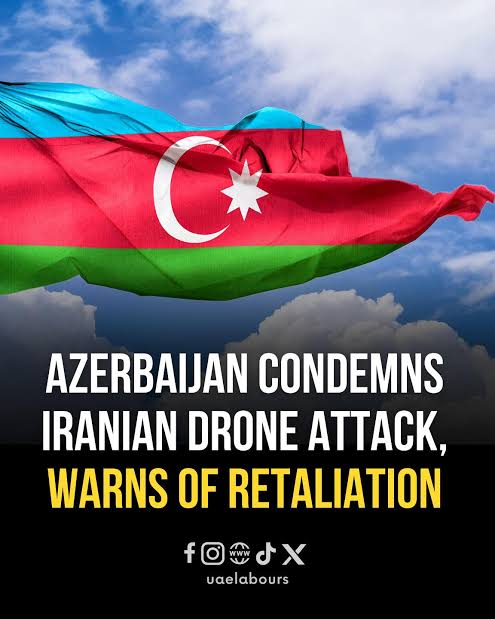
A dramatic escalation unfolded in the South Caucasus after Azerbaijan accused Iran of launching drone strikes on its territory, damaging an airport and injuring civilians. The attack, which targeted infrastructure in the Nakhchivan region, has triggered diplomatic outrage and raised fears of wider regional conflict.
Officials in Baku say the drone attack hit the passenger terminal of Nakhchivan International Airport, injuring several people and causing visible structural damage. Azerbaijan’s leadership described the incident as a “terrorist act” and vowed to respond if necessary. Meanwhile, Tehran has denied involvement, insisting that Iran does not attack neighboring countries.
The incident comes amid growing tensions linked to the broader Middle East conflict and geopolitical rivalries involving Iran, Israel, and regional allies.
Drone Strike Rocks Azerbaijan’s Nakhchivan Region
The alleged attack occurred in the Nakhchivan Autonomous Republic, an Azerbaijani exclave bordering Iran and Turkey. According to Azerbaijani officials, multiple drones crossed the border and struck near the airport terminal while another drone fell near a school in a nearby village.
The strike injured at least four civilians and caused damage to airport infrastructure and surrounding facilities. Emergency services quickly responded, securing the area and transporting injured individuals to local hospitals. Authorities later confirmed that all victims were in stable condition.
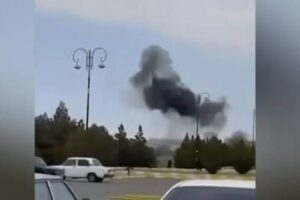
Security footage and videos circulating online show smoke rising from the airport terminal and emergency crews working to contain the damage. Azerbaijani defense officials said technical monitoring systems detected unmanned aerial vehicles entering their airspace before the explosions occurred.
The attack is particularly alarming because the Nakhchivan region is geographically separated from mainland Azerbaijan by Armenia and lies directly along the Iranian border. Any cross-border military action in this area could rapidly destabilize the South Caucasus.
Azerbaijan Blames Iran for “Terrorist Attack”
Azerbaijani President Ilham Aliyev condemned the strike during an emergency meeting of the national security council.
Aliyev called the drone strike an “unprovoked act of terror and aggression” and ordered the military to prepare possible response measures. He also demanded an official explanation and apology from Iran.
The Azerbaijani government summoned Iran’s ambassador to protest the incident and formally demanded clarification regarding the origin of the drones. Officials emphasized that Azerbaijan had not taken part in any operations against Iran and therefore viewed the strike as unjustified.
Aliyev warned that Azerbaijan’s armed forces were ready to demonstrate their strength if necessary, signaling that retaliation remained on the table.
Iran Denies Responsibility
Iran quickly rejected Azerbaijan’s accusations. Iranian officials insisted that the country’s armed forces had not launched any drones toward Azerbaijani territory.
Deputy Foreign Minister Kazem Gharibabadi said Iran does not target neighboring states and suggested that other actors could be responsible for the incident.
Iranian military authorities also stated that their policy focuses only on military targets belonging to hostile forces such as the United States or Israel. Some Iranian statements even suggested that Israeli involvement could be a factor behind the strike.
Despite these denials, Azerbaijani officials insist that technical monitoring and radar tracking confirmed the drones originated from Iranian territory.
Why Nakhchivan Is Strategically Important
The attack highlights the strategic importance of the Nakhchivan region. This territory serves as a crucial geopolitical crossroads linking Turkey, Iran, and the South Caucasus.
Several factors make the area sensitive:
1. Geographic Isolation
Nakhchivan is separated from mainland Azerbaijan by Armenia. Its unique position makes it vulnerable to cross-border incidents and security threats.
2. Strategic Transport Corridors
Proposed trade routes linking Central Asia to Europe may pass through the region. These corridors could bypass Iranian territory, potentially reducing Tehran’s regional influence.
3. Military Significance
The airport targeted in the attack is a vital transportation hub connecting the enclave with other parts of Azerbaijan and neighboring countries.
Because of these factors, even a limited drone strike in this region can carry significant geopolitical consequences.
Rising Iran–Azerbaijan Tensions
Relations between Azerbaijan and Iran have been strained for several years. Several issues contribute to the tension:
Azerbaijan’s Relationship with Israel
Azerbaijan maintains strong security and economic ties with Israel. Cooperation includes defense technology and intelligence sharing. Iran has repeatedly expressed concern about Israeli influence near its borders.
Regional Security Competition
Both countries compete for influence in the South Caucasus. Azerbaijan’s alliance with Turkey further complicates the regional balance.
Ethnic and Political Factors
Iran hosts a large ethnic Azerbaijani population. Tehran often worries that nationalist sentiments in Azerbaijan could affect internal politics.
These long-standing tensions have created an environment where military incidents can quickly escalate into larger diplomatic crises.
The Broader Middle East Conflict
The drone strike also comes amid a wider conflict involving Iran, the United States, and Israel. The ongoing confrontation has already spread beyond traditional battle zones, affecting multiple countries across the region.
Reports suggest Iranian missiles and drones have targeted locations in several neighboring countries during the conflict. Some nations in the Gulf and the Middle East have intercepted drones or heightened their air defenses as tensions escalate.
Analysts warn that the Azerbaijan incident could represent a dangerous expansion of the conflict into the South Caucasus.
International Reactions
The drone strike has drawn attention from several countries and international organizations.
Turkey
Turkey strongly condemned the attack and expressed support for Azerbaijan. As a close ally of Baku, Ankara has pledged to stand by Azerbaijan’s territorial integrity.
Western Countries
Western governments are monitoring the situation closely because Azerbaijan plays a crucial role in energy supply routes to Europe.
Energy Security Concerns
Azerbaijan is a major exporter of oil and gas through pipelines connecting the Caspian region to European markets. Any instability could threaten critical infrastructure such as the Baku–Tbilisi–Ceyhan pipeline.
As a result, the international community is urging restraint from both sides to prevent further escalation.
Could Azerbaijan Retaliate?
While Azerbaijan has not yet announced specific retaliation plans, officials have clearly stated that a response remains possible.
Military analysts suggest several potential scenarios:
Diplomatic retaliation – sanctions or expelling Iranian diplomats
Cyber operations targeting Iranian systems
Military responses against suspected drone launch sites
Increased border security operations
However, Azerbaijan must carefully balance any response with the risk of escalating into a larger regional conflict.
Regional Stability at Risk
The drone strike illustrates how quickly regional tensions can spiral into international crises. The South Caucasus already faces instability due to historical conflicts and geopolitical rivalries.
If Azerbaijan and Iran escalate the situation further, several risks could emerge:
disruption of international energy supply routes
increased military deployments along borders
involvement of regional allies such as Turkey
wider conflict spillover from the Middle East
Diplomatic engagement will likely be critical in preventing the situation from deteriorating further.
What Happens Next?
The next steps will depend on investigations into the drone strike and diplomatic discussions between the two countries.
Key developments to watch include:
Azerbaijan’s final decision on retaliation
Iran’s response to the accusations
mediation efforts by regional or international actors
potential sanctions or diplomatic pressure
For now, both nations appear to be preparing for possible escalation while leaving the door open for diplomatic dialogue.
Conclusion
The alleged Iranian drone strike on Azerbaijan’s airport marks a serious escalation in regional tensions. With civilians injured and infrastructure damaged, the incident has triggered outrage in Baku and raised fears of retaliation.
While Iran denies involvement, Azerbaijan insists the drones originated from Iranian territory. As both countries trade accusations, the international community is urging restraint to prevent the crisis from spreading further.
In an already volatile geopolitical environment, the attack underscores how fragile regional stability has become. Whether diplomacy can defuse the crisis—or whether it will escalate—remains one of the key geopolitical questions in the coming weeks.
FAQs
What happened in the Azerbaijan drone strike incident?
Azerbaijan accused Iran of launching drone attacks that hit the terminal of Nakhchivan International Airport and nearby areas, injuring several civilians and damaging infrastructure.
How many people were injured in the attack?
Reports indicate that around four civilians were injured, though their injuries were not life-threatening.
Did Iran admit responsibility for the drone strike?
No. Iran has denied launching the drones and said it does not attack neighboring countries.
Why is Nakhchivan strategically important?
Nakhchivan is an Azerbaijani enclave bordering Iran and Turkey. It is an important transportation hub and a potential route for trade corridors connecting Asia and Europe.
Could Azerbaijan retaliate against Iran?
Azerbaijan has stated it reserves the right to retaliate and has placed its military on high alert, though no specific action has been announced yet.
How could this affect regional stability?
If tensions escalate, it could disrupt energy routes, involve regional allies, and potentially expand the broader Middle East conflict into the South Caucasus.
How useful was this post?
Click on a star to rate it!
Average rating 0 / 5. Vote count: 0
No votes so far! Be the first to rate this post.
About the Author

usa5911.com
Administrator
Hi, I’m Gurdeep Singh, a professional content writer from India with over 3 years of experience in the field. I specialize in covering U.S. politics, delivering timely and engaging content tailored specifically for an American audience. Along with my dedicated team, we track and report on all the latest political trends, news, and in-depth analysis shaping the United States today. Our goal is to provide clear, factual, and compelling content that keeps readers informed and engaged with the ever-changing political landscape.