Audrey Hepburn : timeless icon, Hollywood legacy, fashion immortality
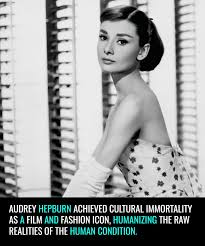
Audrey Hepburn died on January 20, 1993, but her legacy lives on. His words, “Nothing is impossible, the word itself says. Today we will discuss about Audrey Hepburn : timeless icon, Hollywood legacy, fashion immortality
Audrey Hepburn : timeless icon, Hollywood legacy, fashion immortality
Audrey Hepburn stands today as one of the most enduring figures in 20th-century culture — a luminous star whose influence transcended film, fashion, and even humanitarianism. While many remember her for a single iconic image in a little black dress, Hepburn’s legacy is far richer and more profound. Her life story weaves together an extraordinary rise from wartime hardship to Hollywood stardom, a groundbreaking presence in fashion, and a lifelong commitment to compassion and philanthropy. This article explores how her charm, style, and grace have made her truly timeless.
Early Life and Formative Years

Audrey Kathleen Hepburn-Ruston was born on May 4, 1929, in Brussels, Belgium, into a family of complex social and political backgrounds. Her aristocratic mother and father separated early in her life, and as war loomed across Europe, Audrey faced harsh realities that would shape her character. During World War II, she endured food shortages, illnesses, and the challenges of life in Nazi-occupied Netherlands. Yet even in these difficult years, she pursued ballet training, demonstrating resilience and discipline that would later serve her well both on and off the screen.
This formative period embedded in her a mixture of grace under pressure and an empathy for human suffering — qualities that would later surface in her humanitarian work.
Breaking into Hollywood: “Roman Holiday” and Stardom
Hepburn’s career trajectory took a dramatic turn in the early 1950s. After working as a model and performing on the stage, she landed her first major American film role in Roman Holiday (1953), where she played Princess Ann — a royal seeking freedom and adventure on the streets of Rome. Her performance was met with critical acclaim and earned her the Academy Award for Best Actress at just 24 years old.
This success was more than a singular achievement. It established Audrey Hepburn as a captivating presence in Hollywood — someone whose talent could embody both vulnerability and strength, innocence and sophistication. Her portrayal in Roman Holiday blended regal elegance with a down-to-earth charm, signaling the arrival of a new kind of leading lady.
The Art of Performance: Films that Defined an Era
After Roman Holiday, Hepburn continued to build a filmography that showcased her versatility as an actress. Each role added a new dimension to her public persona and deepened her cultural imprint.
Sabrina (1954)
In Sabrina, Hepburn played the chauffeur’s daughter who transforms from shy and understated into a worldly, stylish woman. This film marked the beginning of her collaboration with French designer Hubert de Givenchy, whose elegant couture perfectly matched Hepburn’s own sophisticated yet understated style.
Funny Face (1957) and Other Classics
Films like Funny Face further cemented Hepburn’s reputation as a fashion-forward actress, blending musical charm with couture glamour. Meanwhile, roles in dramas such as The Nun’s Story (1959) showed her dramatic range.
Breakfast at Tiffany’s (1961)
Perhaps no film has contributed more to Hepburn’s immortality than Breakfast at Tiffany’s, in which she played the enigmatic Holly Golightly. It remains one of the most iconic roles in cinematic history — not just for the character, but for the fashion moments that accompanied it.
My Fair Lady (1964)
Her portrayal of Eliza Doolittle — a spirited Cockney flower girl transformed into a refined society lady — earned mixed reactions but showcased Hepburn’s determination to tackle complex characters and adapt to evolving cinematic styles.
Taken together, these roles highlight a career that was both varied and impactful — one that bridged romantic comedies, musicals, and substantive dramas, resonating with audiences around the world.
A Style Beyond Fashion: The Birth of a Fashion Icon
Audrey Hepburn’s influence on fashion remains one of her most lasting legacies. Long after her movie performances, it is her unique sense of style — elegant, minimalist, and deeply personal — that continues to inspire.
Collaboration with Hubert de Givenchy
Hepburn’s partnership with French designer Hubert de Givenchy was one of fashion’s most significant collaborations. Beginning with Sabrina, their creative synergy produced some of the most memorable looks of the 20th century. Givenchy once described Hepburn as “a sister,” and their enduring friendship helped define an aesthetic that balanced simplicity with sophistication.
The Little Black Dress
In Breakfast at Tiffany’s, Hepburn’s black Givenchy dress, paired with pearls, oversized sunglasses, and a poised updo, became the definitive little black dress — a staple that transcended fashion trends and became a symbol of classic elegance. The look has been studied, recreated, and celebrated in exhibitions and fashion retrospectives around the world.
Elements of Hepburn Style
Hepburn’s fashion sensibility was defined by:
Clean lines and silhouettes
Understated accessories
Tailored trousers and ballet flats
Minimal but elegant jewelry
This aesthetic — practical yet chic — touched off not just film costuming, but everyday fashion trends that continue to resonate.
Her style wasn’t about extravagance; it was about harmony between clothes and personality — a lesson that fashion lovers still aspire to today.
Cultural Impact: A Global Legacy
Audrey Hepburn’s influence spread far beyond the silver screen. Through her films, her public image, and her style, she became a global cultural icon.
Influence on Cinema and Fashion
Hepburn’s elegance redefined female representation in Hollywood — a break from the voluptuous glamor of earlier stars into a more refined, graceful ideal that influenced not only Western cinema but storytelling and fashion worldwide.
Her images — whether framed in sepia tones of classic cinema or referenced in contemporary fashion shows — continue to be invoked in everything from film homages to editorial spreads. Contemporary actresses and fashion influencers often cite Hepburn as a major inspiration, and her aesthetic remains a benchmark of timeless chic.
Humanitarianism: The Heart Behind the Image
Perhaps surprisingly to some, Hepburn’s greatest legacy might not be her filmography or wardrobe — but her humanitarian work.
UNICEF Goodwill Ambassador
In the late 1980s, Hepburn embarked on a new chapter as a Goodwill Ambassador for UNICEF, a role she found deeply meaningful. She traveled to some of the world’s most impoverished and conflict-affected regions to spotlight the needs of children. From Africa to Asia and Latin America, Hepburn witnessed firsthand the struggles of communities facing famine, poverty, and disease.
Her own experiences during war — when she witnessed hunger and hardship — had instilled in her a deep empathy that she now dedicated to helping others. Through her advocacy, she brought global attention to issues often neglected by mainstream media.
A Legacy of Compassion
For all her beauty and glamour, Hepburn described elegance as something internal — an attitude of humility, kindness, and grace. Her humanitarian work, more than any fashion moment or acting award, reflected this deeper truth about her character: that true beauty begins with goodness.
Timeless Lessons from Audrey Hepburn
Audrey Hepburn’s life offers enduring lessons that extend well beyond the realms of cinema and style:
1. Grace Under Pressure
Her journey from war-torn Europe to Hollywood stardom teaches resilience and dignity in the face of hardship.
2. Elegance With Purpose
Her fashion legacy shows that simplicity and authenticity often outshine extravagance.
3. Beauty With Heart
Her humanitarian work stands as a testament to using fame for meaningful change.
4. A Legacy That Never Ages
Decades after her death in 1993, Hepburn’s influence remains vibrant — quoted, celebrated, and emulated — not because she was a product of her time, but because her spirit, style, and values were timeless.
Conclusion: Audrey Hepburn — An Immortal Icon
In the tapestry of cultural history, Audrey Hepburn stands as an enduring thread — one woven with cinematic brilliance, fashion innovation, and human kindness. While trends may fade and stars may dim, her legacy continues to shine brightly, inspiring each generation with grace, elegance, and an unwavering commitment to compassion. Whether remembered through her films, her style, or her humanitarian work, Audrey Hepburn remains, quite simply, timeless.
How useful was this post?
Click on a star to rate it!
Average rating 0 / 5. Vote count: 0
No votes so far! Be the first to rate this post.
About the Author

usa5911.com
Administrator
Hi, I’m Gurdeep Singh, a professional content writer from India with over 3 years of experience in the field. I specialize in covering U.S. politics, delivering timely and engaging content tailored specifically for an American audience. Along with my dedicated team, we track and report on all the latest political trends, news, and in-depth analysis shaping the United States today. Our goal is to provide clear, factual, and compelling content that keeps readers informed and engaged with the ever-changing political landscape.