America on Edge: Holiday Security Questioned After DC Violence
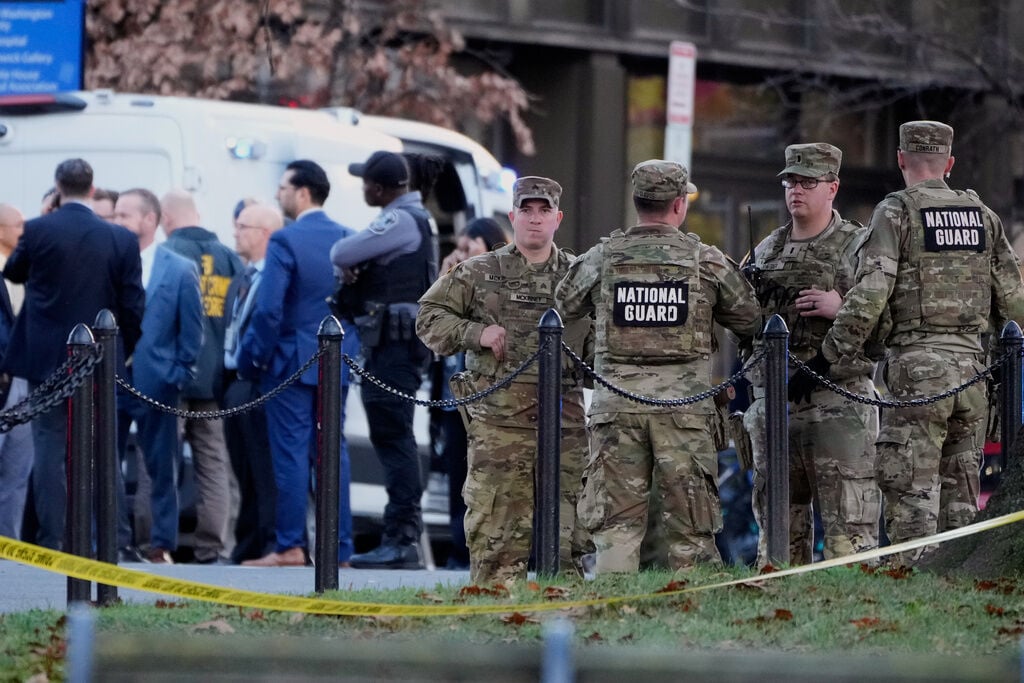
The US has stepped up its security during the holiday season in response to a violent incident near the White House, where two National Guard members were shot. Today we will discuss about America on Edge: Holiday Security Questioned After DC Violence
America on Edge: Holiday Security Questioned After DC Violence
As the year draws to a close, the streets of Washington, D.C. — typically bustling with holiday shoppers, tourists, and families attending festive events — are shrouded in an uneasy silence. What should have been the onset of a cheerful holiday season instead feels tense and uncertain. The reason: a recent violent ambush near the heart of the nation that has shaken faith in public safety, raised serious questions about security protocols, and exposed deep divides over how best to keep Americans safe.
A Capital Stunned: The November 26 Shooting
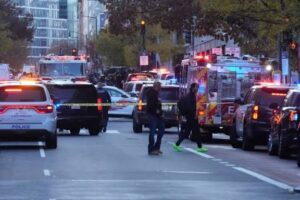
On November 26, 2025, two members of the West Virginia National Guard — deployed in Washington under a sweeping federal security operation — were critically wounded in a “targeted ambush” near the White House, just blocks from the nation’s seat of power. The shooting took place near Farragut West Metro station around 2:15 p.m., as the Patrol was on a high-visibility assignment. According to official statements, the assailant — later identified as 29‑year-old Rahmanullah Lakanwal — opened fire without apparent provocation.
Authorities subdued the shooter during the exchange. Lakanwal was also wounded and subsequently taken into custody. The motive behind the attack remains under investigation — but that ambiguity has only deepened public anxiety.
In response, the federal government rushed to reinforce security. Donald Trump, who ordered the initial deployment of troops to D.C., requested 500 additional members of the United States National Guard be sent to the capital — on top of roughly 2,200 already stationed there.
The timing couldn’t be worse. The shooting occurred just ahead of the Thanksgiving–holiday travel surge — a period during which many Americans travel, shop, and gather with loved ones. That sudden violence near the White House has cast a shadow over planned festivities and prompted urgent reassessments of holiday‑era security protocols.
Why D.C. — and Why Now?
To understand the gravity of the moment, one must appreciate how the capital came to look so militarised in 2025. In August, President Trump declared a “crime emergency” in Washington, citing what his administration described as spiralling violence. Using powers granted by the District of Columbia Home Rule Act, he federalized control of the city’s police force and deployed hundreds of National Guard troops — a historic first in the Nation’s capital.
Originally, about 800 Guard soldiers were deployed, supplemented by various federal law enforcement agencies. Over subsequent months, that number swelled as federal authorities aimed to suppress violent crime, gun violence, and street disorder.
The administration has claimed these deployments have yielded results. According to the local law‑enforcement leadership, the 2025 holiday‑season market in downtown D.C., known as the DowntownDC Holiday Market, reopened this year with renewed optimism, even as authorities acknowledged rising public unease.
Yet critics have been vocal and sharp. Many residents — particularly in historically marginalized communities — view the militarised presence as heavy‑handed, divisive, and potentially counterproductive. Some fear an erosion of civil liberties, mistrust between citizens and law‑enforcement, and an atmosphere of fear rather than safety.
In such a volatile context, an ambush near the White House isn’t just another shooting; it feels like a symbolic rupture — a failure of the very security architecture meant to protect the heart of American democracy.
Holiday Against the Backdrop of Fear
The onset of the winter holidays in D.C. usually comes with lights, markets, festive tunes, and a warm sense of community. The DowntownDC Holiday Market, for instance, has long been a seasonal tradition — celebrated for its local vendors, inclusive community vibe, and family‑friendly events. This year, the market opened amid a citywide insistence that things are under control. Officials pointed to a significant — 21% — drop in violent crime within the downtown BID (Business Improvement District) area over the last year.
But such statistics offer little comfort to a public jolted by violence near the White House. For visitors, employees, families, and residents, the question looms: Is it safe to go about our holiday plans?
Many people — particularly tourists or those unfamiliar with D.C. — may simply defer or cancel plans. Others may decide to go, but with caution: avoiding crowded areas, steering clear of late-night travel, and staying alert to law‑enforcement presence. For businesses and event planners, the added security may translate to more metal detectors, bag checks, patrols — a guard-heavy ambiance more reminiscent of high‑alert zones than celebratory streets.
Moreover, the optics of guards patrolling holiday crowds, backpacks searched, streets cordoned off — that doesn’t foster festive cheer. Instead, it can cultivate a pervasive anxiety, where the festive period becomes shadowed by suspicion and unease.
Political Fallout and Legal Firestorm
The ambush in D.C. has reshaped political conversation overnight. After the attack, federal immigration agencies halted Afghan immigration visas, citing security concerns. This swift move followed the revelation that the suspect was an Afghan national admitted under the Operation Allies Welcome program, initiated after the U.S. withdrawal from Afghanistan.
President Trump labeled the incident an “act of terror” and demanded a sweeping review of all Afghan immigrants accepted under the program. He characterized lax migration policies as the “single greatest national security threat” facing the United States.
On the legal front, the shooting has complicated an already fraught matter: the continued deployment of out-of-state National Guard troops in D.C. Earlier in November, a federal judge — Jia Cobb — ruled that the deployment was unlawful, ordering the troops to stand down.
But in the wake of the shooting, the administration has paused the judge’s order and appealed, citing the need for heightened security. Meanwhile, critics have warned that increasing militarization of law enforcement sets a dangerous precedent: one that undermines the democratic principle of local control and opens the door to further civil-liberties abuses.
Some residents argue that deploying soldiers — trained for battlefield action, not community policing — into crowds carrying holiday packages and heading to Christmas-tree lightings risks more than it protects. A living city, they say, needs trust, not checkpoints.
A Nation’s Anxiety: More Than Just D.C.
While Washington, D.C., remains the focal point, observers argue that what’s happening there reflects broader national anxieties. Across the United States, recent years have seen a rise in mass shootings, a surge in political polarization, increasing distrust in institutions, and a growing fear of “lone-wolf” attacks — especially during high-profile holidays or events.
Even in places considered relatively safe, authorities have issued warnings about potential “lone-wolf” terrorists targeting crowded celebrations. In that sense, what happened in D.C. — a coordinated ambush against uniformed military personnel in the nation’s capital — is a stark reminder that no place feels wholly immune.
In cities across America, from New York to Los Angeles, community leaders, law‑enforcement officials, and ordinary citizens are now rethinking how to balance safety with normalcy. Questions abound: Do we need constant armed patrols on main shopping streets? Should holiday markets be fenced off? Are metal detectors the right way to greet families looking for festive cheer?
Some believe heavy security is the only way to prevent further violence, while others warn that such measures risk transforming public life into a state of perpetual surveillance and suspicion.
The Human Toll: Fear, Fatigue, and a Fragile Peace
Beyond politics and policy, there is a human cost to living under the constant shadow of potential violence. For residents of Washington and visitors alike, every loud noise, every patrol vehicle, every road closure may spark anxiety. For many small businesses — shop owners, vendors, café‑operators — the heightened security and uncertainty may deter customers, dampening seasonal sales at a moment they depend on the most.
Families who had planned holiday gatherings, tree-lighting events, or simply a trip to the capital may postpone or cancel. Employees who commute might stay home, office buildings may buy into calls to limit gatherings — all of this compounds into a subtle but real shift in how people behave.
The trauma of a shooting near the seat of power — especially one involving uniformed soldiers — lingers. For the two wounded Guardsmen, their status remains critical. For the city, the shooting is a jarring wake-up call: the measures taken to protect its citizens may not be enough — or may have unintended consequences.
What Comes Next: From Crisis to Policy Reckoning
In the immediate aftermath, authorities in D.C. have vowed to tighten security, intensify patrols, and review how federal forces are deployed. A surge of National Guard troops is underway, and investigations into the shooting remain open.
But beyond that, the incident is likely to catalyze deeper debates — about immigration, vetting procedures, civil-military boundaries, and the balance between security and civil liberties. The freeze on Afghan visa processing suggests one direction; legal challenges to the extended deployment of troops suggest another.
For lawmakers and city officials, there may be pressure to overhaul protocols on how holiday events, tourist zones, and public gatherings are secured. For citizens, it may prompt renewed demands for transparency, better community policing, and focus on root causes — urban inequality, mental-health support, community outreach — rather than just militarised presence.
If 2025 ends as a “holiday season under guard,” many Americans may ask: is that the measure of a safe society?
Why This Crisis Matters — and Why It Could Define America’s Holiday Seasons for Years
The November 26 shooting in D.C. is more than an isolated tragedy — it’s a signal. It exposes vulnerabilities not just in law enforcement, but in the relationship between the state and its people. It raises the uncomfortable question: can a society rely on force to guarantee safety, or does that reliance erode the very freedoms and sense of community that make public holidays possible?
As the lights go up, wreaths get hung, and markets reopen across the country, Americans are having to reconsider what holiday safety really means. Is it the presence of armed troops on patrol? Or is it trusting your neighbors, walking freely down brightly lit streets, and sharing laughter without fear of ambush?
What’s happening in Washington will echo across many other cities — both in holiday malls and in city streets. The way the U.S., its leaders, and its people respond may reshape the American holiday season — not only for 2025, but for years to come.
Conclusion: A Fragile Balance Between Cheer and Caution
The holiday season — with its promise of warmth, community, hope — is a fragile thing when even the capital feels menaced. The violence near the White House, and the resulting surge in militarised security, has cast a long shadow over what should be a season of joy.
For many, the question isn’t just whether it’s safe to shop or attend a holiday market — but whether it’s possible to celebrate at all, under the weight of fear, suspicion, and uncertainty.
Yet, perhaps this moment can also force a deeper reckoning. A reckoning with how America prioritises security, how it treats immigrants and asylum-seekers, how it protects public spaces, and above all, how it balances vigilance with the freedoms that are supposed to make holidays worth celebrating.
Because if the holiday season becomes synonymous with checkpoints, armed patrols, and fear — then something fundamental has changed in the American public life.
How useful was this post?
Click on a star to rate it!
Average rating 0 / 5. Vote count: 0
No votes so far! Be the first to rate this post.
About the Author

usa5911.com
Administrator
Hi, I’m Gurdeep Singh, a professional content writer from India with over 3 years of experience in the field. I specialize in covering U.S. politics, delivering timely and engaging content tailored specifically for an American audience. Along with my dedicated team, we track and report on all the latest political trends, news, and in-depth analysis shaping the United States today. Our goal is to provide clear, factual, and compelling content that keeps readers informed and engaged with the ever-changing political landscape.