LaGuardia Collision : 2 Pilots Dead, Runway Crash, ATC Failure, Airport Shutdown
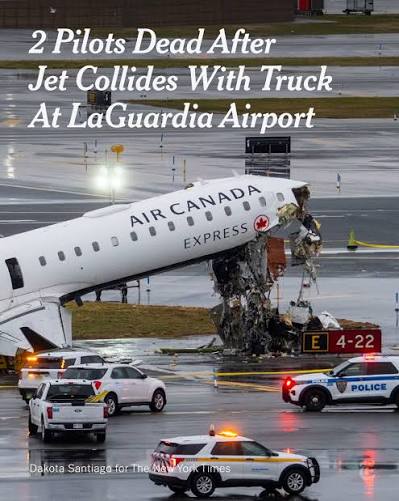
A devastating aviation tragedy unfolded at LaGuardia Airport, shaking the global aviation industry and raising urgent questions about runway safety and air traffic control systems. A collision between a passenger jet and an emergency vehicle resulted in the deaths of two pilots, dozens of injuries, and a complete airport shutdown.
The incident has sparked widespread concern over air traffic control (ATC) failures, runway coordination, and systemic staffing shortages. As investigations unfold, experts warn this may be a turning point for aviation safety protocols worldwide.
What Happened at LaGuardia Airport?
The fatal collision occurred late on March 22, 2026, when an Air Canada Express CRJ-900 aircraft struck a fire truck on the runway during landing. The aircraft, operating as Flight 8646 from Montreal, carried 72 passengers and four crew members.
According to initial reports:
- The pilot and co-pilot were killed instantly
- Over 40 passengers and crew were injured
- Emergency responders on the ground were also hurt
- The airport was immediately shut down
The aircraft collided with a fire truck that had entered the runway while responding to another emergency involving a different aircraft.
Timeline of the Crash
Final Moments Before Impact
- The aircraft was cleared to land on Runway 4
- A fire truck was simultaneously cleared to cross the runway
- Air traffic control attempted to stop the vehicle moments before impact
- The jet struck the truck during its landing roll
Audio recordings reveal frantic warnings and confusion, including a controller reportedly admitting, “we messed up”, indicating a possible human error.
Immediate Aftermath
- Emergency crews rushed to the scene
- The cockpit suffered catastrophic damage
- Survivors were evacuated and rushed to hospitals
- Flights were halted across the airport
Casualties and Injuries
The human toll of the LaGuardia collision has been severe:
- 2 fatalities (pilot and co-pilot)
- 41 injuries, including passengers and crew
- Ground personnel also injured but expected to recover
Most injured individuals were later released, but several suffered serious trauma.
Airport Shutdown and Travel Chaos
Following the crash, LaGuardia Airport was completely shut down for several hours.
Impact on Travel
- Over 500 flights cancelled or delayed
- Thousands of passengers stranded
- Flights diverted to nearby airports
- Nationwide ripple effect on air traffic
The shutdown highlights how a single incident at a major hub can disrupt the entire aviation network.
Was There an ATC Failure?
One of the most critical aspects of the investigation is the potential failure of air traffic control coordination.
Key Concerns
- Both the aircraft and fire truck were cleared onto the same runway
- Communication breakdown between tower and ground control
- Delayed reaction in stopping the vehicle
Experts suggest this may be a classic case of runway incursion, where multiple entities occupy the same runway simultaneously — one of the most dangerous scenarios in aviation.
Staffing Issues
The incident comes amid ongoing concerns about:
- Shortage of air traffic controllers
- Increased workload and fatigue
- Systemic pressure on aviation infrastructure
These factors may have contributed to the breakdown in coordination.
How Did the Fire Truck End Up on the Runway?
The fire truck was responding to a separate emergency involving another aircraft that reported an onboard issue.
- It was initially cleared to cross the runway
- Moments later, ATC attempted to stop it
- The truck failed to clear the runway in time
This sequence suggests a timing and communication failure, rather than a single isolated mistake.
Investigation Underway
Multiple agencies have launched investigations into the crash:
- Federal Aviation Administration (FAA)
- National Transportation Safety Board (NTSB)
- Canadian aviation authorities
Focus Areas
- ATC communication logs
- Runway clearance procedures
- Controller workload and staffing
- Aircraft speed and landing conditions
The investigation aims to determine whether the crash was caused by human error, systemic failure, or a combination of both.
Aircraft and Technical Details
- Aircraft Type: Bombardier CRJ-900
- Operator: Jazz Aviation (Air Canada Express)
- Route: Montreal to New York
- Speed at impact: Estimated high-speed landing roll
The nose and cockpit area of the aircraft sustained severe damage, leading to the fatalities.
Global Aviation Safety Concerns
This tragedy has reignited debate over aviation safety, especially regarding runway operations.
Why Runway Collisions Are Dangerous
- High-speed impact risk
- Limited reaction time
- Complex coordination required
Similar incidents worldwide have often involved miscommunication and ATC errors, making this a recurring concern in aviation safety systems.
Comparison with Past Incidents
Runway collisions, though rare, are among the deadliest aviation accidents.
Examples include:
- Tokyo Haneda runway collision (2024)
- Lima airport runway crash (2022)
These incidents share common factors:
- Miscommunication
- Ground vehicle coordination failure
- High workload environments
Economic and Industry Impact
The LaGuardia collision is expected to have far-reaching consequences:
Airlines
- Financial losses from cancellations
- Compensation claims from passengers
- Operational disruptions
Airports
- Increased scrutiny of safety systems
- Possible regulatory changes
- Investment in technology upgrades
Passengers
- Loss of confidence in air travel safety
- Increased travel delays in coming weeks
Expert Opinions
Aviation analysts have pointed to human error and system overload as likely contributing factors.
Some experts argue:
- The accident was preventable
- Better coordination could have avoided the crash
- ATC systems need modernization
What Happens Next?
The investigation will take months, but immediate actions may include:
- Temporary changes in runway protocols
- Increased supervision of ATC operations
- Emergency safety reviews across U.S. airports
Airlines and regulators are expected to implement interim safety measures to prevent similar incidents.
Conclusion
The LaGuardia collision is a tragic reminder of the complexities and risks of modern aviation. With two pilots dead and dozens injured, the incident underscores the critical importance of flawless coordination between air traffic control and ground operations.
As investigations continue, the world watches closely — not just for answers, but for reforms that could prevent future disasters.
FAQs
1. What caused the LaGuardia collision?
Preliminary reports suggest a miscommunication between air traffic control and a fire truck crossing the runway, leading to a fatal collision.
2. How many people died in the crash?
Two pilots (captain and first officer) were killed in the incident.
3. How many were injured?
Over 40 passengers, crew members, and ground personnel were injured.
4. Why was the airport shut down?
The airport was closed to allow emergency response and investigation after the crash.
5. Was this an ATC failure?
Investigations are ongoing, but early evidence points to possible air traffic control miscommunication.
6. What is a runway incursion?
It is a dangerous situation where multiple vehicles or aircraft occupy the same runway simultaneously.
7. Which agencies are investigating the crash?
The FAA, NTSB, and Canadian aviation authorities are leading the investigation.
8. Will this affect future flights?
Yes, the incident has already caused widespread delays and may lead to stricter aviation safety measures.
How useful was this post?
Click on a star to rate it!
Average rating 0 / 5. Vote count: 0
No votes so far! Be the first to rate this post.
About the Author

usa5911.com
Administrator
Hi, I’m Gurdeep Singh, a professional content writer from India with over 3 years of experience in the field. I specialize in covering U.S. politics, delivering timely and engaging content tailored specifically for an American audience. Along with my dedicated team, we track and report on all the latest political trends, news, and in-depth analysis shaping the United States today. Our goal is to provide clear, factual, and compelling content that keeps readers informed and engaged with the ever-changing political landscape.