Atlanta Airport Chaos : TSA Collapse, 4 Hour Lines, ICE Deployed, Travel Meltdowns
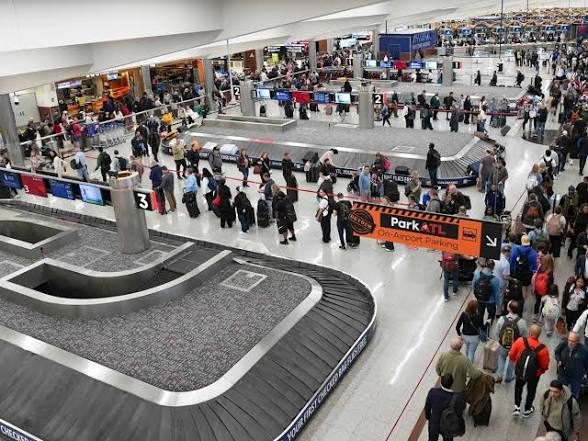
The unfolding crisis at Hartsfield-Jackson Atlanta International Airport has rapidly become one of the most significant travel disruptions in recent U.S. history. Known as the world’s busiest airport, Atlanta is now facing unprecedented congestion, with security lines stretching for hours, passengers missing flights, and authorities scrambling to restore order.
At the center of this chaos lies a combination of factors: a government shutdown, severe staffing shortages within the Transportation Security Administration (TSA), and the controversial deployment of Immigration and Customs Enforcement (ICE) agents inside airport terminals.
This article breaks down the Atlanta Airport chaos in detail—covering the causes, real-time developments, political implications, and what it means for travelers worldwide.
The Scale of the Crisis
Travelers passing through Atlanta airport are experiencing extreme delays, with wait times reaching up to four to five hours. Authorities have advised passengers to arrive at least four hours before departure to avoid missing flights.
Reports indicate that security lines have stretched beyond checkpoints, sometimes extending into baggage claim areas and even outside terminals.
The situation escalated dramatically during peak travel periods such as spring break, when passenger volumes surged to hundreds of thousands daily.
TSA Collapse: What Went Wrong?
1. Government Shutdown Impact
The primary cause of the crisis is a prolonged U.S. government shutdown affecting the Department of Homeland Security (DHS), which oversees the TSA.
- Thousands of TSA officers have been working without pay
- Absentee rates have surged beyond 10% nationally
- Hundreds of employees have resigned due to financial strain
Without adequate staffing, security checkpoints have slowed dramatically, creating bottlenecks at major airports—especially Atlanta.
2. Staffing Shortages Reach Breaking Point
At Atlanta specifically, reports show that up to one-third of TSA workers were unavailable at times.
In some cases, call-out rates approached 30–40%, severely crippling operations.
This shortage led to:
- Reduced number of open security lanes
- Slower ID verification processes
- Limited baggage screening capacity
The result: a near-collapse of standard airport security operations.
ICE Deployment: A Controversial Move
Why ICE Was Deployed
In response to the staffing crisis, the federal government ordered the deployment of ICE agents to assist TSA operations.
Their roles include:
- Crowd control and line management
- Checking IDs before checkpoints
- Supporting operational logistics
Importantly, officials state that ICE agents are not authorized to conduct immigration enforcement inside the airport terminals—at least in theory.
Public Reaction
The presence of ICE agents has triggered mixed reactions:
- Some travelers welcome additional manpower
- Others express fear and confusion over immigration enforcement risks
- Civil rights groups have raised concerns about misuse of authority
Political Controversy
The deployment has intensified political tensions in Washington:
- Critics argue ICE agents lack TSA-specific training
- Supporters say it is necessary to maintain order during the crisis
- Labor unions warn this could compromise airport security
Why Atlanta Was Hit the Hardest
Atlanta’s airport is uniquely vulnerable due to its scale and traffic volume.
Key Factors
1. World’s Busiest Airport
Atlanta consistently handles more passengers than any other airport globally, making it highly sensitive to disruptions.
2. Spring Break Surge
The crisis coincided with peak travel season, amplifying delays.
3. Hub Status
As a major connecting hub, delays in Atlanta ripple across the entire U.S. aviation system.
Inside the Travel Meltdown
Passenger Experience
Travelers report:
- Missing flights despite arriving early
- Standing in lines for 3–5 hours
- Confusion over security procedures
Some described the situation as “insanity” due to the lack of clear communication and organization.
Airport Response
Local authorities and airport officials have taken emergency steps:
- Advising early arrival times
- Providing support for TSA workers (food, transport)
- Coordinating with federal agencies for additional manpower
Despite these efforts, delays remain widespread.
Nationwide Impact
Atlanta is not alone in facing disruption.
ICE agents have been deployed to multiple major airports, including:
- New York (JFK, LaGuardia)
- Newark
- Phoenix
- New Orleans
- Houston
This indicates a nationwide TSA staffing crisis, not just a localized issue.
Economic and Travel Industry Fallout
Airlines Under Pressure
Airlines are dealing with:
- Flight delays and cancellations
- Increased customer complaints
- Operational strain due to missed connections
Tourism Impact
The chaos could:
- Discourage travel during peak seasons
- Affect tourism revenue
- Damage the reputation of U.S. airports globally
Security Concerns
One of the most debated aspects of the crisis is whether security has been compromised.
Concerns Raised
- ICE agents are not trained for TSA screening
- Reduced staff could increase risk of oversight
- Long lines create crowd management challenges
Official Position
Authorities insist that:
- Security protocols remain intact
- ICE agents are only supporting, not replacing TSA officers
However, skepticism remains among experts and unions.
Political Implications
The Atlanta Airport chaos has become a flashpoint in U.S. politics.
Key Issues
- Immigration policy disputes
- DHS funding disagreements
- Federal workforce treatment
The crisis underscores how political gridlock can directly impact everyday infrastructure and public services.
What Travelers Should Do
If you are traveling through major U.S. airports:
Practical Tips
- Arrive at least 4–5 hours early
- Check flight status regularly
- Avoid peak travel times if possible
- Use TSA PreCheck (if available)
- Stay updated via airline alerts
Future Outlook
Short-Term
- Delays likely to continue until staffing improves
- ICE presence may expand to more airports
Long-Term
- Pressure on lawmakers to resolve funding issues
- Potential reforms in TSA staffing and operations
- Increased focus on contingency planning for airports
Conclusion
The Atlanta Airport chaos is more than just a travel inconvenience—it is a reflection of deeper systemic challenges involving government funding, workforce stability, and political conflict.
With TSA staffing stretched thin and ICE agents stepping into unfamiliar roles, the situation highlights vulnerabilities in critical infrastructure. As the crisis unfolds, travelers, policymakers, and aviation authorities alike are watching closely.
Whether this disruption leads to lasting reforms or remains a temporary crisis will depend largely on how quickly the underlying issues are resolved.
FAQs
1. Why are TSA lines so long at Atlanta Airport?
The long lines are due to staffing shortages caused by a government shutdown, leading to high absentee rates among TSA workers.
2. Why are ICE agents at the airport?
ICE agents have been deployed to assist with crowd control and logistics due to TSA staffing shortages.
3. Are ICE agents checking passengers?
No, ICE agents are mainly helping with line management and ID checks, not full security screening.
4. How long are wait times at Atlanta Airport?
Wait times have reached up to 4–5 hours during peak periods.
5. Is airport security compromised?
Officials say security remains intact, but concerns have been raised due to reduced staffing and use of non-TSA personnel.
6. Will this affect other airports?
Yes, similar disruptions have been reported at multiple major U.S. airports.
How useful was this post?
Click on a star to rate it!
Average rating 0 / 5. Vote count: 0
No votes so far! Be the first to rate this post.
About the Author

usa5911.com
Administrator
Hi, I’m Gurdeep Singh, a professional content writer from India with over 3 years of experience in the field. I specialize in covering U.S. politics, delivering timely and engaging content tailored specifically for an American audience. Along with my dedicated team, we track and report on all the latest political trends, news, and in-depth analysis shaping the United States today. Our goal is to provide clear, factual, and compelling content that keeps readers informed and engaged with the ever-changing political landscape.