Ayatollah Ali Khamenei dead: Iran confirms, 40 days mourning declared
You said
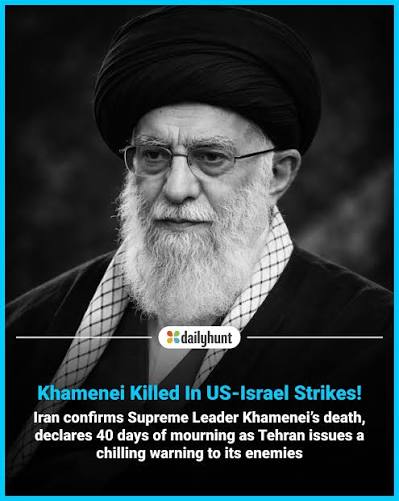
In a historic announcement that sent shockwaves across the Middle East and the world, Iran has confirmed that Ayatollah Ali Khamenei is dead, declaring 40 days of national mourning following what state media described as a targeted attack by the United States and Israel. The death of Iran’s supreme leader—who has guided the Islamic Republic for more than three decades—marks one of the most consequential geopolitical turning points of the 21st century.
This article provides an in-depth analysis of the events leading up to the confirmation, Iran’s official statement, domestic and international reactions, the implications of the mourning period, and the prospects for Iran’s future leadership.
Who Was Ayatollah Ali Khamenei?
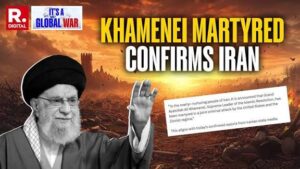
Ayatollah Ali Khamenei served as Iran’s Supreme Leader since 1989 after the death of Ayatollah Ruhollah Khomeini. Over 36 years, Khamenei became the spiritual and political linchpin of the Islamic Republic, wielding unmatched authority over Iran’s government, military, and judiciary. He played a critical role in shaping Iran’s nuclear policy, regional foreign relations, and domestic governance.
Under his leadership, Iran strengthened its support for allied militias across the Middle East, expanded the influence of the Islamic Revolutionary Guard Corps (IRGC), and maintained a defiant stance against Western powers—especially the United States and Israel.
What Happened? The Attack That Led to His Death
On February 28, 2026, the United States and Israel launched coordinated military strikes on strategic targets throughout Iran, including key government and military installations. According to state media reports and global outlets, the strikes hit a central leadership compound in Tehran, where Ayatollah Khamenei was present.
Hours after the military operation began, Iranian officials confirmed that the 86-year-old leader had been killed in the assault. Senior political figures, including several members of Khamenei’s family, were also reported to have perished in the attack.
The offensive reflects one of the most significant escalations between Iran and its adversaries in decades, with implications far beyond the borders of the Middle East.
Iran’s Official Confirmation and Mourning Declaration
On March 1, 2026, Iranian state television broadcast a solemn announcement confirming Khamenei’s death as “martyrdom.” The government subsequently declared a 40-day period of national mourning, during which flags will be flown at half-mast and public institutions will observe mourning protocols. Additionally, Iran declared seven days of public holidays in the immediate aftermath.
Government officials vowed retaliation against those responsible and described Khamenei’s death as a unifying moment for the nation and the wider Islamic community.
What Does 40 Days of Mourning Mean in Iran?
In Iranian and Shiite Islamic tradition, a 40-day mourning period holds profound cultural and religious significance. It is a time for remembrance, prayer, reflection, and communal grieving. Traditionally, mourning ceremonies include:
Public speeches honoring the deceased
Religious gatherings (majlis)
Ritual commemorations in mosques and public spaces
Suspension of celebratory events
The official 40-day mourning declaration underscores the weight of Khamenei’s role in Iranian society and the strategic importance of maintaining social stability during this period.
Domestic Reaction: Iran in Turmoil
Within Iran, reactions have been intense and varied. State media has portrayed a somber populace gathering in public squares to mourn their fallen leader. at the same time, there are reports of increased military readiness and heightened security measures across major cities.
Political analysts note that the sudden leadership vacuum could trigger internal power struggles among Iran’s conservative establishment, reformist factions, and the influential IRGC. Iran’s constitution lays out a succession process involving the Assembly of Experts, but the absence of a clear successor with comparable authority to Khamenei makes the transition unpredictable.
International Reactions
The global response has been swift and mixed:
Allies and Supporters
Iraq announced a three-day mourning period, extending condolences on behalf of its government and Shiite communities.
Russia
Russian President Vladimir Putin condemned the killing as a “cynical murder” while offering little beyond condolences, emphasizing the longstanding strategic partnership between Russia and Iran.
United States & Israel
Leaders in Washington and Tel Aviv have argued that the operation was necessary to curb Iran’s regional and nuclear ambitions. U.S. statements describe Khamenei’s death as a critical blow to extremist influence, while also cautioning against escalation.
United Nations and Global Bodies
Several UN representatives and global diplomats have called for de-escalation, warning that further conflict could destabilize the broader region and impact global energy markets.
Regional Security and the Risk of Wider Conflict
The killing of Iran’s supreme leader has already triggered retaliatory actions and heightened military tensions across the Middle East. The IRGC has pledged revenge, and explosions have been reported in multiple countries—including Qatar, UAE, Bahrain, and Iraq—indicating an expansion of hostilities beyond Iranian borders.
Global oil markets have responded to the uncertainty, with prices spiking due to fears of supply disruption, particularly around the strategic Strait of Hormuz through which a significant portion of the world’s crude oil is transported.
The Leadership Vacuum: Who Could Succeed Khamenei?
Iran’s constitution mandates that the Assembly of Experts, a body of senior clerics, selects the Supreme Leader. Potential successors mentioned by analysts include influential religious figures within Iran’s conservative establishment. However, none currently command the same level of central authority or public recognition as Khamenei.
The absence of a clear heir raises questions about possible political fragmentation, increased influence for the IRGC, or power struggles between religious and military factions.
Economic Impacts and Sanctions
Iran’s economy—already strained by years of sanctions and domestic pressures—is expected to face additional challenges. The death of Khamenei could prompt new phases of international sanctions, changes in foreign investment patterns, and stress on currency markets.
Furthermore, global businesses dependent on Middle Eastern oil are bracing for continued volatility, emphasizing the broader economic ramifications of this geopolitical crisis.
Public Opinion and Grassroots Movements
While official media depicts a nation united in mourning, some grassroots movements inside Iran and among the diaspora interpret Khamenei’s death as a potential turning point. There are reports of varied responses ranging from deep sorrow among loyalists to cautious hope among critics of the regime. Independent verification of these sentiments is limited due to strict media controls within the country.
What Comes Next? A Turning Point in Middle East Politics
The death of Ayatollah Ali Khamenei undoubtedly marks a dramatic shift in Iranian history. With 40 days of mourning underway, the nation and the world watch closely as developments unfold, anticipating:
A possible power transition within Iran’s leadership
Changes in Iran’s foreign policy
Potential for expanded conflict or negotiation
Economic shockwaves affecting global markets
This moment may redefine not only Iran’s political landscape but also broader Middle East geopolitics in the years ahead.
FAQs (Frequently Asked Questions)
1. Is Ayatollah Ali Khamenei really dead?
Yes. Iranian state media confirmed that Ayatollah Ali Khamenei, the Supreme Leader of Iran, is dead following coordinated military strikes attributed to the United States and Israel.
2. How long is Iran’s mourning period?
Iran has declared a 40-day national mourning period along with seven days of public holidays in honor of Khamenei.
3. Why is a 40-day mourning period significant?
In Shiite Islamic cultural tradition, a 40-day mourning period is a deeply symbolic time for prayer, reflection, and public commemoration of a leader’s life and legacy.
4. Who might succeed Khamenei as Supreme Leader?
Iran’s constitution requires the Assembly of Experts to choose the next Supreme Leader. Potential successors could include senior clerics, though no obvious heir has yet been announced.
5. What are the global implications of Khamenei’s death?
His death threatens further escalation in the Middle East, affects global oil markets, and poses uncertainties for international diplomatic and security arrangements.
How useful was this post?
Click on a star to rate it!
Average rating 0 / 5. Vote count: 0
No votes so far! Be the first to rate this post.
About the Author

usa5911.com
Administrator
Hi, I’m Gurdeep Singh, a professional content writer from India with over 3 years of experience in the field. I specialize in covering U.S. politics, delivering timely and engaging content tailored specifically for an American audience. Along with my dedicated team, we track and report on all the latest political trends, news, and in-depth analysis shaping the United States today. Our goal is to provide clear, factual, and compelling content that keeps readers informed and engaged with the ever-changing political landscape.