Igor Komarov : Kremlin Envoy, Sanctions Heat, Regional Grip, Russia Power Move
You said:
In the complex political architecture of modern Russia, few figures encapsulate the blend of technocratic governance, Kremlin loyalty, and international controversy quite like Igor Komarov. A seasoned bureaucrat, former industrial executive, and currently the presidential envoy to Russia’s Volga Federal District, Komarov’s career is as telling of Putin-era power dynamics as it is of Russia’s approach to both domestic governance and geopolitical friction with the West.
This comprehensive profile explores Komarov’s rise, his regional influence, why he’s become a sanctioned figure in the West, and what his role signifies in Russia’s broader strategy of centralized authority and political control.
Who Is Igor Komarov?
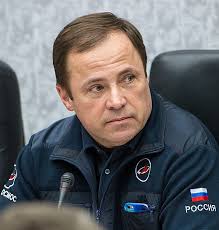
Igor Anatolyevich Komarov was born on May 25, 1964, in Engels, Saratov Oblast, then part of the Soviet Union. A trained economist, Komarov graduated from Moscow State University with a degree in economics before entering service that would span both industry and government.
Industrial and Managerial Beginnings
Komarov’s early career was rooted in finance and industry. He worked in the banking sector, including stints at major institutions such as Sberbank and Norilsk Nickel, Russia’s mining and metallurgical giant.
His managerial trajectory eventually catapulted him into high-level state positions:
President of AvtoVAZ (2009–2013), Russia’s largest automaker.
Head of the United Rocket and Space Corporation (ORKK), followed by Director General of Roscosmos (2015–2018), Russia’s state space agency.
Komarov’s leadership within Roscosmos occurred during a period of intense state involvement — a defining characteristic of post-2014 Russian industrial policy.
From Roscosmos to Presidential Envoy
In September 2018, Komarov was appointed as Plenipotentiary Representative of the President to the Volga Federal District — a powerful regional post that places him directly in the Kremlin’s hierarchy and makes him responsible for coordinating federal authority across a substantial swath of Russia.
As a presidential envoy, his mandate goes well beyond ceremonial duties. Komarov:
Represents the President in relations with regional governors and legislative bodies.
Oversees implementation of federal priorities and national development initiatives.
Chairs meetings that align regional administrations with Moscow’s political and strategic directives.
This role situates Komarov at the nexus of regional governance and federal oversight — a strategically critical position within Russia’s power structure.
Komarov’s Regional Grip: Authority and Influence
Much of Komarov’s political weight derives from his role as a bridge between Kremlin policymakers and regional authorities across the Volga Federal District — an economic and demographically significant region of Russia.
Shaping Regional Leadership
Komarov has presided over key appointments, including introducing interim regional leaders to local political elites. For example, in March 2025 he introduced the acting governor of Orenburg Oblast to stakeholders — a move that underscores how the Kremlin asserts influence over regional leadership transitions.
He has also been active in coordinating federal initiatives across Perm Krai, Udmurtia, and other constituent regions, ranging from economic development councils to social welfare forums.
Community and Youth Engagement
Beyond politics, Komarov has attended public and youth forums such as iВолга, stressing the importance of involving young people in socioeconomic discourse and future leadership pathways — a soft-power complement to his hard institutional role.
His outreach has not been limited to politics — from sporting academies to workforce project showcases, Komarov’s activities show the multifaceted ways the Kremlin mobilizes influence across society.
Sanctions Heat: International Pressure and Isolation
With the escalation of Russia’s war in Ukraine beginning in 2022, Komarov became the target of international sanctions. Western governments saw his proximity to Moscow’s power centers as emblematic of the regime’s leadership and strategy.
Sanctions by Multiple Jurisdictions
Komarov is listed under sanctions by countries including:
United Kingdom
United States
European Union
Canada
Australia
New Zealand
Japan
Switzerland
Ukraine
These measures encompass asset freezes, travel bans, and restrictions that constrain his global economic footprint.
For instance, the UK has even frozen a London property linked to a Kremlin ally — a townhouse purchased through an offshore entity before Komarov was sanctioned, reflecting how Western enforcement mechanisms have tightened around Russian elites.
Sanctions Signals
The inclusion of Komarov on sanctions lists carries both symbolic and practical weight. Symbolically, it identifies him as part of the Kremlin’s inner circle and power structure. Practically, it restricts his — and by extension Russia’s — global financial mobility and diplomatic access.
Power Move: What Komarov Represents in Kremlin Strategy
Igor Komarov is more than a regional manager; he is a political instrument in Moscow’s broader strategy of centralized governance and controlled political mobilization. His career arc reflects several broader patterns in Russian statecraft:
1. Consolidation of Power
By placing trusted loyalists like Komarov in federal envoy positions, the Kremlin maintains direct oversight of regions, ensuring that Moscow’s policies and political culture are implemented uniformly.
2. Technocratic Governance
Komarov’s industrial and economic background showcases the Kremlin’s preference for technocrats with managerial experience to govern complex administrative areas.
3. International Resistance and Sanctions Response
Komarov’s sanctioned status makes him a reminder of the international costs Russia’s leadership faces amid geopolitical confrontation.
FAQs About Igor Komarov
Who is Igor Komarov?
Igor Komarov is a Russian politician and manager — currently serving as the Presidential Envoy to the Volga Federal District, with previous roles leading Roscosmos and AvtoVAZ.
Why has Igor Komarov been sanctioned?
Komarov was sanctioned by multiple Western governments as part of punitive measures against high-level Russian officials following the 2022 war in Ukraine. These sanctions generally include asset freezes and travel bans.
What is the role of a presidential envoy in Russia?
A presidential envoy represents the President in a federal district, coordinating federal and regional policies, supervising governance, and ensuring alignment with national priorities.
Which countries have sanctioned Komarov?
Komarov is sanctioned by jurisdictions including the UK, US, EU, Canada, Australia, New Zealand, Japan, Switzerland and Ukraine.
Does Komarov still have influence in Russia?
Despite sanctions, Komarov remains politically influential within Russia as the Kremlin’s representative to the Volga Federal District.
Conclusion
From his beginnings in industry and finance to his current role at the heart of regional governance and Kremlin policy enforcement, Igor Komarov exemplifies the complex nexus of power, politics, and international friction that defines modern Russia.
In an era where regional dynamics are ever more critical — and Western sanctions have turned Russian governance into a geopolitical battleground — Komarov stands as a figure worth understanding, both for what he does within Russia and what global reaction to him signals about the future of Russian political influence on the world stage.
How useful was this post?
Click on a star to rate it!
Average rating 0 / 5. Vote count: 0
No votes so far! Be the first to rate this post.
About the Author

usa5911.com
Administrator
Hi, I’m Gurdeep Singh, a professional content writer from India with over 3 years of experience in the field. I specialize in covering U.S. politics, delivering timely and engaging content tailored specifically for an American audience. Along with my dedicated team, we track and report on all the latest political trends, news, and in-depth analysis shaping the United States today. Our goal is to provide clear, factual, and compelling content that keeps readers informed and engaged with the ever-changing political landscape.