Donald Trump Tariffs Surge : Global Trade Tension, Market Volatility Fears
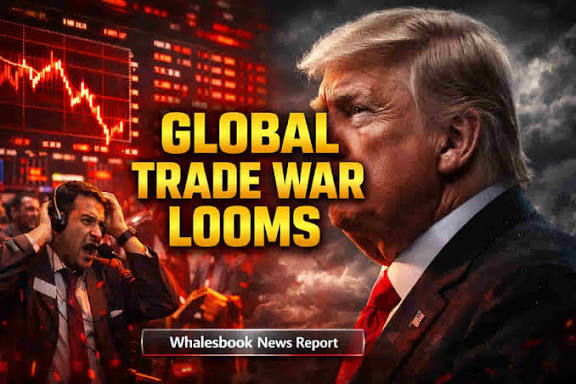
In recent months, Donald Trump’s tariff policies have once again thrust the global economy into uncertainty — igniting trade tensions, fueling market volatility, and raising questions about the future of international commerce. From steep import duties to legal battles reaching the U.S. Supreme Court, the ripple effects of these policies extend far beyond borders, affecting supply chains, inflation dynamics, emerging markets, and investor confidence.
This comprehensive article explains the origins, impacts, controversies, and prospects surrounding the surge in tariffs — and why global markets remain jittery.
📈 1. The Surge of Tariffs Under Trump: A New Trade Era
Donald Trump’s tariff initiatives mark one of the most aggressive trade policy shifts in decades.
While tariffs are not new to U.S. economic policy, the scale and scope of recent measures have been unprecedented — targeting not only traditional rivals like China but also close partners and a wide range of imported goods.
At the heart of these policies were attempts to:
Reduce trade deficits
Protect domestic industry
Force supply chain re-alignment
However, implementing sweeping tariffs via executive action generated fierce debate — not just economically, but constitutionally.
In February 2026, the U.S. Supreme Court ruled 6–3 that many of Trump’s tariffs imposed via emergency powers were unlawful, stating that the executive branch cannot levy such broad import taxes without clear Congressional authorization.
This ruling — a watershed moment — effectively nullified significant portions of Trump’s trade strategy and introduced fresh legal uncertainty into global commerce.
🌍 2. Why Tariffs Spark Global Trade Tension
At their core, tariffs are taxes on imports. When one of the world’s largest economies imposes broad tariffs, the repercussions are felt globally.
Retaliation and Escalation
Countries affected by U.S. tariffs have responded in various ways:
Reciprocal duties on American goods
WTO challenges
Negotiated tariff changes with select trade partners
This tit-for-tat dynamic resembles a classic trade war scenario — historically linked to slower growth and heightened uncertainty.
Strain on Global Trade Flow
According to World Trade Organization estimates, tariff measures and the resulting uncertainty could reduce world merchandise trade growth by up to 1.5% — a meaningful drag on global economic activity.
The volatility isn’t confined to tariffs alone — unclear policy direction and inconsistent statements have added complexity, making it harder for markets and businesses to plan ahead.
📉 3. Financial Markets and Volatility: Fear in the Trading Room
Tariffs aren’t an economic silo — they quickly seep into financial markets.
Market Reactions and Sell-offs
Major global indices have experienced sharp swings during tariff announcements and escalations. Previous tariff threats have caused:
Sudden sell-offs in equities
Elevated volatility indices (e.g., VIX)
Increased safe-haven demand for gold
Such behavior reflects investor anxiety over disrupted trade flows and uncertain corporate earnings.
Stagflation Fears
Economists have warned that sustained tariffs could contribute to stagflation — where inflation rises while growth stagnates. Rising input costs, production disruptions, and decreased consumer spending combine to create a challenging economic environment.
Market Crashes & Indicators
In early 2026, one notable market event — referenced by analysts as a significant market drop on January 20, 2026 — was tied directly to tariff fears, illustrating how trade policy is now inseparable from investor sentiment.
🛠 4. Supply Chains Under Pressure
Tariffs upheave the cost structure of manufacturing by:
Raising import prices
Reducing profitability
Disrupting long-established regional supply chains
Companies reliant on multi-national production networks have faced:
Higher costs passed down to consumers
Delays in sourcing inputs
Strategic reassessments of where to produce and sell
In the broader context, trade frictions force businesses to explore “China+1” or alternative sourcing — but those shifts take time, capital, and strategic retooling.
🏛 5. Legal Controversy and Constitutional Backdrop
The recent Supreme Court decision fundamentally alters the landscape for tariff policy by requiring clear legislative authority for broad import taxes, rather than executive decrees.
The ruling makes three big points:
Tariffs are essentially taxes, for which Congress has authority.
Broad use of emergency powers for trade policy is unconstitutional.
Future tariff actions may require greater legislative collaboration.
This outcome:
Weakens unilateral tariff mechanisms
Signals judicial checks on trade policy
Potentially reduces market turmoil linked to domestic legal battles
Many analysts see this as a reset moment for global trade rule-making.
🇮🇳 6. Impacts on India and Other Emerging Markets
Emerging markets — including India — felt the effects of tariff dynamics:
Increased volatility in local stock markets
Shifts in Foreign Institutional Investment
Pressure on export-oriented sectors
With the recent judicial rollback of U.S. tariffs, specific duties affecting Indian exports have been overturned, potentially boosting trade competitiveness.
However, broader trade tension still influences investor sentiment and growth forecasts across South Asian markets.
🤝 7. Diplomatic Implications and Trade Negotiations
Tariffs don’t just touch economics — they shape international relations.
In some cases, countries have:
Negotiated tariff exemptions
Reached bilateral agreements
Suspended retaliatory duties
Trade diplomacy has become as important as policy mechanics, with global forums calling for cooperative approaches to resolve tensions rather than unilateral action.
📊 8. What Comes Next: Key Outlooks for 2026 and Beyond
Short-Term Projections
Continued market sensitivity to tariff signals
Policy uncertainty tied to legislative processes
Ongoing reconfiguration of supply chains
Long-Term Possibilities
Enhanced multilateral frameworks under WTO or regional pacts
Institutional checks on executive trade actions
Potential global growth moderation or recovery scenarios
What remains clear is that trade policy will remain a central driver of market confidence and geopolitical risk.
❓ Frequently Asked Questions (FAQs)
Q1. What triggered the surge in Donald Trump’s tariffs?
A: The tariff surge was triggered by Trump’s push to impose wide-ranging import duties as part of trade policy reforms aimed at reducing trade deficits and protecting domestic manufacturing.
Q2. Why have markets reacted strongly to tariff announcements?
A: Markets dislike uncertainty. Tariff announcements affect corporate earnings, increase input costs, and lead to speculation about global growth — all of which boost volatility.
Q3. What did the U.S. Supreme Court rule regarding Trump’s tariffs?
A: In February 2026, the Supreme Court ruled that most of Trump’s executive-imposed tariffs were illegal because they exceeded presidential authority under emergency powers. This reversed many tariff measures.
Q4. How have global trading partners responded?
A: Many partners responded with reciprocal tariffs, WTO challenges, or strategic negotiations — dampening trade growth and contributing to uncertainty.
Q5. What is the impact of tariffs on inflation?
A: Tariffs raise import costs, which can be passed to consumers — pushing up prices and contributing to inflationary pressure.
Q6. Are tariffs likely to continue?
A: Future tariff strategies may shift toward more negotiated frameworks, especially after the Supreme Court decision and as trade diplomacy gains importance.
Conclusion
The surge in Donald Trump’s tariffs has rekindled a fierce debate about the role of trade policy in a globally interlinked economy. From legal challenges to market volatility and global trade tension, the effects are multifaceted and ongoing.
While recent legal decisions have reset the tariff landscape, the longer narrative remains the same: trade policy uncertainty is a powerful force — disrupting markets, reshaping supply chains, and testing diplomatic ties across continents.
Staying informed, responsive, and analytical is critical for investors, policymakers, and business leaders navigating this complex era of global trade.
How useful was this post?
Click on a star to rate it!
Average rating 0 / 5. Vote count: 0
No votes so far! Be the first to rate this post.
About the Author

usa5911.com
Administrator
Hi, I’m Gurdeep Singh, a professional content writer from India with over 3 years of experience in the field. I specialize in covering U.S. politics, delivering timely and engaging content tailored specifically for an American audience. Along with my dedicated team, we track and report on all the latest political trends, news, and in-depth analysis shaping the United States today. Our goal is to provide clear, factual, and compelling content that keeps readers informed and engaged with the ever-changing political landscape.