Prince Andrew Arrest: UK Police Action, Epstein Links, Royal Shock
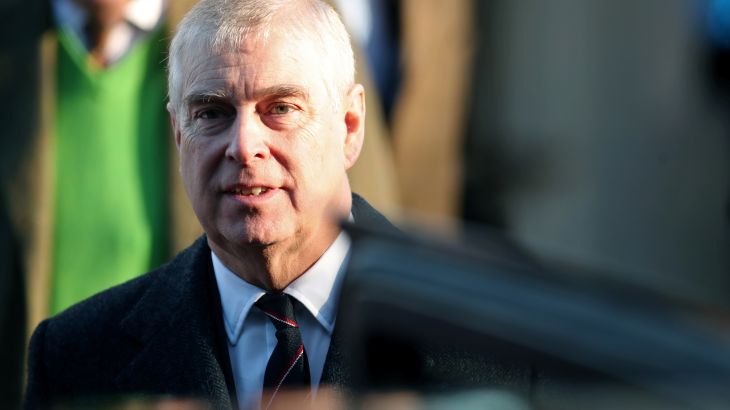
You saiIn one of the most startling developments in modern British history, Prince Andrew — formally Andrew Mountbatten-Windsor — was arrested by UK police on 19 February 2026 on suspicion of misconduct in public office, linked to fresh scrutiny over his connections with convicted sex offender Jeffrey Epstein. This extraordinary event has sent shockwaves across the UK, the Commonwealth, and global media, marking the first significant custodial intervention involving a senior member of the royal family in centuries.
What Happened: The Arrest Action
Police Move In
Thames Valley Police conducted a coordinated operation at Wood Farm on the Sandringham Estate in Norfolk early on Thursday morning, coinciding with Prince Andrew’s 66th birthday. Officers, including unmarked vehicles and plain-clothes detectives, were pictured arriving at his residence, leading to his arrest on suspicion of misconduct in public office — a serious common-law offence that can carry a life sentence in the UK.
The force also carried out searches at at least one additional address in Berkshire, reflecting the broad scope of its inquiries.
What Is “Misconduct in Public Office”?
According to UK legal definitions, misconduct in public office refers to a wilful neglect or abuse of responsibilities entrusted to a public official. While Prince Andrew is not a current office-holder, allegations relate to his time serving as a UK trade envoy, during which he is alleged to have shared sensitive information with Epstein — potentially breaching confidentiality and undermining official duty.
The Epstein Link: What’s Behind the Investigation?
The Epstein Files Revelation
This arrest follows the release of previously sealed documents — commonly referred to as the “Epstein files” — that have triggered renewed police interest. Published by the U.S. Department of Justice, these files include emails and communications suggesting that Prince Andrew may have forwarded confidential government briefings during overseas trade missions to Epstein or associates.
Trade Envoy Role Under Scrutiny
As a trade envoy from 2001 to 2011, Prince Andrew had privileged access to senior officials and international contacts. Some documents appear to show him sharing trip details from visits to Vietnam, Singapore, China, and other regions with Epstein — actions potentially constituting misconduct or even breaches of national security protocols.
Previous Allegations
The Duke of York had faced legal challenges and public condemnation over his connections with Epstein in the past. In 2022, he settled a high-profile US civil case brought by Virginia Giuffre, one of Epstein’s most prominent accusers. Though not resulting in criminal charges, the episode significantly damaged his public reputation.
Historic Implications: Royals and the Law
Prince Andrew’s arrest represents a watershed moment for the British monarchy — the most serious law enforcement action involving a senior royal in modern history. The last comparable situation dates back to the English Civil War era, involving King Charles I.
King Charles III’s Reaction
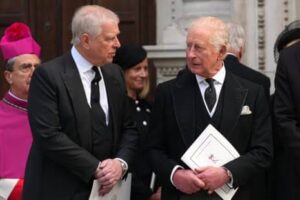
King Charles III issued a public statement expressing “deepest concern” over the arrest, emphasizing that the law must take its course and affirming the royal family’s cooperation with authorities.
This response signals the Crown’s determination to balance tradition with accountability — a challenging position as public trust in institutions continues to evolve.
Political Commentary
Before the arrest, UK Prime Minister Keir Starmer reinforced a central democratic tenet: “Nobody is above the law,” underscoring political support for impartial investigation and the rule of law.
Public and Media Reaction
News of the arrest spread rapidly across global media networks and social channels, drawing intense public debate. For many, it is a moment of accountability; for others, it raises questions about institutional power and transparency.
Victims’ Advocacy Response
The family of Virginia Giuffre — who died in April 2025 — issued a statement welcoming the arrest, seeing it as validation that the law can reach even the most powerful figures.
What Happens Now? Police and Legal Process
Custody and Court Proceedings
Following the arrest, Prince Andrew remains in police custody as inquiries continue. Under UK law, an arrested person may be held for questioning, and if sufficient evidence is found, prosecutors may decide to file charges.
Potential Penalties
If convicted of misconduct in public office, the individual could face a maximum life sentence. This underlines the seriousness of the allegations and potential ramifications for royal accountability.
Ongoing Searches and Evidence Gathering
Police raids and evidence gathering efforts continue at multiple properties, and additional witnesses or documents may emerge as the investigation progresses.
Historical Context: The Royal Factor
Prince Andrew’s arrest also invites reflection on a broader evolution of how monarchy interacts with law enforcement.
Past Legal Cases and Royals
Historically, British royals have enjoyed various legal protections. Modern constitutional norms have increasingly emphasized impartial justice, but this arrest represents one of the strongest affirmations of legal equality in centuries.
Frequently Asked Questions (FAQs)
1. Why was Prince Andrew arrested?
Prince Andrew was arrested by UK police on 19 February 2026 on suspicion of misconduct in public office, linked to allegations that he improperly shared official information with Jeffrey Epstein.
2. What does “misconduct in public office” mean in the UK?
It is a serious common-law offence involving the abuse or neglect of duty by someone entrusted with public responsibilities. Convictions can carry life imprisonment.
3. Are the allegations linked to the Epstein files?
Yes — the arrest follows renewed scrutiny from the release of the Epstein files, which include emails and communications suggesting improper conduct by Prince Andrew during his time as a UK trade envoy.
4. What has the royal family said publicly?
King Charles III expressed “deepest concern,” stressed cooperation with police, and affirmed that the law must take its course.
5. Could Prince Andrew face jail time?
If charged and convicted, the offence of misconduct in public office carries a maximum penalty of life imprisonment under UK law.
6. Is this the first time a British royal has been arrested?
In modern history, yes — this is the first major custodial legal action involving a senior member of the royal family since the 17th century.
Conclusion
The arrest of Prince Andrew by UK police on suspicion of misconduct in public office is a historic milestone that resonates far beyond royal circles. It ties together questions of legal accountability, abuse of power, and public trust at the highest levels of governance. With the investigation ongoing and legal proceedings yet to unfold, this case will continue to dominate headlines and prompt discussions about justice, transparency, and the role of constitutional monarchy in the 21st century.
How useful was this post?
Click on a star to rate it!
Average rating 0 / 5. Vote count: 0
No votes so far! Be the first to rate this post.
About the Author

usa5911.com
Administrator
Hi, I’m Gurdeep Singh, a professional content writer from India with over 3 years of experience in the field. I specialize in covering U.S. politics, delivering timely and engaging content tailored specifically for an American audience. Along with my dedicated team, we track and report on all the latest political trends, news, and in-depth analysis shaping the United States today. Our goal is to provide clear, factual, and compelling content that keeps readers informed and engaged with the ever-changing political landscape.