Linda Davis killed: ICE chase crash ignites outrage, protests erupt

On February 16, 2026, a tragic collision occurred near Savannah, Georgia, when a driver fleeing Immigration and Customs Enforcement (ICE) officers crashed into a vehicle carrying Dr. Linda Davis, a beloved special education teacher at Herman W. Hesse K-8 School. Davis died from her injuries, sparking a wave of public grief, outrage, and growing protests that have brought national attention to questions about immigration enforcement tactics, interagency coordination, and civilian safety.
A Beloved Educator Lost
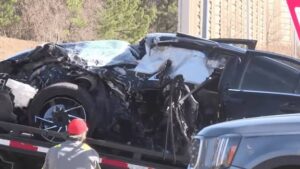
Dr. Linda Davis was a long-time educator known for her dedication to her students and her deep commitment to the Savannah community. On Presidents’ Day, when students were off but teachers had reported for a planning day, Davis was driving to work as she did every day. Just before 7:45 a.m., a vehicle driven by Oscar Vasquez Lopez, a 38-year-old Guatemalan national, struck her car after fleeing a traffic stop initiated by ICE agents.
The crash occurred less than half a mile from the school, on a route Davis took daily. She was rushed to a local hospital but was pronounced dead shortly afterward. School officials and colleagues have described Davis as a nurturing, patient, and beloved teacher, whose loss has deeply affected students, families, and staff alike.
Sequence of Events: What Happened
According to authorities, ICE agents attempted to stop the vehicle driven by Vasquez Lopez as part of an immigration enforcement action. Lopez initially pulled over but then fled when the officers approached. He made a U-turn, ran a red light, and collided with Davis’s vehicle.
Officials later disclosed that Vasquez Lopez had a 2024 deportation order and was in the United States without legal authorization. Law enforcement sources said he had no significant criminal history beyond immigration violations.
Local police were not notified prior to the ICE operation and were not participating in the attempted stop, as confirmed by the Chatham County Police Department. Police emphasized that they typically avoid high-speed pursuits for public safety reasons and that they learned of the federal action only after responding to the crash.
Charges Against the Suspect
Vasquez Lopez was taken into custody and faces multiple state charges, including vehicular homicide in the first degree, reckless driving, driving without a valid license, and failure to obey a traffic control device. He was treated at a hospital for non-life-threatening injuries before booking into the Chatham County Jail.
Public Reaction and Outrage
The circumstances of Davis’s death quickly ignited public anger and deep concern over federal immigration enforcement methods, particularly the use of vehicle stops and follows near populated areas and schools. Families, community leaders, and local officials have expressed grief while calling for accountability and change.
Savannah Mayor Van Johnson offered condolences to Davis’s family and urged the community to focus on compassion and understanding as they process the tragedy. Meanwhile, elected officials have presented sharply different views on ICE’s role, enforcement policy, and responsibility for the crash.
Protests and Demonstrations Erupt
Within days of the tragedy, community members and activists gathered in Forsyth Park and other public spaces in Savannah, demanding justice for Davis and calling for reforms to federal immigration enforcement practices. Hundreds of protesters waved signs and chanted slogans urging accountability and an end to perceived endangerment of civilians during immigration operations.
The Party for Socialism and Liberation (PSL) held an emergency demonstration, framing the protest as both a tribute to Davis’s life and a call for action against ICE. Organizers highlighted the emotional impact of the incident and the fear many community members feel regarding aggressive federal enforcement tactics.
These protests echo broader nationwide demonstrations earlier in 2026 that followed high-profile ICE enforcement incidents, including scenes that stirred national debate about law enforcement practices and immigrant rights.
Federal Enforcement and Local Concerns
The department responsible for immigration enforcement, the U.S. Department of Homeland Security (DHS) and its sub-agency ICE, responded to the incident with statements stressing that Lopez caused the fatal crash. DHS officials pointed out that Lopez fled from the stop and that the outcome was directly due to his reckless actions.
Still, critics argue that federal agents should coordinate more closely with local law enforcement, especially in cities with strict “no high-speed pursuit” policies designed to protect public safety. Savannah’s police department has a longstanding policy against chase pursuits, a measure intended to prevent exactly the sort of tragedy witnessed in this crash.
Georgia State Senator Derek Mallow and other local leaders have called for a review of federal practices, emphasizing that immigration enforcement should not endanger innocent lives and that operations near schools and residential areas require careful evaluation.
Community Grief and Memorials
In the days following Davis’s death, community members laid flowers and notes near a makeshift memorial at the site, paying tribute to her life and legacy. Students and colleagues shared stories highlighting Davis’s nurturing spirit, her dedication to every child’s success, and the profound impact she had on those around her — far beyond her classroom duties.
Parents and school officials have made grief counselors available to students and staff, acknowledging the emotional toll the incident has taken on the school community. Messages of support have poured in from across the country, with many echoing calls for safer enforcement protocols.
National Dialogue and Broader Implications
The death of Linda Davis has prompted renewed national conversation about immigration enforcement in the United States — not only its legal and humanitarian dimensions but also its impact on civilian safety. Advocates for policy reform argue that life-threatening outcomes highlight the urgent need to examine how federal agencies execute traffic stops and punitive actions in civilian areas.
This debate is further fueled by similar protests earlier in 2026 following other controversial ICE operations that spurred sustained public demonstrations in cities nationwide.
What Happens Next?
As legal proceedings against the driver continue, and as public debate intensifies, there are several potential outcomes:
Local and federal investigations into the coordination and decision-making behind the ICE operation.
Policy reviews by federal and local authorities regarding vehicle pursuits, especially in populated zones near schools.
Continued community action, including protests and calls for legislative reform on immigration enforcement and public safety.
Support initiatives honoring Dr. Linda Davis’s life, such as scholarship funds or tributes within the school system.
The tragedy has become a rallying point for groups advocating for civil liberties, immigrant rights, and public safety reforms — amplifying questions about how enforcement actions are conducted when the stakes include innocent lives.
Frequently Asked Questions (FAQs)
Q1: Who was Linda Davis?
A1: Linda Davis was a special education teacher at Herman W. Hesse K-8 School in Savannah, Georgia, known for her dedication, patience, and nurturing impact on students. She died on February 16, 2026, after a vehicle fleeing federal immigration officers struck her car.
Q2: What led to the crash that killed Linda Davis?
A2: A man identified as Oscar Vasquez Lopez fled a traffic stop initiated by ICE officers. In attempting to evade the stop, he made a U-turn, ran a red light, and collided with Davis’s vehicle, resulting in her death.
Q3: Was ICE directly responsible for her death?
A3: The immediate cause was the fleeing driver’s reckless actions. However, critics argue that federal enforcement tactics and coordination — specifically the pursuit — contributed to the circumstances leading to Davis’s death.
Q4: What charges does the suspect face?
A4: Oscar Vasquez Lopez faces state charges including first-degree vehicular homicide, reckless driving, driving without a valid license, and failure to obey a traffic control device.
Q5: Why did protests erupt?
A5: Protests erupted as community members expressed outrage over the conditions of the crash and called for accountability, safer law enforcement protocols, and reconsideration of federal immigration operations near civilian areas.
How useful was this post?
Click on a star to rate it!
Average rating 0 / 5. Vote count: 0
No votes so far! Be the first to rate this post.
About the Author

usa5911.com
Administrator
Hi, I’m Gurdeep Singh, a professional content writer from India with over 3 years of experience in the field. I specialize in covering U.S. politics, delivering timely and engaging content tailored specifically for an American audience. Along with my dedicated team, we track and report on all the latest political trends, news, and in-depth analysis shaping the United States today. Our goal is to provide clear, factual, and compelling content that keeps readers informed and engaged with the ever-changing political landscape.