Kennedy Center : scandal sparks outrage, arts world shaken, Washington drama
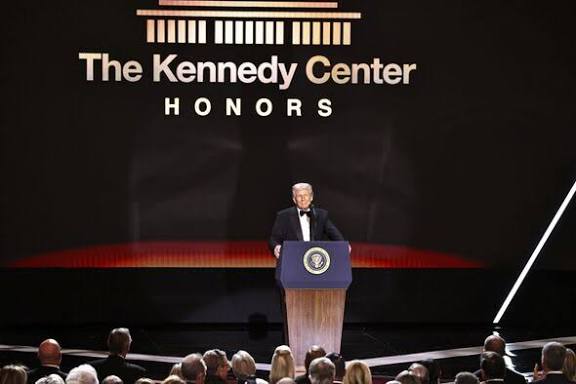
Why so much anger against the American President? When… BREAKING: Fire breaks out under the name “Trump-Kennedy Center”. Today we will discuss about Kennedy Center : scandal sparks outrage, arts world shaken, Washington drama
Kennedy Center : scandal sparks outrage, arts world shaken, Washington drama
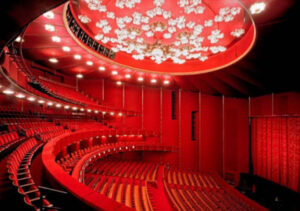
The John F. Kennedy Center for the Performing Arts — once revered as America’s premier cultural institution, a living memorial to President Kennedy, and a global hub for music, theater, dance, and the arts — is now embroiled in one of the most explosive controversies in its history. What began as a leadership change has metastasized into a full-blown scandal, drawing fierce backlash from artists, lawmakers, audiences, and cultural commentators alike. The Kennedy Center, long celebrated as a place where artistic freedom and national pride intersect, is now a flashpoint in a broader battle over politics, cultural identity, and the future of arts in America.
This article explores how the controversy unfolded, the forces driving it, its impact on the arts world, public reaction, and what lies ahead for this iconic institution.
The Origins of the Turmoil
At the center of the crisis is a dramatic shift in leadership and direction at the Kennedy Center. In early 2025, President Donald Trump — in his second presidency — orchestrated a sweeping overhaul of the Center’s governance. Trump replaced nearly the entire board of trustees, ousted the previous leadership, including longtime president Deborah Rutter, and appointed loyalists in their place. The Trump-aligned board then installed Trump himself as chair of the Kennedy Center’s governing board.
The move was immediately controversial. Unlike most national arts institutions that operate with broad bipartisan support and relative autonomy, the Kennedy Center had suddenly become much more overtly political. Critics saw this as not just administrative restructuring, but a significant ideological shift. Many believed the changes were aimed at reshaping the Center’s cultural identity in line with a more conservative agenda, scoffing at what the new leadership described as “woke” content in past programming.
The stakes were instantly high. The Kennedy Center was not merely a performance venue — it was the premier national stage for American and international arts, with deep symbolic weight as a living tribute to one of America’s most beloved modern presidents. Once reshaped in a way that appeared to foreground partisan politics over artistic mission, reactions were swift and dramatic.
The Renaming and Rebranding Controversy
One of the most extraordinary decisions was the addition of Trump’s name to the institution’s facade, effectively renaming it the “Trump-Kennedy Center.” The board unanimously approved this change in December 2025, much to the shock and outrage of many in the cultural community.
Under normal circumstances, renaming a federal memorial institution like the Kennedy Center — which Congress designated as the official national memorial to President John F. Kennedy — would require legislative approval. Yet the board pushed ahead with the rebranding, asserting that it reflected “bipartisan support” for preserving and enhancing the Center’s legacy. Many legal scholars questioned the legality of this move.
The renaming became a defining flashpoint in the scandal. Detractors viewed it as an act of political vanity unbecoming of an institution intended to unite diverse audiences around the arts. The Kennedy family itself condemned the decision, stating that such a change undermined the purpose of the center and violated its founding mission.
Artist and Institution Withdrawals
The arts world’s reaction was immediate and severe. Performers, composers, ensembles, and cultural organizations began distancing themselves from the Kennedy Center in protest. The fallout has been almost unprecedented for such a venerable institution.
One of the most notable withdrawals came from acclaimed composer Philip Glass. Glass canceled the world premiere of his Symphony No. 15, Lincoln, which was scheduled to debut at the Kennedy Center in 2026. Glass explained that the themes of his work — celebrating democratic values and the legacy of Abraham Lincoln — were at odds with the “values of the Kennedy Center today,” given its leadership and direction.
The Washington National Opera — a long-standing affiliate of the Kennedy Center — also cut ties, choosing to operate independently rather than remain associated with a controversial institution.
Beyond these marquee departures, a growing number of artists, troupes, and individual performances have been canceled. The jazz group The Cookers, the dance company Doug Varone and Dancers, jazz virtuoso Chuck Redd, and folk singer Kristy Lee all opted out of performing at the Center in protest.
Even key arts festivals have reacted. The American College Theatre Festival, which had long been held at the Kennedy Center, suspended its affiliation in late 2025, saying the Center’s decisions did not align with its values.
The wave of cancellations didn’t just affect touring performers: several high-profile cultural figures resigned from advisory positions at the Center. Actress and writer Shonda Rhimes stepped down from her role as treasurer, and soprano Renée Fleming resigned as an artistic advisor, signaling deep disapproval from within the arts community itself.
Financial and Operational Impact
These artistic deflections have not been without consequence for the Kennedy Center’s finances. Already struggling with stagnating ticket sales before the controversy, the Center has seen audience engagement decline further under its new leadership.
Analyses revealed that a far higher percentage of seats across major performance series remained unsold compared with previous years, leading to significant revenue shortfalls — a serious concern for an institution that relies heavily on ticket sales, sponsorships, and donations to fund its operations.
Compounding these issues, internal staffing turmoil has emerged. Several senior staff and programming executives resigned or were let go within months of the leadership overhaul. This contributed to operational instability and pressure on an already stressed workforce.
Political Backlash and Investigations
The controversy quickly spilled into Washington’s political arena. Senate Democrats launched an investigation into the Kennedy Center’s finances, contracts, and governance practices. Lawmakers alleged that the Center had engaged in cronyism, wasteful spending, and preferential treatment for political allies, including discounted rentals for outside groups, sparking particular ire for potentially violating nonprofit best practices.
The investigation also raised concerns about lavish expenditures and contracts allegedly funneled to personal acquaintances of leadership, details that further fueled criticism from both sides of the aisle.
Supporters of the current leadership defended these changes, arguing that the Center was in need of financial and structural renovation — something its new board advocated as long overdue. The Center’s president installed by the board publicly rejected accusations of corruption and labeled many of the attacks as politically motivated.
The Two-Year Closure Announcement
In February 2026, the controversy moved into a new phase when President Trump announced that the Kennedy Center would close entirely for two years beginning July 4, 2026. The ostensible reason given was to undertake a comprehensive renovation and reconstruction of the facility, transforming it into a “world-class” performing arts venue ahead of the United States’ 250th anniversary.
While such infrastructure investment could be positive under ordinary circumstances, many critics saw the timing — coming amid mass cancellations and cultural backlash — as a tactical response to mounting criticism rather than an urgent artistic necessity.
The announcement sparked further outrage, particularly among artists and arts organizations that had already canceled engagements. Critics argued that the closure was an attempt to silence critics and reset the Center’s programming away from its traditional artistic mission.
Public Opinion and Cultural Debate
The Kennedy Center’s turmoil has ignited wider debates about cultural institutions’ roles in American society. Is an arts center meant to be apolitical or reflect the country’s dominant political ethos? Should national memorials remain free from overt political branding? What responsibilities do institutions like the Kennedy Center have to the artists and communities they serve?
For many observers, the Kennedy Center controversy has become emblematic of deeper divides in American cultural and political life. Supporters of the changes argue that the Center suffered from declining relevance and needed bold action. They claim that critics are driven by partisan opposition rather than substantive concerns about artistic integrity.
Opponents counter that the Kennedy Center’s mission as a national cultural institution is fundamentally incompatible with overt political branding and partisan control. They argue that arts should transcend politics, serving as a space for dialogue and creativity — not as a platform for ideological warfare.
Impact on the Arts Community
At the heart of the backlash is the global arts community, which has shown remarkable solidarity in distancing itself from the Kennedy Center under its current governance. Composer Philip Glass — a figure whose work is as respected for its innovation as for its cultural commentary — voiced a sentiment shared by many creatives: that artistic spaces should reflect openness, diversity, and artistic freedom, not serve as battlegrounds for political symbolism.
Through cancellations, resignations, and public statements, artists have used their platforms to highlight what they view as an erosion of those core values. The cultural footprint of these protests extends beyond DC: performances canceled at the Kennedy Center often find new homes elsewhere, redistributing artistic energy to communities and venues that uphold artistic autonomy.
Looking Ahead: The Future of the Kennedy Center
As the Kennedy Center prepares for its planned two-year closure and potential reopening in 2028, its future remains uncertain in both artistic and political terms.
Will the renovation signal a revitalized cultural landmark or a symbolic reset that entrenches partisan divides further? Can the Kennedy Center recover its reputation and draw back the artists and audiences that have disengaged? And what will Washington — and the world — make of an institution at the crossroads of political turbulence and cultural identity?
If history is any guide, America’s most storied institutions are resilient — but not immune to the forces of politics and public perception. The Kennedy Center’s current crisis underscores a painful truth: when politics and culture collide, the arts — and the communities that cherish them — can feel the impact most intensely.
Conclusion
The Kennedy Center scandal is more than a story about institutional change or leadership disputes. It’s a narrative about cultural stewardship, political influence, artistic freedom, and national identity. In a time when cultural institutions often reflect broader societal fault lines, the Kennedy Center stands as both a symbol and battleground — reminding us that art, politics, and public life are inexorably intertwined.
How useful was this post?
Click on a star to rate it!
Average rating 0 / 5. Vote count: 0
No votes so far! Be the first to rate this post.
About the Author

usa5911.com
Administrator
Hi, I’m Gurdeep Singh, a professional content writer from India with over 3 years of experience in the field. I specialize in covering U.S. politics, delivering timely and engaging content tailored specifically for an American audience. Along with my dedicated team, we track and report on all the latest political trends, news, and in-depth analysis shaping the United States today. Our goal is to provide clear, factual, and compelling content that keeps readers informed and engaged with the ever-changing political landscape.