Peter Mandelson : Labour comeback drama, Starmer strategy shift, UK power politics
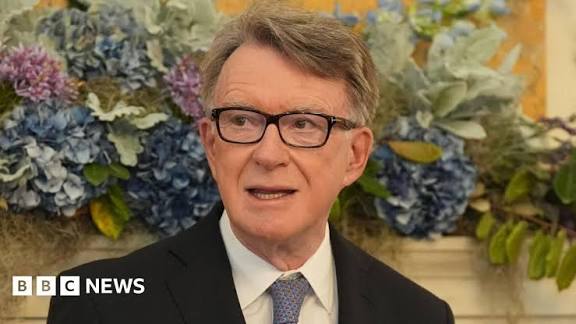
As of February 2, 2026, Lord Peter Mandelson has resigned from the Labor Party following new revelations about his relationship with Jeffrey Epstein. Today we will discuss about Peter Mandelson : Labour comeback drama, Starmer strategy shift, UK power politics
Peter Mandelson : Labour comeback drama, Starmer strategy shift, UK power politics
Peter Mandelson remains one of the most influential and controversial figures in modern British politics. Over four decades, his career has mirrored the dramatic shifts within the Labour Party itself — from ideological struggle and reinvention to electoral dominance, internal fracture, and renewed debates about power and accountability. Often described as a master strategist operating behind the scenes, Mandelson has shaped Labour’s direction more than almost any figure who rarely sought the limelight.
His story is not simply about personal ambition. It is about how political power is built, maintained, lost, and sometimes reclaimed in the unforgiving environment of UK politics. From the creation of New Labour to his influence on Keir Starmer’s leadership, Mandelson’s imprint on British political strategy is deep and enduring.
Early Life and Political Awakening
Born in London in 1953, Peter Mandelson grew up in a politically aware environment. He studied Philosophy, Politics, and Economics at Oxford University, a traditional breeding ground for British political elites. From an early stage, he showed more interest in political strategy, communication, and messaging than in grassroots activism.
Unlike many politicians who rise through local party structures, Mandelson’s early influence came through media management and internal party reform. He understood something that many in Labour resisted during the 1980s: elections were not won on ideology alone, but on perception, discipline, and credibility with swing voters.
Architect of Labour’s Modernisation
Mandelson rose to prominence during the leadership of Neil Kinnock, when Labour was struggling to recover from repeated election defeats. Appointed as Director of Communications, he helped reshape Labour’s public image, moving it away from factional infighting and ideological rigidity.
This period laid the groundwork for what later became New Labour. Alongside Tony Blair and Gordon Brown, Mandelson pushed for a decisive break from policies and language that voters associated with economic instability and protest politics. His belief was clear: if Labour wanted to govern, it had to look and sound like a party of government.
This approach was controversial within Labour. Many activists saw it as a retreat from socialist principles. Others viewed it as a necessary evolution in a country that had changed economically and socially. What cannot be disputed is that Mandelson’s strategy worked electorally.
Entry into Parliament and Rise to Power
Mandelson entered Parliament in 1992 as the Member of Parliament for Hartlepool. Just five years later, Labour achieved a historic landslide victory in 1997, ending nearly two decades of Conservative rule.
In government, Mandelson quickly became one of the most powerful figures in the Blair administration. He held several senior cabinet and ministerial roles, including Minister without Portfolio, Trade and Industry Secretary, Northern Ireland Secretary, and later Business Secretary under Gordon Brown.
His influence extended far beyond his official titles. Mandelson was a key internal power broker, often acting as a bridge — and sometimes a buffer — between rival factions within Labour’s leadership.
Controversy and Resignations
Mandelson’s political career has been marked by repeated controversy. He resigned from government more than once, each time amid questions over judgment and transparency. These episodes reinforced his reputation as both indispensable and politically vulnerable.
Despite these setbacks, Mandelson demonstrated an unusual ability to recover. Each return to power reinforced his image as a survivor — a figure too useful to be permanently sidelined. His nickname, the “Prince of Darkness,” reflected both admiration for his strategic brilliance and suspicion about his methods.
New Labour and the Centre-Ground Strategy
The New Labour project remains one of the most consequential political shifts in modern British history. Mandelson was central to its intellectual and tactical design. He believed Labour had to dominate the political centre to win elections consistently, even if that meant alienating parts of its traditional base.
Under this model, Labour embraced market-friendly economics alongside social reform. This repositioning delivered three consecutive general election victories and a decade of political dominance.
However, critics argue that this strategy weakened Labour’s ideological identity and deepened voter cynicism. The tension between electoral pragmatism and political conviction — a tension Mandelson embodied — continues to shape Labour’s internal debates today.
International Influence and Post-Government Roles
After leaving frontline UK politics, Mandelson moved onto the international stage. His experience and network made him a sought-after figure in global policy circles, think tanks, and advisory roles.
He became known as an advocate of centre-left politics adapted to globalization, arguing that social democracy had to evolve in response to economic and technological change. This period further expanded his influence beyond Westminster, but it also drew criticism for blurring the line between public service and private consultancy.
Relationship with Keir Starmer
When Keir Starmer became Labour leader, many observers speculated about Mandelson’s role behind the scenes. While not officially embedded in party leadership, Mandelson consistently argued that Labour needed discipline, clarity, and a broad electoral coalition to return to power.
His views aligned closely with Starmer’s efforts to reposition Labour after a period of internal division and electoral defeat. Mandelson publicly supported a strategy focused on credibility, national security, and economic responsibility — themes that became central to Starmer’s leadership.
To supporters, this represented a return to winning politics. To critics, it looked like a revival of old New Labour thinking under a different name.
Diplomatic Appointment and Renewed Scrutiny
Mandelson’s appointment to a senior diplomatic role marked one of the most surprising chapters in his career. It was widely interpreted as a sign of trust in his experience and international stature.
However, this return to prominence also reignited scrutiny of his past associations. In an era defined by transparency and accountability, Mandelson’s long-standing elite networks became a source of political risk rather than strength.
Scandal and Sudden Exit
The release of previously sealed documents connected to Jeffrey Epstein triggered a political storm that engulfed Mandelson. Allegations regarding financial ties and personal associations created intense public and political pressure.
Although Mandelson denied wrongdoing, the controversy quickly became untenable. He resigned from the Labour Party and stepped away from public office, effectively ending his active political career.
The episode placed Keir Starmer in a difficult position, forcing him to confront uncomfortable questions about judgment, vetting, and ethical standards within modern politics.
Impact on Labour and UK Politics
Mandelson’s fall had wider implications beyond his own career. It highlighted the risks faced by parties that rely heavily on experienced insiders with complex pasts. It also underscored the changing expectations of political accountability in the UK.
For Labour, the moment was both a reckoning and a warning. The party’s future strategy will likely continue to reflect many of Mandelson’s ideas, even as it seeks to distance itself from the controversies that now surround his legacy.
Assessing Mandelson’s Legacy
Peter Mandelson’s legacy is deeply divided. To supporters, he was a strategic genius who helped Labour win power and modernize British politics. To critics, he symbolized an era of elite-driven politics detached from grassroots concerns.
What is undeniable is his influence. Few individuals have shaped Labour’s electoral strategy, internal culture, and public messaging as profoundly. His career offers lessons in both political success and political vulnerability.
Conclusion: Power, Strategy, and Consequence
Peter Mandelson’s journey through British politics is a story of ambition, intellect, and consequence. He understood power better than most and knew how to wield it effectively — but power, once lost, is unforgiving.
His rise, repeated comebacks, and dramatic fall reflect the changing nature of political life in the UK. Strategy alone is no longer enough. Public trust, transparency, and ethical clarity now define political survival.
As Labour charts its future under Keir Starmer, Mandelson’s influence will remain — not as a guiding hand, but as a cautionary tale. His story will be studied for years as an example of how political brilliance and controversy can exist side by side, and how even the most skilled architects of power are ultimately accountable to the public they serve.
How useful was this post?
Click on a star to rate it!
Average rating 0 / 5. Vote count: 0
No votes so far! Be the first to rate this post.
About the Author

usa5911.com
Administrator
Hi, I’m Gurdeep Singh, a professional content writer from India with over 3 years of experience in the field. I specialize in covering U.S. politics, delivering timely and engaging content tailored specifically for an American audience. Along with my dedicated team, we track and report on all the latest political trends, news, and in-depth analysis shaping the United States today. Our goal is to provide clear, factual, and compelling content that keeps readers informed and engaged with the ever-changing political landscape.