Government Shutdown 2026 : Washington paralysis, budget war, US economy shock
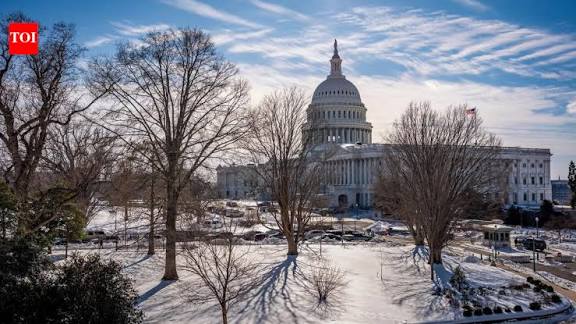
The cumulative effect of a six-week shutdown by the end of 2026 would be to reduce real GDP (in 2025 dollars) by $11 billion, which would be a very small impact at $30. Today we will discuss about Government Shutdown 2026 : Washington paralysis, budget war, US economy shock
Government Shutdown 2026 : Washington paralysis, budget war, US economy shock
A government shutdown occurs when Congress fails to pass appropriations legislation to fund federal agencies and programs before a statutory deadline. When that happens, funding “lapses,” non-essential government functions close, and federal workers may be furloughed or required to work without pay. The U.S. Constitution requires appropriations for government spending, and Congress divides federal funding into a series of 12 annual appropriations bills covering everything from defense to education.
A shutdown doesn’t mean everything stops. Essential activities tied to national security, public safety and critical services continue, albeit under strain. But without new spending authority, agencies can’t pay staff, process new contracts, or manage large swaths of routine work.
2. How Did the 2026 Shutdown Begin?
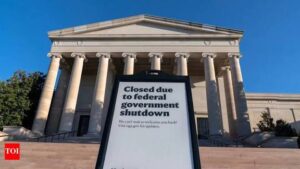
At 12:01 AM EST on January 31, 2026, the United States entered a partial government shutdown after appropriations failed to pass by the deadline. Congress had previously passed funding for six of the 12 required spending bills. But the remaining six — covering key agencies like the Department of Homeland Security (DHS), Defense, Transportation and Health and Human Services — were left unresolved.
Triggers of the 2026 Shutdown
The 2026 shutdown fight ignited over homeland security funding and immigration enforcement policies. Democrats in the Senate refused to support the full appropriations package unless the DHS bill was reworked to include reforms to Immigration and Customs Enforcement (ICE), following national outrage after the fatal shooting of two U.S. citizens by federal immigration agents in Minneapolis.
Senate Democrats, led by Minority Leader Chuck Schumer, demanded stricter oversight and accountability on ICE operations, including requirements such as:
Independent investigations into misconduct
Mandatory body cameras for agents
Restrictions on roving patrols and undercover operations
Ending mask use to improve accountability in communities
These demands became non-negotiable conditions for their support of DHS funding.
Political Gridlock
Although the Senate ultimately approved a compromise spending package — funding most government departments through September and creating a two-week extension for DHS — the House of Representatives has yet to pass it. The Republican-led House, with a razor-thin majority, faces pressure from conservative factions to modify the deal, while Democrats refuse to back funding without meaningful reforms.
As a result, the shutdown entered its early days amid intense partisan blame-casting and mounting uncertainty in Washington.
3. Washington Paralysis: A Battle of Budgets and Blame
The 2026 shutdown showcases how budget politics have become a battlefield for broader ideological conflicts in Washington.
Republican Strategy
House Speaker Mike Johnson and other GOP leaders argue that passing the Senate’s funding package is necessary to avoid prolonged paralysis. Johnson has publicly stated optimism that the government could be reopened quickly — possibly by Tuesday after the shutdown began — yet has also resisted Democratic demands as “unacceptable.”
Within the Republican conference, divisions persist. Some conservative members oppose the Senate package even if it secures funding, pushing instead for deeper policy changes such as citizenship requirements for voter registration and spending cuts.
Democratic Leverage and Resistance
Democrats see the budget fight as leverage to address immigration enforcement policies they consider abusive and dangerous. Leaders like Hakeem Jeffries and Jamie Raskin argue that continuing to fund DHS without reforms sends a message that federal agencies are above accountability.
Despite bipartisan efforts in the Senate to avert shutdown, Democrats have stuck to their demands, refusing to expedite funding without concessions on ICE oversight.
Polarization and Political Theater
This shutdown is emblematic of Washington’s hyper-polarized era. More than fiscal budgeting, it is a political war over immigration, federal authority, and public accountability. Neither side seems willing to yield easily, and each blames the other for the stalemate. This has left federal workers, contractors, and ordinary Americans caught in the crossfire.
4. The Economic Shock: What Happens When Washington Stops?
Government shutdowns may seem like internal political squabbles, but they have real economic consequences — both domestic and global.
Immediate Economic Pain
Historical data indicates that shutdowns can be costly:
Analysts estimated that previous long shutdowns could cost the U.S. economy $7 billion per week in lost GDP growth — and possibly as much as $15 billion per week according to some White House economic advisers.
Delayed government services contribute to reduced business confidence and slower economic activity.
Federal employees facing furloughs spend less, reducing demand in local economies.
Even partial shutdowns that last just days can harm key economic indicators by delaying data releases and dampening market sentiment.
Market Reactions
Financial markets tend to respond negatively to protracted political impasses. Recent trading data showed U.S. futures slipping after the shutdown began, as investors priced in the risk of prolonged fiscal uncertainty and delayed economic reports.
Volatility often spikes during shutdowns, with safe-haven assets like Treasuries and gold outperforming riskier equities as traders reevaluate risk profiles.
Federal Worker Impacts
Hundreds of thousands of federal employees may be furloughed or continue working without pay. Essential personnel — such as air traffic controllers, TSA agents, and military personnel — often work through shutdowns without immediate compensation, stressing morale and household budgets.
This also affects contractors and businesses dependent on government contracts, amplifying the economic fallout beyond federal payrolls.
5. Social and Public Service Disruptions
Beyond macroeconomic indicators, shutdowns disrupt everyday life:
National parks may close or operate with reduced staff.
Processing of federal permits and licenses slows or halts.
Social safety net programs can experience administrative delays.
Data releases (jobs reports, GDP figures, census updates) may be postponed, affecting policy and investment decisions.
Even if essential services continue, the quality and accessibility of government support can deteriorate, generating frustration among citizens and stakeholders.
6. A Tale of Two Shutdowns: Context from 2025
The 2026 shutdown follows a record-long 43-day shutdown in 2025 — the 11th federal shutdown in U.S. history. That extended crisis revealed both the limits of compromise and the political costs of prolonged impasse.
Last year’s shutdown ended with an agreement that resolved some disputes but left unresolved tensions over spending priorities, particularly healthcare subsidies and immigration policy. Many analysts now view the 2026 crisis as a continuation — not a fresh break — of those deeper budget wars.
7. Could It Have Been Averted?
Many political observers argue that smarter fiscal management, earlier negotiations and greater bipartisan trust could have prevented the shutdown. There were attempts to pass stopgap continuing resolutions and early funding packages. The House even passed a funding bill earlier in January to avoid a lapse; however, the Senate’s rejection of the DHS provisions and subsequent fracturing of that deal made shutdown almost unavoidable.
The Trump administration struck an eleventh-hour deal with Senate Democrats to avert a long shutdown — funding most departments through September and granting a temporary two-week extension for Homeland Security — but that deal still requires House approval.
8. What Happens Next?
As of early February 2026, the House of Representatives is scheduled to vote on the Senate’s funding legislation that could reopen the government. The outcome remains uncertain due to narrow margins and internal party divisions.
If the House passes the legislation — either as is or with modifications — it could end the shutdown quickly. But if it fails to muster enough support, the shutdown could extend into weeks, increasing economic and social disruption.
This situation also sets a precedent for future budget fights: will Congress legislate responsibly, or will shutdown brinkmanship become an expected tool of political leverage?
9. Broader Implications for U.S. Governance
The 2026 shutdown is about much more than money. It encapsulates:
Deep ideological divides over immigration, federal authority, and national priorities.
Eroding trust between political parties and within branches of government.
Rising frustration among Americans frustrated with political paralysis.
Questions about the stability of U.S. fiscal policy and global leadership.
A democratic system depends on functioning budget processes. When shutdowns become frequent, they weaken the credibility and efficacy of government institutions.
10. Conclusion: A Government at a Crossroads
The 2026 government shutdown marks a critical moment in U.S. political life — where budgetary battles, polarization and public outrage intersect. Whether this shutdown ends quickly or drags on, its effects will linger in economic statistics, public confidence, and Washington’s political landscape.
As lawmakers negotiate, Americans watch closely — hoping for resolution, weary from repeated fiscal crises, and wary of the costs that political paralysis imposes on everyday life.
How useful was this post?
Click on a star to rate it!
Average rating 0 / 5. Vote count: 0
No votes so far! Be the first to rate this post.
About the Author

usa5911.com
Administrator
Hi, I’m Gurdeep Singh, a professional content writer from India with over 3 years of experience in the field. I specialize in covering U.S. politics, delivering timely and engaging content tailored specifically for an American audience. Along with my dedicated team, we track and report on all the latest political trends, news, and in-depth analysis shaping the United States today. Our goal is to provide clear, factual, and compelling content that keeps readers informed and engaged with the ever-changing political landscape.