Texas Shockwave : Taylor Rehmet, GOP Seat Flips, Red to Blue
The court documents include the names of Bill Clinton, Michael Jackson, David Copperfield and Prince Andrew. Today we will discuss about Texas Shockwave : Taylor Rehmet, GOP Seat Flips, Red to Blue
Texas Shockwave : Taylor Rehmet, GOP Seat Flips, Red to Blue
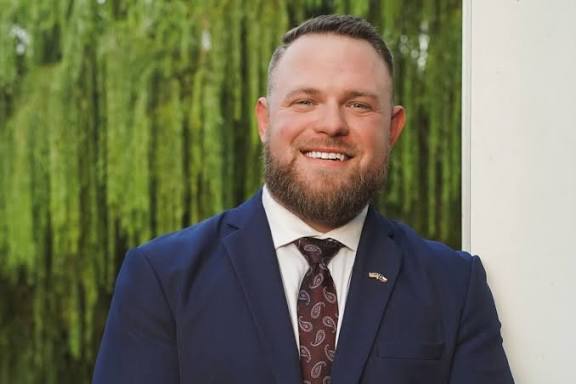
Texas politics has long been defined by its deep-rooted Republican dominance, earning the state a reputation as one of America’s most reliable conservative strongholds. But in early 2026, that image cracked — and the tremors were felt nationwide. What many observers are now calling the “Texas Shockwave” was triggered by a stunning political upset: Taylor Rehmet, a Democrat, flipped a traditionally Republican Texas State Senate seat from red to blue.
This unexpected victory did more than change party control in one district. It challenged assumptions about Texas voters, exposed vulnerabilities in GOP strongholds, and ignited new conversations about whether the Lone Star State is slowly but steadily shifting toward a more competitive political future.
The Election That No One Saw Coming

The shock began with a special election runoff in a Texas State Senate district encompassing parts of Fort Worth and surrounding suburban communities. Historically, this district had been safely Republican, consistently delivering double-digit victories for GOP candidates in statewide and presidential elections.
In the 2024 presidential race, the district had supported Donald Trump by a significant margin. That history made the idea of a Democratic victory seem unlikely — if not impossible — to many analysts.
Yet when the ballots were counted, Taylor Rehmet emerged with a decisive win, flipping the seat and stunning both state and national political observers. The result represented a dramatic swing in voter behavior, marking one of the most surprising Democratic breakthroughs in Texas politics in recent years.
Who Is Taylor Rehmet?
Taylor Rehmet is not a traditional career politician. His background helped shape both his campaign and his appeal to voters across party lines.
A Texas native, Rehmet served in the United States Air Force as an aircraft mechanic before transitioning into civilian life and becoming active in organized labor. He rose through the ranks to become a labor union leader, representing workers in industries central to Texas’s economy.
This blend of military service, blue-collar experience, and community involvement allowed Rehmet to connect with voters who might otherwise be skeptical of Democratic candidates. Rather than focusing on national political rhetoric, his campaign emphasized local concerns, economic stability, and community investment.
Why the Seat Flip Matters
At first glance, one state senate seat may seem like a small shift. In reality, the implications are far broader.
1. A Crack in the Republican Firewall
Texas Republicans have long relied on suburban districts as a buffer against Democratic gains in urban areas. Rehmet’s win suggests that even these once-secure zones are no longer immune to political change.
Flipping a seat in a district that had recently favored Republicans by wide margins sends a clear signal: party loyalty is weakening, and voter behavior is becoming more fluid.
2. Suburban Voters Are Rewriting the Rules
Suburban Texas has been evolving rapidly. Population growth, increasing diversity, and rising economic pressures have reshaped voter priorities. Issues like property taxes, public education funding, healthcare access, and cost-of-living concerns are now front and center.
Rehmet’s campaign successfully tapped into these concerns, offering practical solutions rather than ideological battles. This approach resonated with voters who may not identify strongly with either party but are motivated by day-to-day realities.
3. Special Elections as Political Warning Signs
Special elections often act as early indicators of broader political trends. While turnout is typically lower than in general elections, these races can reveal which party has greater enthusiasm and organizational strength at a given moment.
The Texas shockwave fits a pattern seen in other recent contests, where Democrats have outperformed expectations in districts once considered safely Republican.
How Rehmet Won: Key Factors Behind the Upset
Economic Messaging Over Ideology
Rather than leaning heavily on partisan talking points, Rehmet centered his campaign on economic fairness, job security, and affordability. His union background gave credibility to his message, especially among working-class voters who felt overlooked by traditional political narratives.
Appealing to Independents and Moderate Republicans
Rehmet did not campaign solely to Democratic voters. He actively sought support from independents and moderate Republicans frustrated with national politics. By emphasizing service, responsibility, and local accountability, he built a coalition that crossed traditional party boundaries.
Ground Game and Community Engagement
While his opponent benefited from established party infrastructure, Rehmet’s campaign focused on direct voter contact. Door-to-door outreach, community events, and grassroots organizing played a major role in boosting turnout among supporters.
Changing Demographics
The district’s evolving demographics cannot be ignored. Younger voters, more diverse communities, and suburban families concerned about education and housing costs contributed to a political environment more open to change than in previous cycles.
Republican Response: Alarm or Anomaly?
Texas Republicans were quick to downplay the loss, describing it as an outlier influenced by special election dynamics and unusual turnout patterns. Party leaders emphasized that Republicans still control the Texas Legislature and all statewide offices.
However, behind the scenes, the result sparked serious discussion. Losing a seat in such a reliably red district raised concerns about messaging, candidate recruitment, and voter engagement — especially in suburban areas that have shown signs of political drift.
Some GOP strategists argue that national political issues may be dampening enthusiasm among certain voter groups, while others see the result as a call to refocus on local concerns and rebuild trust with suburban constituents.
Democrats See Momentum Building
For Texas Democrats, the victory has been energizing.
After years of falling short in statewide races, Rehmet’s win provided tangible proof that strategic, localized campaigns can succeed — even in hostile political terrain. Party leaders have framed the upset as evidence that Texas is no longer politically static.
While Democrats remain realistic about the challenges ahead, the result has boosted confidence and donor interest, potentially reshaping campaign strategies heading into the 2026 midterms.
National Implications of the Texas Shockwave
The impact of Rehmet’s victory extends beyond state borders.
Across the country, both parties are watching Texas closely. As the second-largest state by population and a major prize in national politics, even incremental shifts in Texas can have significant consequences.
The Texas shockwave reinforces a broader national trend: voters are increasingly willing to split tickets, reject party labels, and support candidates who speak directly to local needs.
What This Means for the 2026 Midterms
The flipped seat will be contested again in the 2026 general election, setting the stage for a high-profile rematch. Both parties are expected to invest heavily, viewing the race as a test of whether the shockwave was a one-time event or the beginning of a larger realignment.
Beyond this single district, the implications are clear:
Suburban Texas will be fiercely contested
Messaging focused on economic and community issues will be critical
Voter turnout strategies may determine control in closely divided districts
Republicans will aim to reclaim lost ground, while Democrats will seek to replicate Rehmet’s model in similar districts across the state.
Is Texas Really Turning Blue?
Despite the excitement, most analysts agree that Texas is not on the verge of a sudden political transformation. Republicans still enjoy structural advantages, strong rural support, and control over statewide offices.
However, what the Texas shockwave demonstrates is movement — not a flip, but a shift.
Texas politics is becoming more competitive, more unpredictable, and more responsive to local conditions. In that sense, Rehmet’s victory is less about partisan triumph and more about changing voter behavior.
Conclusion: A Political Earthquake with Lasting Ripples
Taylor Rehmet’s upset victory will be remembered as one of the most surprising moments in recent Texas political history. By flipping a GOP stronghold from red to blue, he challenged assumptions, energized Democrats, and forced Republicans to reassess their strategy.
Whether the Texas shockwave turns into a sustained political trend remains to be seen. But one thing is certain: Texas is no longer as politically predictable as it once was.
As the 2026 elections approach, both parties know that the ground beneath them is shifting — and ignoring the warning signs could prove costly.
How useful was this post?
Click on a star to rate it!
Average rating 0 / 5. Vote count: 0
No votes so far! Be the first to rate this post.
About the Author

usa5911.com
Administrator
Hi, I’m Gurdeep Singh, a professional content writer from India with over 3 years of experience in the field. I specialize in covering U.S. politics, delivering timely and engaging content tailored specifically for an American audience. Along with my dedicated team, we track and report on all the latest political trends, news, and in-depth analysis shaping the United States today. Our goal is to provide clear, factual, and compelling content that keeps readers informed and engaged with the ever-changing political landscape.