Sonya Massey shooting : bodycam release, federal probe, police accountability
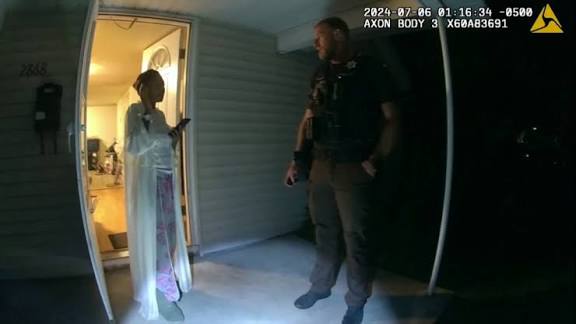
Body-camera footage released showing the fatal police shooting of Sonya Massey, a 36-year-old Black woman who called 911 for help. Today we will discuss about Sonya Massey shooting : bodycam release, federal probe, police accountability
Sonya Massey shooting : bodycam release, federal probe, police accountability
The fatal shooting of Sonya Massey has become one of the most significant police accountability cases in recent American history. What began as a routine 911 call for help ended in the death of a 36-year-old woman inside her own home, sparking national outrage, a federal investigation, and renewed debate over law enforcement practices, mental health response, and racial justice.
As body-worn camera footage emerged and criminal proceedings unfolded, the Sonya Massey shooting exposed systemic failures that continue to shape conversations around police accountability in the United States. This case is not only about one tragic incident but about the broader structures that allow such encounters to escalate into deadly force.
Who Was Sonya Massey?
Sonya Massey was a 36-year-old Black woman and a devoted mother of two children living in Springfield, Illinois. Family members described her as caring, spiritual, and deeply connected to her community. Like many Americans, Massey had experienced mental health struggles, something her family had previously communicated to local authorities.
On the night of July 6, 2024, Massey called 911 from her home, reporting that she believed someone might be outside her residence. She sought protection and reassurance from law enforcement, expecting help in a moment of vulnerability. Instead, that call would lead to her death.
Her killing would later become a symbol of what many critics argue is a dangerous intersection of inadequate crisis response, racial bias, and excessive use of force by police officers.
What Happened During the Police Encounter
Deputies from the Sangamon County Sheriff’s Office responded to Massey’s call shortly after midnight. Among them was Deputy Sean Grayson, whose actions would later become the focus of criminal prosecution.
According to official records and video evidence, deputies found no sign of a prowler outside the home. Despite this, they entered Massey’s residence to continue the interaction. At first, the encounter appeared calm and conversational, with no immediate indication of danger.
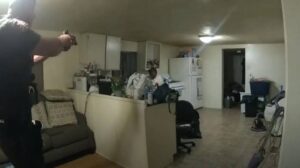
Inside the kitchen, a pot of boiling water sat on the stove. Grayson instructed Massey to move the pot, citing safety concerns. Massey complied, picking it up. At one point, she uttered a religious phrase, saying she rebuked the officer “in the name of Jesus.”
What followed was a rapid and fatal escalation. Grayson drew his firearm, issued a verbal threat, and within seconds fired three shots at Massey, striking her in the face. She collapsed and later died from her injuries.
The speed and severity of the response shocked the public, particularly given that Massey was inside her own home, had called police for help, and was not armed with a conventional weapon.
The Bodycam Footage and Its Impact
The release of body-worn camera footage marked a turning point in the case. Although Grayson’s own camera was not recording during critical moments, footage from his partner captured the shooting and its immediate aftermath.
What the Footage Revealed
The video showed:
Deputies entering Massey’s home without visible urgency.
A non-violent interaction that escalated abruptly.
Grayson drawing his weapon quickly.
Massey being shot within seconds of the perceived threat.
The footage contradicted early narratives that suggested Massey posed an imminent danger. Instead, many viewers saw a woman in distress who was not given adequate time or opportunity for de-escalation.
Public Reaction
When the footage was made public, outrage spread nationwide. Civil rights groups, lawmakers, and activists described the shooting as unjustified and emblematic of deeper failures within policing. Demonstrations were held in Illinois and beyond, with Massey’s name joining a growing list of victims cited in calls for reform.
The video intensified scrutiny of how police interpret threats, especially when responding to individuals experiencing mental health crises.
Federal Probe and Criminal Charges
The seriousness of the case prompted a federal investigation, focusing on whether Massey’s civil rights were violated. The U.S. Department of Justice examined the actions of the deputies involved, department policies, and training procedures.
Charges Against Deputy Sean Grayson
Grayson was fired from the sheriff’s office and charged with multiple felonies, including:
First-degree murder
Aggravated battery with a firearm
Official misconduct
He pleaded not guilty, and the case proceeded to trial amid intense public attention.
Verdict and Sentencing
In late 2025, a jury found Grayson guilty of second-degree murder, concluding that his actions demonstrated reckless disregard for human life rather than premeditated intent.
In January 2026, Grayson was sentenced to 20 years in prison, the maximum sentence allowed under Illinois law for second-degree murder. The ruling marked one of the most significant criminal convictions of a police officer for on-duty killing in recent years.
While many viewed the sentence as a rare moment of accountability, others argued it did not go far enough, believing first-degree murder would have better reflected the gravity of the act.
Civil Settlement and Institutional Consequences
Alongside the criminal case, Massey’s family filed a civil lawsuit against Sangamon County. The county ultimately agreed to a $10 million settlement, acknowledging the devastating harm caused by the shooting.
Leadership Fallout
The case triggered significant institutional consequences:
The Sangamon County sheriff resigned amid growing criticism.
Internal reviews revealed gaps in hiring practices and training oversight.
Lawmakers questioned how Grayson had been allowed to serve as a deputy given concerns about his background.
These developments highlighted systemic vulnerabilities that extend beyond a single officer.
Legislative and Policy Reforms
In response to the shooting, Illinois lawmakers introduced and passed reforms aimed at strengthening police oversight. These included:
Tighter background checks for law enforcement recruits
Expanded use-of-force reporting requirements
Enhanced training standards related to de-escalation and mental health response
At the federal level, the case reinvigorated debates over national policing legislation, including renewed calls for limits on qualified immunity and mandatory crisis intervention training.
Mental Health and Policing
One of the most critical aspects of the Sonya Massey shooting is its connection to mental health response failures.
Massey’s family had previously alerted authorities to her mental health struggles. Advocates argue that sending armed officers without specialized training to handle crisis situations significantly increases the risk of fatal outcomes.
The case strengthened calls for:
Unarmed crisis response teams
Greater involvement of mental health professionals
Alternative emergency response models that do not default to police intervention
Supporters of reform argue that Massey’s death may have been preventable if appropriate crisis services had been available.
Race, Bias, and Use of Force
Race played a central role in public discussions surrounding the shooting. Critics pointed to patterns showing Black Americans are more likely to experience excessive force during police encounters.
Massey’s case raised difficult questions:
Would the situation have escalated differently if she were not Black?
How do implicit biases influence threat perception?
Why are religious expressions or emotional distress so often misinterpreted as aggression?
These questions continue to fuel national conversations about equity and justice in policing.
Transparency and Public Trust
The delayed release of bodycam footage also renewed debates about transparency. Advocates argue that prompt disclosure of video evidence is essential for maintaining public trust, particularly in fatal encounters.
While body cameras are often promoted as accountability tools, Massey’s case demonstrated their limitations when policies are inconsistently enforced or when footage is selectively released.
Community Response and the Sonya Massey Commission
In Springfield, local leaders established a commission in Massey’s name to study police practices and community relations. The commission gathered testimony from residents, law enforcement officials, and policy experts to propose reforms.
Its findings emphasized:
The need for independent oversight
Improved communication between police and communities
Clear accountability mechanisms for misconduct
Although progress has been slow, the commission’s work represents an effort to turn tragedy into structural change.
The Broader Legacy of the Sonya Massey Shooting
More than a year after her death, Sonya Massey’s name continues to resonate in protests, courtrooms, and policy debates. Her case stands as a reminder of the consequences when systems designed to protect instead cause harm.
For many, Massey’s legacy is about more than justice for one woman. It is about ensuring that:
Calling 911 does not become a death sentence
Mental health crises are met with care, not gunfire
Police officers are held to the highest standards of accountability
Conclusion
The Sonya Massey shooting exposed profound flaws in policing, crisis response, and accountability mechanisms in the United States. From the release of bodycam footage to the federal investigation and eventual sentencing, the case forced a national reckoning with how law enforcement handles vulnerability, fear, and power.
While the conviction of Deputy Sean Grayson and the civil settlement provided some measure of accountability, they cannot undo the loss suffered by Massey’s family or community. The true test of justice will be whether meaningful reforms prevent future tragedies.
Sonya Massey’s death is now part of the ongoing struggle to redefine public safety, restore trust, and ensure that help truly means help.
How useful was this post?
Click on a star to rate it!
Average rating 0 / 5. Vote count: 0
No votes so far! Be the first to rate this post.
About the Author

usa5911.com
Administrator
Hi, I’m Gurdeep Singh, a professional content writer from India with over 3 years of experience in the field. I specialize in covering U.S. politics, delivering timely and engaging content tailored specifically for an American audience. Along with my dedicated team, we track and report on all the latest political trends, news, and in-depth analysis shaping the United States today. Our goal is to provide clear, factual, and compelling content that keeps readers informed and engaged with the ever-changing political landscape.