Senate Democrats : government shutdown threat, ICE reforms, funding showdown
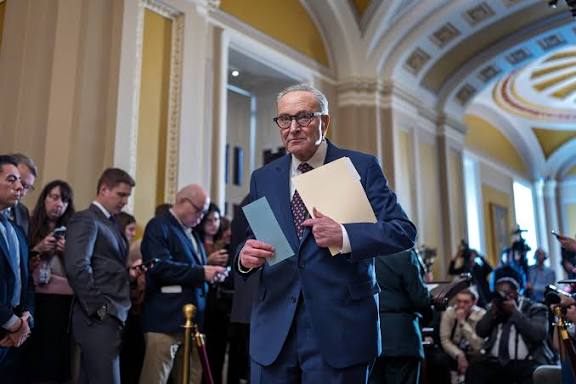
With an uncertain path forward, the standoff threatens to push the country into another shutdown just two months after Democrats blocked. Today we will discuss about Senate Democrats : government shutdown threat, ICE reforms, funding showdown
Senate Democrats : government shutdown threat, ICE reforms, funding showdown
The United States Senate is once again at the center of a high-stakes political confrontation as Senate Democrats threaten to block critical government funding unless sweeping reforms are imposed on Immigration and Customs Enforcement (ICE). The standoff has raised the specter of a partial government shutdown, placing immigration policy, civil liberties, and fiscal governance on a collision course. With funding deadlines approaching, the clash highlights deep ideological divisions over law enforcement accountability, border security, and the proper limits of executive power.
At the core of the conflict lies the Department of Homeland Security (DHS) appropriations bill, a must-pass measure that finances agencies responsible for border protection, immigration enforcement, disaster response, cybersecurity, and national security. Senate Democrats, led by their leadership, have made it clear that they will not support the bill unless it contains legally binding reforms to restrain ICE and federal immigration agents. Republicans, meanwhile, argue that tying policy changes to essential funding threatens national security and risks plunging the government into another disruptive shutdown.
Origins of the Crisis: Public Anger and Accountability Demands
The current standoff did not emerge in a vacuum. It was triggered by a series of controversial enforcement actions involving federal immigration agents, including fatal encounters that reignited national debate over the use of force, transparency, and accountability in immigration policing. These incidents intensified scrutiny of ICE operations, particularly regarding masked agents, unmarked uniforms, and warrantless arrests that critics say undermine civil liberties and public trust.
Senate Democrats contend that the agency has grown too powerful and opaque, operating with insufficient external oversight. They argue that, unlike local police departments, ICE has avoided many of the reforms imposed after nationwide protests over policing in recent years. For Democrats, the funding bill represents the strongest leverage point to force structural change.
What Reforms Are Senate Democrats Demanding?
Democrats are not merely seeking symbolic language; they want enforceable statutory requirements written directly into law. Their proposed conditions on DHS funding include:
Ban on Face Coverings: Immigration agents would be prohibited from wearing masks during routine operations to ensure identification and accountability.
Mandatory Body Cameras: All ICE officers would be required to wear body-worn cameras, with strict rules governing data storage and public release.
Visible Identification: Agents must clearly display names or badge numbers to allow citizens to identify officers during encounters.
Judicial Warrants: Arrests and searches would require court-issued warrants, limiting reliance on internal administrative approvals.
Use-of-Force Standards: ICE would be bound by the same force protocols that apply to local law enforcement.
Independent Investigations: Alleged misconduct would be reviewed by external authorities rather than internal DHS units.
Democrats frame these measures as basic safeguards rather than radical changes, arguing that no law enforcement agency should operate without transparency and judicial oversight.
The Funding Deadline and Shutdown Risk
The DHS budget runs into the tens of billions of dollars and supports hundreds of thousands of federal employees. Without congressional approval, parts of the department would be forced to halt non-essential operations, furlough workers, and suspend services ranging from disaster preparedness to cybersecurity monitoring.
A shutdown would not completely halt border operations or counterterrorism efforts, but it would disrupt immigration courts, visa processing, disaster response planning, and airport security staffing. The economic cost could reach billions, while the political fallout would be severe for both parties.
Democrats argue that temporary disruption is a necessary price to pay for long-term reform. Republicans counter that using shutdown threats as leverage is reckless and undermines public confidence in government stability.
Republican Resistance and Security Concerns
Republican leaders strongly oppose linking ICE reforms to funding. They argue that immigration enforcement agencies are already under pressure from record border crossings, human trafficking networks, and national security threats. In their view, restricting ICE’s operational flexibility could embolden criminal organizations and weaken border control.
Republicans also assert that reforms should be debated through standalone legislation, not forced through budget brinkmanship. They accuse Democrats of exploiting emotional public reactions to justify policies that could permanently weaken immigration enforcement.
Democratic Unity and Internal Tensions
While Democratic leadership has rallied around the reform-or-shutdown strategy, not all members are comfortable with it. Moderate senators from swing states worry that another shutdown could harm federal workers, military families, and small businesses, potentially triggering voter backlash.
Progressive lawmakers, on the other hand, believe the party has waited too long to confront ICE’s authority and see this moment as a historic opportunity to reshape immigration enforcement permanently. Despite internal debate, party leadership has maintained discipline, calculating that unity increases their negotiating power.
Public Opinion and Political Calculations
Public reaction is divided. Many Americans oppose government shutdowns and fear economic instability. However, polls also show broad support for police accountability, body cameras, and judicial oversight. Democrats are betting that voters will side with reform over procedural gridlock, especially in an election cycle where civil rights and law enforcement practices remain central issues.
Republicans, conversely, believe voters prioritize security and stability and will punish any party perceived as obstructing government operations.
Possible Outcomes
Several scenarios remain on the table:
Compromise Package: Congress could pass temporary funding while negotiating ICE reforms separately.
Targeted Concessions: Limited reforms, such as body cameras and identification rules, might be added without full warrant requirements.
Partial Shutdown: A lapse in DHS funding could force negotiations under political and economic pressure.
Long-Term Legislative Battle: Even if funding passes, the fight over ICE authority is likely to continue in future sessions.
Conclusion
The Senate Democrats’ confrontation over ICE reforms and government funding reflects a broader struggle over the balance between national security and civil liberties. By threatening a shutdown, Democrats are using one of the most powerful tools available to force accountability measures they believe are long overdue. Republicans view the tactic as dangerous and destabilizing.
Regardless of the immediate outcome, the showdown signals a turning point in the national debate over immigration enforcement. Whether through compromise or crisis, the question of how ICE operates—and under what level of public oversight—has become one of the defining political battles of the year.
How useful was this post?
Click on a star to rate it!
Average rating 0 / 5. Vote count: 0
No votes so far! Be the first to rate this post.
About the Author

usa5911.com
Administrator
Hi, I’m Gurdeep Singh, a professional content writer from India with over 3 years of experience in the field. I specialize in covering U.S. politics, delivering timely and engaging content tailored specifically for an American audience. Along with my dedicated team, we track and report on all the latest political trends, news, and in-depth analysis shaping the United States today. Our goal is to provide clear, factual, and compelling content that keeps readers informed and engaged with the ever-changing political landscape.