Mark Carney: Canada-US Rift,Trade Pivot,Global Shock
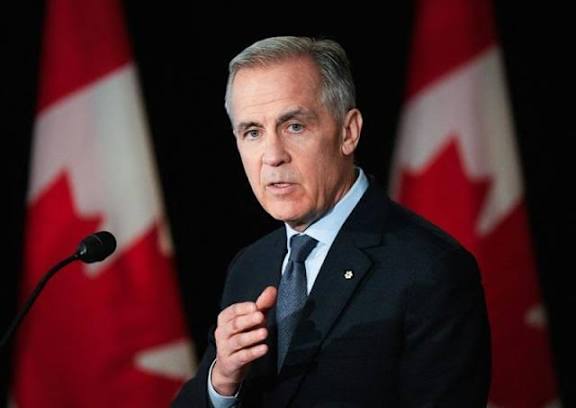
Prime Minister Mark Carney visited China in a bid to cut US dependency in the wake of Trump’s tariff threat. See how this change affects global trade and your portfolio. Today we will discuss about Mark Carney: Canada-US Rift,Trade Pivot,Global Shock
Mark Carney: Canada-US Rift,Trade Pivot,Global Shock
In the shifting sands of 21st‑century geopolitics and economics, few figures have risen as conspicuously as Mark Joseph Carney — a central banker turned prime minister whose leadership is reshaping Canada’s place in the global order. Once renowned for steering major economies through crisis, Carney now leads Canada through one of the most consequential diplomatic and economic ruptures of the modern era. His navigation of the Canada‑US relationship, bold trade diversification strategy, and commentary on a volatile global landscape resonate far beyond the northern borders of Ottawa.
1. From Central Banking to Political Leadership
Born on March 16, 1965, in Fort Smith, Northwest Territories, Mark Carney’s path initially led through elite academic institutions — Harvard University and the University of Oxford — and then onto Wall Street, where he rose through the ranks at Goldman Sachs. His early career presaged a deep engagement with global finance and crisis management, advising struggling economies and mastering the mechanics of international markets.
Carney’s reputation soared when he became Governor of the Bank of Canada (2008–2013) and later Governor of the Bank of England (2013–2020). In both roles, he was credited with decisive action during financial turbulence: lowering interest rates before peers, reassuring markets, and applying “forward guidance” to stabilize expectations. His leadership helped Canada’s banks weather the 2008 financial crisis and steered the UK through unstable post‑Brexit conditions.
Such a resume — rare for a political newcomer — set the stage for Carney’s surprising entry into elected politics. In January 2025, amid domestic political upheaval in Canada and rising economic tensions with the United States, Carney announced his bid for the leadership of the Liberal Party of Canada. In March 2025 he won a commanding victory and was sworn in as Canada’s 24th prime minister.
His transition was historic: a technocrat without prior elected appointment propelled into national leadership at a time of crisis.
2. The Canada‑US Rift: From Allies to Adversaries
Carney’s premiership almost instantly collided with a changing tone in Canada–US relations. For decades, the two nations maintained one of the world’s most integrated economic partnerships. Exports, supply chains, and shared industries across steel, lumber, automotive, and agriculture made the United States Canada’s largest trading partner — a relationship that once accounted for a major slice of Canada’s GDP.
However, mounting protectionist rhetoric and policies from the US leadership fueled a sharp deterioration. The US imposed and threatened sweeping tariffs on Canadian products and even made provocative remarks about Canada’s sovereignty — including suggestions related to annexation rhetoric about becoming the “51st state” of the United States.
2.1 A “Rupture,” Not a Transition
In a pivotal address, Carney declared that the traditional economic partnership with the United States was no longer the foundation it once was. He stated that the decades‑long process of deepening economic integration was “over,” and that Canada must now recalibrate its outlook for an era marked by uncertainty and geopolitical fragmentation.
This marked shift was not merely rhetorical. It underpinned new trade and foreign policy priorities aimed at reducing reliance on the US and strengthening economic self‑sufficiency. The Canadian prime minister reinforced this stance on several global stages, including major speeches at international economic forums, where he critiqued economic coercion and called for increased cooperation among “middle powers” in a fragmented global order.
2.2 Tariffs and Trade Showdown
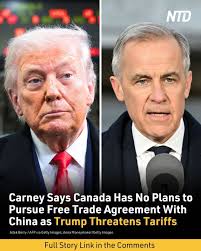
Tensions peaked when the US threatened to impose 100% tariffs on Canadian goods if Canada advanced a free trade agreement with China — a stark illustration of how contentious trade politics had become. Carney promptly clarified that Canada had no intention of signing such a deal but used the moment to emphasize Canada’s commitment to diversifying trade relationships globally.
In defending Canada’s sovereignty and economic interests, Carney affirmed that Canada would respect existing commitments under the United States‑Mexico‑Canada Agreement (USMCA), even as it sought new paths.
2.3 Diplomatic Backlash
The diplomatic rift extended beyond economics. After Carney’s critical speech at an international forum, the US rescinded an invitation for Canada to join a US-led “Board of Peace,” signaling how even broader global agendas were entangled in bilateral strain. Analysts interpret the move differently — some see it as punitive, while others view it as relieving Canada of a potentially problematic commitment.
3. Pivot to the World: Trade Diversification Strategy
Faced with what he described as a “rupture” in the traditional economic order, Carney championed a bold strategy of trade diversification — a pivot away from dependence on the United States toward a more balanced global network of partnerships.
3.1 Asia and Beyond
Carney’s government embarked on high-profile diplomatic engagements across Asia, visiting Malaysia, South Korea, Singapore, and Japan, with discussions aimed at expanding trade, investment, and supply chain cooperation — particularly in emerging sectors like energy, technology, and critical minerals.
While Carney publicly denied pursuing a free trade pact with China under US pressure, Canada did actively engage Beijing through diplomatic visits and negotiations, focusing on practical tariff reductions in sectors like agriculture and automotive goods. These discussions culminated in a recalibrated partnership emphasizing mutual economic benefits, even amidst global geopolitical tensions.
3.2 Reinforcing Global Ties
Carney also pursued closer collaboration with European partners and other middle powers. At international summits, he reinforced relations with leaders such as the UK Prime Minister, agreeing on joint economic initiatives and a deeper Trade Continuity Agreement. Such moves signaled Canada’s intention to forge a diversified strategic network that spanned continents.
3.3 Domestic Economic Strategy: The One Canadian Economy Act
Reacting to the trade shock and economic uncertainty, Carney championed legislative initiatives — such as the One Canadian Economy Act — aimed at eliminating internal trade barriers and strengthening interprovincial commerce within Canada. This approach was intended to fortify domestic economic resilience and promote internal cohesion as Canada adjusted to a less predictable North American trade environment.
4. The “Global Shock”: Carney’s Broader Vision
Carney’s leadership emerges at a time of profound structural challenges in international relations. His public speeches and diplomacy reflect a belief that the post‑World War II economic order — long anchored by the United States — is undergoing a fundamental transformation.
4.1 Rethinking Global Leadership
Carney argues that the era of US-led economic primacy is ending, and that countries like Canada must prepare for a more multipolar reality where leadership is shared among middle powers and regional blocs. This worldview has shaped Canada’s engagements with Asia, Europe, and emerging markets, even as it navigates tensions with its southern neighbour.
At global forums, Carney has underscored the need for alliances founded on shared values and mutual respect, warning about the dangers of economic coercion and urging countries to collaborate in response to shifting geopolitical forces.
4.2 The “New World Order” Narrative
Carney’s mention of a “new world order” in trade negotiations stirred controversy but also underscored his belief in a reconfigured global economic landscape. For some critics, this phrase evokes conspiracy theories, but for international strategists it reflects a serious recognition: traditional post-war economic frameworks are giving way to a more fragmented, multipolar system where Canada must reassert its role.
5. Domestic Politics and Public Reception
Despite international headline-making, Carney’s policy agenda has also sparked debate at home. His pivot away from US dependence resonates with many Canadians who see a need for economic sovereignty, but it also carries risks.
5.1 National Identity and Unity
Carney’s emphasis on Canadian sovereignty has been coupled with domestic initiatives aimed at unifying a country facing regional political tensions — notably in provinces like Quebec and Alberta. He has sought to balance national unity with economic reform, arguing that Canada must strengthen internal cohesion to navigate global instabilities.
5.2 Climate and Economic Priorities
Critics argue that Carney’s focus on pragmatic economic interests, including expanded energy partnerships and less emphasis on climate commitments, could undermine environmental goals. Others see this as a necessary adjustment in an era of realpolitik, where economic resilience becomes paramount amid trade shocks and shifting alliances.
6. Looking Ahead: Canada in a New Global Landscape
Mark Carney’s leadership represents a turning point in Canadian foreign and economic policy — a deliberate reorientation from a historic reliance on a single economic powerhouse toward broader global engagement. If successful, this strategy could modernize Canada’s economic relationships, embed it deeper into dynamic Indo‑Pacific markets, and enhance resilience against global shocks.
Yet significant challenges remain. Relations with the United States, a neighbour and partner for generations, risk long-term strain if tariffs and diplomatic tensions persist. Meanwhile, navigating partnerships with major powers like China — with its own geopolitical sensitivities — requires careful diplomacy.
Ultimately, Carney’s tenure will be judged by how effectively Canada can adapt to an evolving world order where economic power is dispersed, global alliances are less predictable, and national sovereignty remains paramount.
How useful was this post?
Click on a star to rate it!
Average rating 0 / 5. Vote count: 0
No votes so far! Be the first to rate this post.
About the Author

usa5911.com
Administrator
Hi, I’m Gurdeep Singh, a professional content writer from India with over 3 years of experience in the field. I specialize in covering U.S. politics, delivering timely and engaging content tailored specifically for an American audience. Along with my dedicated team, we track and report on all the latest political trends, news, and in-depth analysis shaping the United States today. Our goal is to provide clear, factual, and compelling content that keeps readers informed and engaged with the ever-changing political landscape.