Sheikh Hasina: Ex-PM Speaks from India, Bangladesh Fury, Election Chaos Erupts
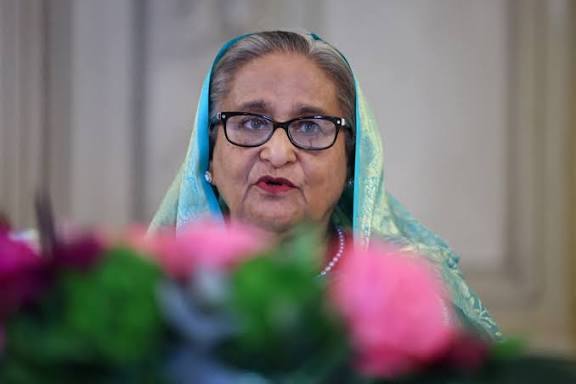
Ousted Bangladesh Prime Minister Sheikh Hasina said in an interview with Alpayu Singh that free and fair elections are impossible in her country. Today we will discuss about Sheikh Hasina: Ex-PM Speaks from India, Bangladesh Fury, Election Chaos Erupts
Sheikh Hasina: Ex-PM Speaks from India, Bangladesh Fury, Election Chaos Erupts
Sheikh Hasina, the long‑time leader of Bangladesh and its longest‑serving Prime Minister, remains at the center of a mounting political maelstrom that has gripped her country for over a year. Once synonymous with political stability, Hasina’s era ended in a dramatic uprising that forced her into exile in India in August 2024. Since then, her continued involvement in Bangladesh’s politics—especially through public addresses delivered from abroad—has ignited diplomatic fury, sparked protests in Dhaka, and set the stage for an intensely contested election slated for February 12, 2026.
Hasina’s story now embodies far more than one politician’s struggle; it reflects deep divisions within Bangladeshi society, clashes over the meaning of democracy, and complex geopolitical tensions between Bangladesh and its huge neighbor, India.
From Power to Exile: The Fall of Sheikh Hasina
To understand the present upheaval, it’s key to trace how Sheikh Hasina—once lauded for her developmental achievements—came to lose power so dramatically.
Hasina’s political career dominated Bangladeshi politics for more than a decade. Her tenure saw major infrastructure projects, steady economic growth, and an expanded social safety net. But critics accused her administration of eroding democratic norms, cracking down on dissent, and suppressing independent media. These tensions simmered for years, punctuated by allegations of election irregularities and political arrests.
The tipping point came in July 2024, when widespread student‑led protests erupted over perceived discrimination and political grievances. The demonstrations quickly transformed into a broad anti‑government uprising that confronted state security forces and paralysed much of daily life across the country. Violent clashes resulted in significant casualties, eventually forcing Hasina to flee to neighboring India in August 2024.
Once in India, Hasina’s status transformed from a sitting leader to an exile—and her continuing involvement in Bangladesh’s domestic politics became both a catalyst and a flashpoint in the nation’s political crisis.
‘Democracy in Exile’: Hasina’s Address and Its Fallout
In late January 2026, Sheikh Hasina delivered a highly controversial public address from India at a major media forum. This speech marked her first major public statement since fleeing Bangladesh. Through an audio recording broadcast to the media and online audiences, Hasina made a sweeping denunciation of Bangladesh’s interim government and called for mass mobilization against what she termed an illegitimate regime.
Main Themes of the Speech
In her address, Hasina accused interim leader Muhammad Yunus—head of the caretaker government—of:
Creating lawlessness and political instability across Bangladesh;
Failing to protect vulnerable communities and religious minorities;
Eroding democratic institutions and freedoms;
Engineering an unfair environment that would prevent free and fair elections.
She described the current situation as an “age of terror” and declared that “democracy is now in exile,” calling on Bangladeshi citizens to rise up and restore constitutional order and participatory democracy.
Hasina’s remarks reflected her frustration at being barred from contesting the upcoming election. The Awami League, her political party, remains banned by the interim election commission—a decision that has further intensified political chaos.
Bangladesh Government’s Reaction: Furious and Alarmed
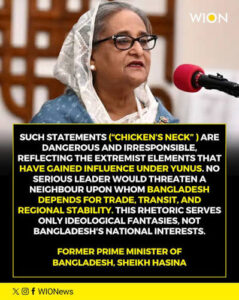
Bangladesh’s interim government and foreign ministry reacted sharply to Hasina’s speech, condemning it as “dangerous,” “inciteful,” and a breach of diplomatic norms that could threaten domestic peace. Dhaka publicly criticised India for permitting the address to take place on its soil, arguing that the event violated the principle of non‑interference in sovereign affairs.
The foreign ministry stated that Hasina’s statements set a “dangerous precedent” that could damage Bangladesh‑India relations and undermine efforts to ensure a peaceful electoral process. The interim authorities have threatened to hold Hasina and her party responsible for any pre‑poll violence tied to her calls for action.
These diplomatic tensions have intensified to the point where India has recently begun withdrawing diplomats’ families from Bangladesh due to security concerns—a signal of serious bilateral strain.
Political Violence and Election Chaos
The backdrop to all of these events is the deepening crisis in Bangladesh itself. Since Hasina’s departure, the country has been rocked by ongoing unrest, including violent protests sparked by incidents such as the death of a prominent youth activist. These disturbances reflect broader dissatisfaction with political uncertainty and fears of escalating communal tensions.
Political tensions are now at a fever pitch as the February 2026 election approaches:
The Awami League is banned from contesting the elections, leaving its traditional voter base without its principal political vehicle;
Opposition parties like the Bangladesh Nationalist Party (BNP) and Islamist group Jamaat‑e‑Islami are poised to make significant gains, potentially reshaping the political landscape;
Ongoing unrest has raised fears of voter intimidation and pre‑poll violence that could compromise the credibility of the electoral process;
The interim government has warned it will attribute any violence to Hasina’s party, further escalating the stakes.
These conditions underscore just how fragile Bangladesh’s political environment has become.
Accusations of Rights Violations and Legal Battles
Compounding the political chaos are ongoing legal cases against Hasina and key figures in her administration. In 2025, she was sentenced to death in absentia by a Bangladeshi court for allegedly inciting violence and failing to prevent atrocities during the protests that toppled her government.
Meanwhile, the judicial system continues to process cases related to violent crackdowns during the uprising and protests, with former security officials receiving harsh sentences. In a recent development, Bangladesh courts sentenced several top police officers to death for crimes against humanity connected to protest violence, indicating a broader push to hold past actors accountable.
Hasina and her supporters dismiss much of this legal action as politicised “lawfare,” aimed at preventing her return to power. But critics argue the judicial system is being used to strengthen the interim government’s hand and marginalise former elites. Either way, these cases have entrenched political polarisation and legal uncertainty.
Regional and Geopolitical Dimensions
Hasina’s prolonged presence in India and the diplomatic tension that followed have injected a significant external dimension into Bangladesh’s internal political turmoil.
For decades, India and Bangladesh enjoyed relatively close ties rooted in shared cultural history and cooperation during Bangladesh’s 1971 Liberation War. But India’s hosting of Hasina, combined with Dhaka’s objections to her political intervention, has challenged this relationship.
The interim government has repeatedly requested Hasina’s extradition, aligning with broader efforts to prosecute her for alleged misgovernance and human rights violations. India so far has refused, citing legal and humanitarian considerations.
Geopolitically, Bangladesh’s alignment is of interest not just to India but also to other regional powers like China and Western states concerned about stability and democratic norms. The evolving situation could reshape South Asian strategic alignments in the years ahead.
Sheikh Hasina’s Legacy and Future Prospects
Hasina’s legacy is one of paradoxes. Her supporters credit her with boosting economic growth, forging international partnerships, and transforming Bangladesh into a formidable regional economy. But opponents blame her for entrenching authoritarian practices, suppressing dissent, and deepening societal divisions.
Now, from afar, Hasina continues to wield influence—mobilising supporters, condemning her opponents, and shaping political discourse ahead of a pivotal election. Whether her efforts will reignite mass resistance, spur electoral reform, or further polarise Bangladesh remains uncertain.
Conclusion: An Uncertain Political Future
Sheikh Hasina’s recent address from India, and the explosive reactions it triggered, underscore just how volatile Bangladeshi politics have become. With the country hurtling toward an election under heavily contested conditions, the foundational questions about democratic legitimacy, governance, civil liberties, and diplomatic relations hang in the balance.
Bangladesh stands at a crossroads: whether to find a peaceful way forward through inclusive elections and national reconciliation—or to spiral further into factionalism and instability. Sheikh Hasina will remain a defining figure in that struggle, whether as a leader, a symbol, or a cautionary tale of power, exile, and political endurance.
How useful was this post?
Click on a star to rate it!
Average rating 0 / 5. Vote count: 0
No votes so far! Be the first to rate this post.
About the Author

usa5911.com
Administrator
Hi, I’m Gurdeep Singh, a professional content writer from India with over 3 years of experience in the field. I specialize in covering U.S. politics, delivering timely and engaging content tailored specifically for an American audience. Along with my dedicated team, we track and report on all the latest political trends, news, and in-depth analysis shaping the United States today. Our goal is to provide clear, factual, and compelling content that keeps readers informed and engaged with the ever-changing political landscape.