Gregory Bovino: Minneapolis Shooting, Border Patrol Defense Sparks Outrage
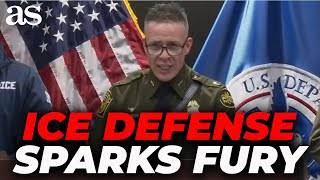
Trump administration officials defend Alex Pretty’s fatal shooting by immigration agents, even though video evidence contradicts it. Today we will discuss about Gregory Bovino: Minneapolis Shooting, Border Patrol Defense Sparks Outrage
Gregory Bovino: Minneapolis Shooting, Border Patrol Defense Sparks Outrage
Gregory Bovino, a senior official in the United States Border Patrol, has emerged as one of the most controversial law-enforcement figures in America following a deadly shooting in Minneapolis during a federal immigration enforcement operation. His outspoken defense of the agents involved, and his refusal to acknowledge video evidence that appears to contradict official claims, has ignited national outrage, political confrontation, and renewed debate over the militarization of immigration enforcement inside U.S. cities.
Supporters describe Bovino as a tough, disciplined commander determined to restore law and order. Critics see him as the face of an aggressive federal strategy that places heavily armed immigration agents into civilian neighborhoods, escalating tensions and undermining civil liberties. The Minneapolis shooting has turned Bovino from a little-known federal official into a lightning rod for a broader national argument about policing, accountability, and the limits of federal power.
This article explores who Gregory Bovino is, what happened in Minneapolis, why his defense of the Border Patrol has provoked such anger, and what the controversy reveals about the future of immigration enforcement in the United States.
Who Is Gregory Bovino?
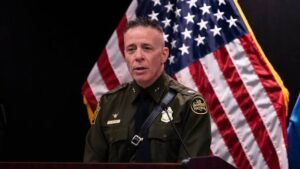
Gregory Bovino is a high-ranking commander within U.S. Customs and Border Protection (CBP), the agency that oversees the Border Patrol. In late 2025, he was assigned a powerful role as a national operational commander responsible for directing large-scale immigration enforcement actions in major metropolitan areas.
Unlike traditional Border Patrol leadership, which historically focused on the southern border, Bovino’s mission has centered on interior cities. His responsibilities include coordinating teams of Border Patrol agents, ICE officers, and tactical units to carry out arrests, raids, and security operations far from the border.
Bovino has become known for his stern public image, military-style appearance, and blunt rhetoric. He regularly appears in media interviews defending federal operations and criticizing what he calls “political interference” by local leaders who oppose immigration crackdowns. His leadership style, emphasizing discipline and force readiness, has made him popular among hard-line law-and-order advocates and deeply unpopular among civil-rights groups.
The Federal Enforcement Surge
The Minneapolis operation was part of a broader national initiative launched to intensify immigration enforcement in large U.S. cities. The program involved deploying hundreds of federal agents into urban areas to conduct warrant arrests, locate undocumented migrants, and support criminal investigations.
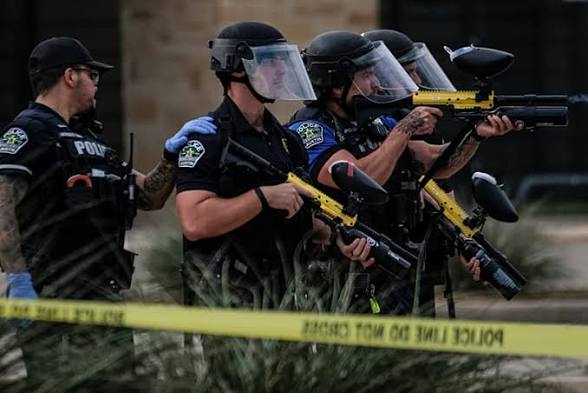
Federal officials described the effort as a public-safety mission targeting dangerous offenders. However, local leaders and activists argued that the presence of heavily armed immigration agents in residential neighborhoods created fear, disrupted communities, and blurred the line between immigration enforcement and military occupation.
Minneapolis, already a symbol of national debates over policing since 2020, became one of the most politically sensitive locations for this federal surge.
The Minneapolis Shooting
The Incident
During a protest against federal immigration operations in Minneapolis, Border Patrol agents confronted a crowd that had gathered near a residential area. Amid the confrontation, an unarmed civilian, later identified as Alex Pretti, was shot and killed by a federal agent.
Pretti was reportedly an ICU nurse and a legally registered gun owner, but multiple videos from bystanders showed him holding what appeared to be a mobile phone at the time he was shot. The footage circulated rapidly on social media, raising immediate questions about whether he posed any threat to officers.
The Department of Homeland Security initially claimed that Pretti had interfered with agents and that lethal force was used in self-defense. According to the official statement, officers believed their lives were in danger.
Conflicting Narratives
While federal authorities insisted the shooting was justified, independent video evidence painted a more complex picture. Several recordings suggested that Pretti was attempting to document the operation rather than attack officers. Witnesses said he was shouting and gesturing but did not appear to be aiming a weapon.
This gap between the official narrative and visual evidence became the core of the controversy, fueling accusations that the government was misleading the public.
Bovino’s Defense of the Agents
Gregory Bovino quickly became the public face of the federal response. In multiple television appearances and press briefings, he defended the Border Patrol agents involved and framed them as victims of hostile protesters.
He made several key arguments:
Agents faced a perceived lethal threat and had to make split-second decisions.
Interference with federal operations creates dangerous situations.
Video clips do not show the full context, and critics were drawing conclusions without understanding what officers experienced.
Federal agents are under constant attack, both physically and politically, and need strong leadership support.
Bovino rejected claims that the shooting represented excessive force. He insisted that the agents followed their training and that any suggestion of misconduct was politically motivated.
His tone was unapologetic and confrontational. Rather than expressing sympathy for the victim’s family, he focused on defending federal authority and warning that protests could lead to further violence.
Public Outrage
Community Reaction
The killing sparked immediate protests in Minneapolis. Thousands of residents marched through downtown, demanding the withdrawal of federal immigration agents and calling for an independent investigation. Demonstrators accused the Border Patrol of acting like an occupying force rather than a law-enforcement agency.
Chants of “No justice, no peace” and “Feds out of our city” echoed through the streets as community leaders described the shooting as a violation of basic civil rights.
Political Backlash
City and state officials openly challenged the federal account. The mayor of Minneapolis called the shooting “deeply troubling” and said the city had not consented to such aggressive federal operations. The governor demanded transparency and warned that the presence of Border Patrol agents was inflaming tensions rather than improving safety.
Members of Congress called for hearings, questioning why an agency designed for border security was operating with military equipment in civilian neighborhoods.
Civil Rights Concerns
Human-rights organizations argued that the incident reflected a pattern of excessive force by federal agents operating with little local oversight. They warned that immigration enforcement was increasingly resembling counter-insurgency tactics, with civilians caught in the middle.
Symbolism and International Attention
Bovino himself became a symbol of this perceived militarization. His distinctive long military-style coat and stern public demeanor drew attention in international media, where some commentators compared his appearance to historical authoritarian figures.
While Bovino dismissed such criticism as superficial, it added to the perception that federal immigration enforcement was adopting the imagery and posture of military occupation rather than civilian policing.
Legal and Investigative Developments
In response to public pressure, federal and local authorities launched parallel investigations into the shooting. Civil lawsuits were filed by the victim’s family, alleging wrongful death and excessive use of force.
Judges ordered the preservation of all video footage, body-camera recordings, and radio communications. Lawmakers demanded access to internal reports and training protocols governing the use of deadly force by Border Patrol agents operating in cities.
The outcome of these investigations could have lasting implications for how federal immigration officers are deployed and how they are held accountable.
Broader Implications
1. Expansion of Border Patrol Authority
The controversy highlights how the mission of the Border Patrol has expanded far beyond the border. Once primarily responsible for preventing unauthorized crossings, the agency is now conducting armed operations deep inside the country.
Critics argue this shift lacks sufficient legal safeguards and civilian oversight.
2. Militarization of Immigration Enforcement
The use of tactical gear, armored vehicles, and combat-trained units in urban neighborhoods raises questions about proportionality and necessity. Many fear that immigration enforcement is becoming indistinguishable from military occupation.
3. Trust in Federal Institutions
Conflicting narratives and delayed transparency have eroded public trust. When official statements appear to contradict video evidence, confidence in government accountability suffers.
4. Political Polarization
The Bovino controversy has become a symbol of America’s deep divisions over immigration, policing, and federal authority. Supporters see strong enforcement as essential to national security; opponents see it as a threat to democracy and civil rights.
Conclusion
Gregory Bovino’s defense of the Border Patrol after the Minneapolis shooting has placed him at the center of one of the most intense law-enforcement controversies in recent years. To some, he represents disciplined leadership under fire. To others, he embodies the dangers of unchecked federal power and the militarization of immigration policy.
The death of Alex Pretti, the disputed circumstances surrounding it, and the unwavering stance taken by Bovino have transformed a single incident into a national reckoning over how far federal authority should extend inside American cities.
As investigations continue and political pressure grows, the outcome will shape not only Bovino’s legacy but also the future of immigration enforcement, civil liberties, and public trust in the United States.
How useful was this post?
Click on a star to rate it!
Average rating 0 / 5. Vote count: 0
No votes so far! Be the first to rate this post.
About the Author

usa5911.com
Administrator
Hi, I’m Gurdeep Singh, a professional content writer from India with over 3 years of experience in the field. I specialize in covering U.S. politics, delivering timely and engaging content tailored specifically for an American audience. Along with my dedicated team, we track and report on all the latest political trends, news, and in-depth analysis shaping the United States today. Our goal is to provide clear, factual, and compelling content that keeps readers informed and engaged with the ever-changing political landscape.