Burnham vs Labour Today: Party Clash, Leadership Rift, UK Politics Shake-Up
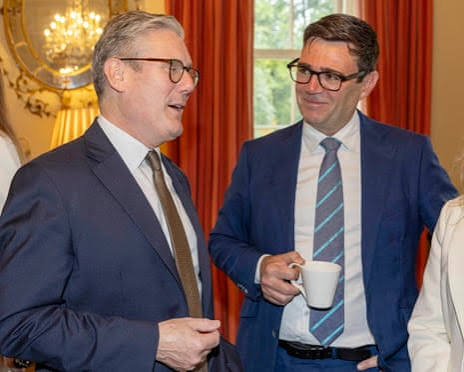
Labor MPs have strong opinions on whether Burnham should be Labour’s candidate in the Gorton and Denton by-election. Today we will discuss about Burnham vs Labour Today: Party Clash, Leadership Rift, UK Politics Shake-Up
Burnham vs Labour Today: Party Clash, Leadership Rift, UK Politics Shake-Up
In early 2026, British politics has been roiled by a major internal dispute within the ruling Labour Party — one that pits Greater Manchester Mayor Andy Burnham against his own party’s leadership, led by Prime Minister Sir Keir Starmer. What started as a bid by Burnham to return to the House of Commons has escalated into a defining clash about power, direction and leadership within Labour, exposing deeper tensions at the heart of the British centre-left.
1. Who is Andy Burnham? A Political Profile
Andy Burnham is one of Labour’s most seasoned and high-profile politicians. He served as a Member of Parliament from 2001 to 2017, holding junior ministerial posts and later becoming Secretary of State for Health and for Culture, Media and Sport under the Gordon Brown government. After leaving Westminster, he was elected Mayor of Greater Manchester in 2017, a role he reprised in 2021.
Burnham’s brand of politics — often described as centre-left populism with a focus on regional equity, devolution and social justice — has set him somewhat apart from the more technocratic style of Keir Starmer and the current Labour leadership. His base of support includes traditional Labour voters in the North, and many on the party’s left who believe New Labour’s establishment has drifted from its roots.
In 2025, Burnham backed a network called Mainstream, aligned with progressive think-tanks, that advocates policies such as higher council tax on pricey homes in the South, a 50p top rate of income tax, universal basic income experiments and a stronger focus on ending regional inequalities. These positions feed into the perception — both inside and outside Labour — that he represents an alternative vision to the Starmer leadership.
2. The Gorton and Denton By-Election: Spark of the Clash
The immediate flashpoint came with the Gorton and Denton by-election.
Long-serving Labour MP Andrew Gwynne announced his resignation from Parliament, creating a vacancy for the seat in Greater Manchester — territory considered friendly to Labour. This was widely seen as an opportunity for Burnham to return to Westminster, a necessary step if he wanted to mount any future challenge to Starmer’s leadership from within Parliament.
On 24 January 2026, Burnham submitted an application to Labour’s National Executive Committee (NEC) seeking permission to be the party’s candidate for the by-election. In his application, he wrote that his intention would be to “help the government go further and faster” and not to undermine it — a clear attempt to reassure the leadership while positioning himself as a unifying force.
3. Labour’s NEC Blocks Burnham’s Bid
Instead of welcoming Burnham’s attempt, Labour’s ruling NEC blocked him from standing.
In a decisive vote — reportedly 8 to 1 — the NEC refused to grant Burnham permission to contest the seat. The move effectively ended his short-term plan to return to the Commons.
The party leadership argued that allowing Burnham to contest the seat would trigger a costly and disruptive mayoral by-election in Manchester, draining resources at a time when Labour must focus on upcoming local, Scottish and Welsh elections in May 2026. Officials also pointed to strategic concerns about internal resources and political risk, given the rising challenge from parties like Reform UK and the Green Party.
From the leadership perspective, the decision reflects a desire to control the narrative and maintain unity at a time when Labour faces potential setbacks nationally. Sir Keir Starmer’s government has struggled with declining poll numbers, and unity has been a constant theme of his leadership strategy.
4. Internal Backlash and Labour Rift
The NEC’s decision has provoked a storm of criticism from within Labour.
Senior MPs such as Ed Miliband and majority leader Lucy Powell publicly called for the party to let local members decide Burnham’s fate, warning against centralised decision-making and accusations of a ‘stitch-up.’ Some backbenchers described the handling of Burnham’s nomination as an “energy-sapping distraction” and a “total shitshow,” suggesting the party risks losing the seat now it has sidelined one of its most popular figures.
The Labour union movement has also voiced concerns. The general secretary of Unison, Andrea Egan, warned against “control-freakery” and urged the party to respect democratic selection processes, hinting that central interference could drive disillusionment at the grassroots.
Critics within both the parliamentary party and its broader membership argue that the leadership’s move was driven less by concern for electoral strategy and more by fear of Burnham’s potential as a rival — a fear rooted in his relatively higher popularity compared to Starmer among some segments of the public.
5. Leadership Ambitions and Broader Implications
At the heart of this clash lies deeper speculation about Labour’s future leadership.
Rumours have swirled for months that Burnham is being quietly urged by MPs to challenge Starmer for the Labour leadership throne — especially after internal criticisms over policy direction, electoral performance and ideological positioning. Some polls have suggested that Burnham could outperform Starmer in a leadership contest among party members, highlighting his ongoing pull with Labour’s base.
Despite Burnham’s repeated attempts to downplay any personal leadership ambitions publicly, his strategic manoeuvres — from launching Mainstream to expressing openness to returning to Westminster — have been interpreted by many as laying the groundwork for a future challenge.
The leadership rift highlights a philosophical divide in Labour: whether the party should continue Starmer’s centrist course, focused on broad electoral appeal and managerial competence, or pivot back towards a more progressive, grassroots-energised approach that Burnham represents.
The stakes extend beyond personalities. With national elections on the horizon and Labour vulnerable to electoral threats on both the right and left, the outcome of this internal struggle could shape British politics for years. A fragmented Labour Party could cede ground to the Conservatives, Reform UK or the Greens, weakening the centre-left’s electoral prospects and potentially reshaping the parliamentary balance.
6. Public Perception and the Media Narrative
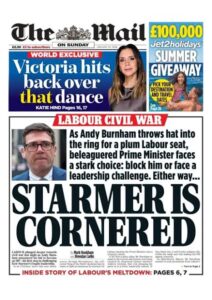
Media coverage of the Burnham vs Labour narrative has amplified its significance. Headlines framing the episode as a “civil war” within Labour have proliferated, while commentators dissect every internal statement for signs of infighting or leadership instability.
Labour loyalists insist the party must present a united front to government opponents, while critics inside and outside the party warn that silencing internal debate will only deepen resentment and risk long-term fragmentation.
Social media and public forums have been rife with discussion, with many Labour voters — especially in the North — expressing frustration at what they perceive as metropolitan party elites shutting down a potential champion of regional interests.
7. What Happens Next? Possible Scenarios
a) Labour Maintains Control
The leadership could double down on unity messaging, avoid further clashes and focus on electoral strategy for the May 2026 local and devolved elections. This would require repairing fences with Burnham’s supporters and harnessing internal dissent into constructive reform.
b) Burnham Re-Engages in Other Ways
Burnham could refocus his influence as Mayor of Greater Manchester while building networks and support within Labour’s left-leaning grassroots. Over time, shifting party currents might broaden his path to a leadership contest.
c) Leadership Challenge Intensifies
If frustration grows over Starmer’s leadership style or electoral performance, the Burnham faction — combined with other critics like Lucy Powell — could coalesce around a formal leadership challenge, potentially setting the stage for an unprecedented showdown at Labour’s annual conference or within Parliament.
d) Splinter Movements or Third-Party Options
Though unlikely, persistent internal conflict could fuel the rise of splinter groups or bolster the appeal of third parties, especially Reform UK, which continues gaining ground amid Labour’s polling struggles.
8. Conclusion: A Defining Moment for Labour
The confrontation between Andy Burnham and the broader Labour leadership encapsulates more than a personal dispute; it is emblematic of a party at a crossroads. With internal tensions laid bare by the recent by-election blockage and mounting questions about leadership, Labour faces a pivotal choice in how it reconciles its identity, unity and strategic direction.
For now, the leadership has stood firm. But the debate over who should shape Labour’s future — and how the party can best connect with Britain’s changing political landscape — is only intensifying. Whether this marks the beginning of a new chapter for Burnham, a reaffirmation of Starmer’s control, or something yet unforeseen, the repercussions will ripples through UK politics for months to come.
How useful was this post?
Click on a star to rate it!
Average rating 0 / 5. Vote count: 0
No votes so far! Be the first to rate this post.
About the Author

usa5911.com
Administrator
Hi, I’m Gurdeep Singh, a professional content writer from India with over 3 years of experience in the field. I specialize in covering U.S. politics, delivering timely and engaging content tailored specifically for an American audience. Along with my dedicated team, we track and report on all the latest political trends, news, and in-depth analysis shaping the United States today. Our goal is to provide clear, factual, and compelling content that keeps readers informed and engaged with the ever-changing political landscape.