Alex Pretti Minneapolis Shooting: Federal Agents Kill ICU Nurse, Protests Erupt
A photo of Alex Pretty, 37, can be seen temporarily. Summary. shot by federal immigration officers. Today we will discuss about Alex Pretti Minneapolis Shooting: Federal Agents Kill ICU Nurse, Protests Erupt
Alex Pretti Minneapolis Shooting: Federal Agents Kill ICU Nurse, Protests Erupt
On January 24, 2026, Minneapolis was thrust into national and international headlines after federal law enforcement officers fatally shot 37-year-old Alex Jeffrey Pretti, an intensive care unit nurse employed at the Minneapolis Veterans Affairs Medical Center. The shooting occurred during a tense immigration enforcement operation that quickly spiraled into chaos, triggering massive protests, political outrage, and renewed debate over the use of lethal force by federal agencies on American citizens.
What began as a routine morning in a busy south Minneapolis neighborhood soon turned into one of the most controversial law-enforcement encounters in recent U.S. history, raising serious questions about accountability, transparency, and civil rights.
The Incident: A Protest Turns Deadly
The fatal encounter took place on Nicollet Avenue shortly after 9 a.m. Federal agents were conducting an immigration enforcement action when a group of demonstrators gathered nearby to protest. Alex Pretti, who was off duty at the time, was among those present.
Video recordings captured by bystanders show Pretti standing in the street, holding a mobile phone, and appearing to communicate with both protesters and officers. Witnesses say he was attempting to de-escalate tensions and ensure traffic safety when agents confronted him.
Within moments, the situation escalated rapidly. Agents used pepper spray, forced Pretti to the ground, and restrained him. While he was pinned to the pavement, multiple gunshots were fired. He was pronounced dead at the scene.
Federal authorities later stated that Pretti had been armed and posed a threat. However, footage circulating widely on social media appears to show that he was holding a phone, not a weapon, in the moments before being taken down. A handgun was reportedly recovered from his waistband after he was already on the ground, leading to intense public scrutiny over the sequence of events.
Who Was Alex Pretti?
Alex Pretti was a highly respected ICU nurse known for his dedication to patients and colleagues. Born in Illinois, he earned his nursing degree from the University of Minnesota and spent more than a decade working in critical care. At the Minneapolis VA hospital, he treated severely ill veterans, managed complex medical equipment, and participated in clinical research.
Friends and coworkers described him as compassionate, calm under pressure, and deeply committed to social justice. Outside of work, Pretti enjoyed outdoor activities, photography, and community involvement. He had no criminal record and was legally licensed to carry a firearm in Minnesota.
Family members stated that he attended the protest out of concern for recent aggressive immigration operations and was motivated by a belief in protecting civil liberties. They firmly rejected claims that he acted violently or threatened officers.
Conflicting Narratives
Federal Account
Federal agencies maintained that Pretti approached officers with a loaded handgun and resisted commands, forcing agents to respond with lethal force to protect themselves and others. Officials framed the shooting as a justified act of self-defense during a volatile enforcement operation.
Video Evidence and Eyewitnesses
Independent video analysis tells a more troubling story. The footage shows Pretti:
Holding a mobile phone
Standing in a non-aggressive posture
Being tackled and restrained before shots were fired
Not visibly pointing or raising a weapon
Civil rights groups argue the video contradicts official statements and suggests excessive use of force. Legal experts have called for full release of body-camera footage, radio communications, and surveillance recordings.
Public Reaction and Protests
Within hours, hundreds of protesters gathered near the site of the shooting. Demonstrations spread across Minneapolis and later to other major U.S. cities. Crowds demanded justice for Pretti and accountability for the agents involved.
Chants of “Release the footage” and “Nurses save lives, they don’t deserve bullets” echoed through the streets. Some protests turned tense, with law enforcement deploying crowd-control measures including tear gas.
Community leaders, civil rights activists, and healthcare workers joined the demonstrations, emphasizing that the killing of a medical professional during a peaceful protest symbolized a dangerous erosion of civil liberties.
Political and Legal Fallout
City officials called for an independent federal investigation. Members of Congress demanded hearings, while legal scholars questioned whether constitutional rights were violated.
Key issues under review include:
Whether lethal force was necessary
Whether de-escalation protocols were followed
Why official statements differ from video evidence
Whether federal agents exceeded their authority
The Department of Justice announced a preliminary civil-rights inquiry, while state authorities pledged cooperation.
A Nation Reexamining Policing and Power
The Alex Pretti shooting reignited national debates on:
Militarization of federal law enforcement
The role of armed agents in civilian protests
Transparency in use-of-force investigations
Rights of lawful gun owners during police encounters
Protection of medical professionals as public servants
The case has been compared to other high-profile incidents involving civilian deaths during law-enforcement operations, further intensifying demands for reform.
The Human Cost
Beyond politics and policy, the tragedy has left a grieving family, shocked colleagues, and a community struggling to understand how a healer lost his life in such a violent manner.
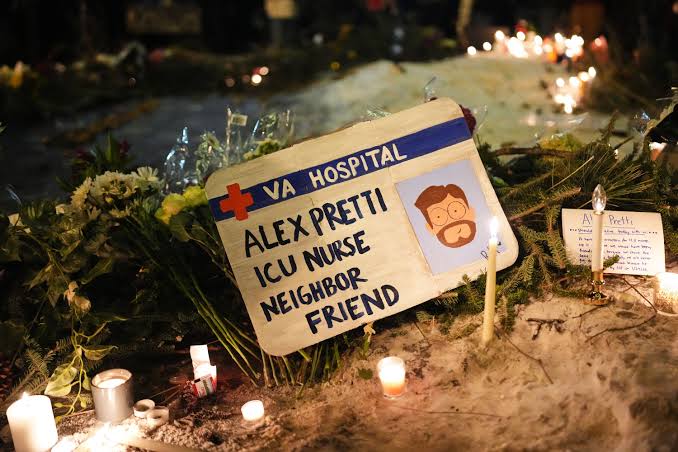
At the VA hospital, coworkers held candlelight vigils, remembering Pretti as a nurse who saved countless lives and treated patients with dignity and compassion. Many expressed fear that healthcare workers now face risks even outside hospital walls.
Conclusion
The killing of Alex Pretti is more than a single tragic encounter. It represents a critical moment in America’s ongoing struggle to balance law enforcement authority with civil liberties, public safety with human rights, and national security with transparency.
As investigations continue, the nation watches closely. The outcome may shape future federal policing standards, protest protections, and the accountability mechanisms that govern the use of deadly force.
For many, Alex Pretti will be remembered not as a suspect, but as a caregiver, a citizen, and a man whose life ended in circumstances that demand truth, justice, and reform.
How useful was this post?
Click on a star to rate it!
Average rating 0 / 5. Vote count: 0
No votes so far! Be the first to rate this post.
About the Author

usa5911.com
Administrator
Hi, I’m Gurdeep Singh, a professional content writer from India with over 3 years of experience in the field. I specialize in covering U.S. politics, delivering timely and engaging content tailored specifically for an American audience. Along with my dedicated team, we track and report on all the latest political trends, news, and in-depth analysis shaping the United States today. Our goal is to provide clear, factual, and compelling content that keeps readers informed and engaged with the ever-changing political landscape.