Phạm Minh Chính : Party Shakeup, Leadership Shift, Vietnam Shock
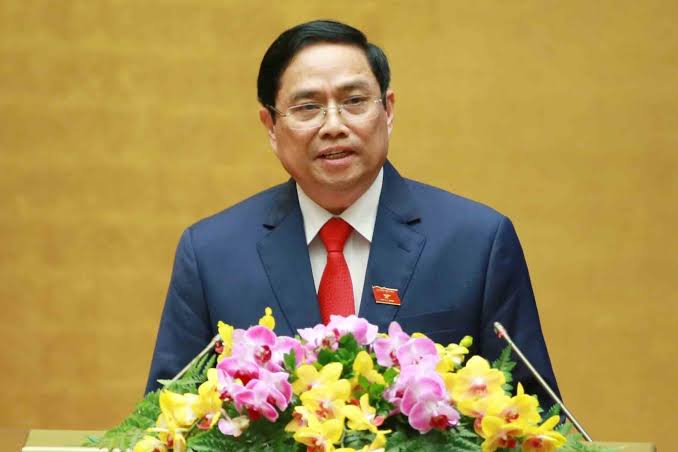
As of January 2026, Vietnam is experiencing a major political restructuring, which sees the position of Prime Minister Pham Minh Chinh weakened. Today we will discuss about Phạm Minh Chính : Party Shakeup, Leadership Shift, Vietnam Shock
Phạm Minh Chính : Party Shakeup, Leadership Shift, Vietnam Shock
Phạm Minh Chính — a name increasingly synonymous with Vietnam’s political evolution — stands at the centre of one of the most consequential transitions in modern Vietnamese governance. As the Prime Minister of Vietnam and a senior leader of the Communist Party of Vietnam (CPV), Chính has been instrumental in shaping the nation’s policy direction, administrative reform, and strategic priorities throughout the 2020s. His rise to power, leadership style, and political transformation ambitions have sparked significant debate at home and abroad, igniting what many have termed a leadership shake‑up in the Party and state structure.
This article explores Phạm Minh Chính’s biography, his role within the Communist Party hierarchy, the ongoing leadership and governance reforms under his tenure, and the implications of these shifts for Vietnam’s future — both domestically and internationally.
1. Early Life and Rise in Vietnamese Politics
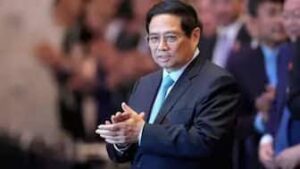
Phạm Minh Chính was born on 10 December 1958 in Hoa Lộc Commune, Hậu Lộc District, Thanh Hóa Province, Vietnam. He joined the Communist Party in 1986 and steadily climbed party and state ranks through a combination of security service, administrative expertise, and political acumen.
Chính has an academic background in civil and industrial engineering, supplemented by advanced studies in law and political theory. He also served in Vietnam’s People’s Public Security forces, where he attained the rank of Lieutenant General before transitioning fully into Party and government roles.
His early career was marked by assignments in both security services and party organization, reflecting Vietnam’s hybrid approach to governance, where security, political loyalty, and administrative capability are intertwined. By the early 2010s, he had established a reputation as a definitive operator within the Party’s internal structure, particularly through roles in the Central Organizing Commission and as Party Secretary in Quảng Ninh Province.
2. Becoming Prime Minister: Leadership at the Helm
Phạm Minh Chính’s most defining career milestone came on 5 April 2021, when he was elected Prime Minister of the Socialist Republic of Vietnam by the National Assembly — becoming the eighth person to hold this office since the country’s reunification.
Chính’s ascension came at a time of intense national pressure: the COVID‑19 pandemic was in full swing, economic disruptions mounted, and Vietnam faced complex challenges in balancing public health with economic stability. Under his leadership, the government put strong emphasis on vaccination rollout, economic reopening, and foreign investment promotion, which many analysts credit with helping Vietnam regain economic growth momentum after pandemic setbacks.
In addition to his role as Prime Minister, Chính serves as the Secretary of the Government Party Committee, is a member of the Politburo, and Vice Chairman of the National Defense and Security Council — cementing his status as a key figure in both administrative and security policy.
3. Party Shakeup and Leadership Shifts
Economic Modernization and Structural Reform
One of the defining themes of Phạm Minh Chính’s premiership has been the push for structural reform and modernization of the Vietnamese governance apparatus. In recent years, the Communist Party has signalled a strong desire to streamline state institutions to improve efficiency and responsiveness in the face of both domestic pressures and global competition. This push includes rationalizing bureaucratic layers, restructuring ministries, and enhancing central policy coherence.
For example, in 2025, the National Assembly approved a major reshuffle of government structures, expanding leadership positions to include seven deputy prime ministers and reorganizing ministries to better align with economic and social policy priorities.
Moreover, Chính has overseen initiatives like the establishment of national steering committees to implement policies aimed at strengthening private sector development, reinforcing the government’s efforts to make Vietnam’s economy more dynamic and globally competitive.
Party Organisation Innovation
Under Chính’s guidance, the Government Party Organisation has also implemented reforms aimed at forging stronger alignment between the Communist Party’s strategic direction and government implementation. Key initiatives include strengthening Party leadership within government ministries and developing frameworks for more effective coordination of policy execution.
Continuing the practice of appointing leaders who are non‑local to key positions further highlights the Party’s strategy of cross‑regional leadership mobility, aimed at reducing localism and consolidating central policy standards nationwide.
4. A “Shakeup” or Stability Consolidation?
The term “shakeup” often appears in foreign commentary regarding Vietnam’s political landscape, particularly in the context of leadership renewal ahead of major Party congresses or after high-profile resignations. While institutional changes are often labeled as tumultuous in Western media, many domestic analysts frame these shifts as controlled, strategic, and policy-oriented.
Leadership Transition and the 2026 Communist Party Congress
In early 2026, Vietnam’s ruling Communist Party convened its five-yearly congress in Hanoi — an event that not only sets policy direction for the coming term but also selects the top leadership for the Party and State. The congress has drawn international interest because it signals how the Party will balance reform, central control, and continuity.
Reports indicate that top Party leaders are expected to consolidate their roles at the congress, reflecting broader Party unity with minimal internal contention.
Amid these broader leadership arrangements, Phạm Minh Chính’s role as Prime Minister continues to situate him as a central figure even as the Party leadership landscape shifts around him. This combination of continuity and recalibration is vital to understanding Vietnam’s political evolution: changes are often structural and policy-driven rather than purely factional.
5. Policy Priorities Under Chính’s Leadership
Pham Minh Chính has articulated and driven several significant policy priorities that reflect both domestic needs and Vietnam’s role on the global stage:
Economic Growth and Strategic Goals
Chính has emphasized the importance of sustaining strong economic performance, pushing ambitious targets tied to Vietnam’s long-term development blueprint. Such goals include aggressively pursuing growth rates, enhancing infrastructure, and expanding logistics networks.
He has also highlighted the importance of the “three strategic breakthroughs” — institutions, infrastructure, and human resources — as core pillars to drive economic transformation and global competitiveness.
Private Sector Development
Under Chính’s leadership, the government formed a National Steering Committee dedicated to implementing policies that bolster Vietnam’s private sector, demonstrating an official pivot toward more market-oriented development while maintaining socialist orientation.
Party and Governance Reforms
Chính’s tenure has also overseen deeper integration of Party leadership within governance institutions, strengthening the Communist Party’s direct guidance over implementation mechanisms, which he asserts is essential for policy consistency and national resilience.
6. International Diplomacy and Strategic Partnerships
Foreign Relations with Major Powers
Pham Minh Chính’s approach to foreign affairs reflects a nuanced balance between Vietnam’s strategic interests and geopolitical realities. Vietnam has maintained strong bonds with major global powers while safeguarding its sovereignty and policy autonomy.
For instance, Vietnam continues to cultivate economic and diplomatic ties with China and the United States — navigating trade complexities and tariff negotiations while seeking deeper cooperation in infrastructure and technology.
Global Presence in Multilateral Fora
Under Chính’s government, Vietnam has been active in international engagements, including forums like the G20 and ASEAN meetings. These platforms serve as venues for expanding trade partnerships, enhancing investment flows, and reinforcing Vietnam’s role as a responsible actor in regional stability.
7. Challenges and Criticisms
As with any significant political leader, Phạm Minh Chính’s tenure has not been without criticisms and challenges. Observers note that consolidating power, especially across Party and government structures, can raise concerns about bureaucratic rigidity or limited political diversity. Some external commentary portrays these internal shifts as a “shakeup” with unpredictable consequences — though this view may overstate the extent of instability and underplay the Party’s tradition of collective leadership.
Additionally, while economic reforms aim at modernization, debates continue on balancing state control with private enterprise growth, and how to ensure transparency amidst central consolidation.
8. Legacy and the Road Ahead
Pham Minh Chính’s legacy is still unfolding, but his impact on Vietnam’s politics and governance architecture is undeniable. From managing pandemic recovery to steering institutional reforms and representing Vietnam on the global stage, his leadership reflects a blend of continuity and transformation.
As Vietnam approaches critical milestones — including new Party leadership appointments and the culmination of its current five-year socio-economic plan — Chính’s role will be pivotal in shaping how the country balances reform with stability, openness with national identity, and growth with social governance.
Whether historians will ultimately define his tenure as a period of shock or strategic evolution remains to be seen; what is clear, however, is that Phạm Minh
How useful was this post?
Click on a star to rate it!
Average rating 0 / 5. Vote count: 0
No votes so far! Be the first to rate this post.
About the Author

usa5911.com
Administrator
Hi, I’m Gurdeep Singh, a professional content writer from India with over 3 years of experience in the field. I specialize in covering U.S. politics, delivering timely and engaging content tailored specifically for an American audience. Along with my dedicated team, we track and report on all the latest political trends, news, and in-depth analysis shaping the United States today. Our goal is to provide clear, factual, and compelling content that keeps readers informed and engaged with the ever-changing political landscape.