Mark Rutte Davos: NATO diplomacy, Greenland talks heat up alliance tensions
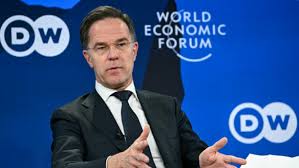
I mean, now the Prime Minister of Greenland is telling his people that an attack cannot be ruled out. NATO Secretary General Mark Rutte. Today we will discuss about Mark Rutte Davos: NATO diplomacy, Greenland talks heat up alliance tensions
Mark Rutte Davos: NATO diplomacy, Greenland talks heat up alliance tensions
At the 2026 World Economic Forum (WEF) in Davos‑Klosters, Switzerland, NATO Secretary‑General Mark Rutte found himself at the center of a diplomatic storm. The annual global gathering of political leaders, CEOs, academics, and strategists, often focused on economic trends, this year turned into an unexpected flashpoint for geopolitical tensions — particularly within the North Atlantic Treaty Organization (NATO) — over the fate of Greenland.
While Rutte aimed to underscore unity and mutual security, discussions on Ukraine, Arctic cooperation, and Greenland’s future revealed deep underlying stresses among NATO members, especially between the United States and its European partners. This article explores Rutte’s role, the evolving Greenland controversy, NATO’s priorities, and the broader implications for transatlantic relations.
1. Mark Rutte: From Dutch Politics to NATO Leadership
Before assuming his current role, Mark Rutte served multiple terms as Prime Minister of the Netherlands. Known for his pragmatic approach to governance and coalition building, Rutte built a reputation as a centrist leader who could manage complex political environments. When he became Secretary‑General of NATO, expectations centered on his ability to balance alliance commitments with evolving global threats.
At Davos, Rutte’s leadership was on display not just as a representative of NATO, but as a mediator between conflicting visions of global security — particularly those advanced by the United States under President Donald Trump and key European capitals.
2. Davos 2026: A Stage Set for Diplomatic Strife
Historically, the WEF’s annual summit serves as a venue for high‑level diplomacy and networking among policymakers and business leaders. At Davos 2026, however, the forum became a backdrop for heated diplomatic engagement over NATO’s unity and emerging geopolitical rifts.
Rutte participated in panel sessions that touched on NATO’s strategic priorities, notably the alliance’s role in defending Europe and addressing global security challenges. He engaged with counterparts and policymakers from across the geopolitical spectrum, emphasizing the need for cooperation amid rising tensions.
Among the many sessions, one titled “Can Europe Defend Itself?” featured Rutte alongside key European leaders, reasserting the alliance’s shared security commitments despite the growing strain of public disagreements.
3. Greenland: From Sideline Topic to Strategic Flashpoint
The dominant geopolitical tension at Davos stemmed from discussions over Greenland, the world’s largest island and a Danish autonomous territory. While geographically associated with North America, Greenland is politically tied to Denmark — a founding NATO member — which complicates the strategic calculus for allies.
In the days leading up to the summit, President Donald Trump reignited a controversial push for the United States to acquire control over Greenland, claiming it essential for national and global security. Trump’s provocative statements — including assertions that Greenland should be “ours” and suggestions that negotiations should begin immediately — shocked European leaders and raised questions about respect for national sovereignty and alliance norms.
Although Trump publicly ruled out the use of military force, his rhetoric and repeated emphasis on strategic necessity heightened diplomatic sensitivities.
4. Rutte’s Response: Advocating “Thoughtful Diplomacy”
Amid the Greenland controversy, Rutte took a carefully measured public stance. Speaking at Davos, he insisted that the only responsible path forward was through “thoughtful diplomacy,” stressing that diplomatic engagement rather than coercive pressure would help defuse tensions and prevent a rupture within the alliance.
Rutte emphasized that he was working on the issue “behind the scenes,” avoiding public posturing while encouraging all stakeholders to engage constructively. This echoed a broader theme at the forum: maintaining NATO unity and preventing transactional disputes from overshadowing the alliance’s core mission.
In a panel session, he stressed the importance of seeing beyond immediate controversies:
“The only way to deal with that is, in the end, thoughtful diplomacy.”
By framing the issue in these terms, Rutte sought to reassure European allies concerned about U.S. unilateralism while signaling to Washington that NATO still valued cooperation and mutual respect.
5. Ukraine vs. Greenland: Rutte’s Priorities for NATO
While Greenland dominated headlines in Davos, Rutte consistently reminded audiences that Ukraine remained NATO’s foremost priority. As Russian aggression continued its assault on Kyiv, Rutte argued that the alliance’s focus must remain steadfast on supporting Ukraine’s defense and deterrence capabilities.
In a panel, Rutte said that while territorial issues like Greenland deserved attention and resolution in an amicable way, Ukraine’s defense should be the alliance’s main priority. He cautioned that focusing too much on peripheral disputes could detract from ongoing challenges on Europe’s eastern flank.
This emphasis reflects a strategic balancing act: reaffirming NATO’s commitment to traditional security concerns in Europe, while also addressing emerging and contentious diplomatic issues such as Arctic geopolitics.
6. The U.S. Position and Transatlantic Strain
President Trump’s remarks at Davos added to the complexity of NATO diplomacy. In a lengthy address, he reiterated U.S. interest in Greenland and called for “immediate negotiations” with Denmark, while also highlighting a wide range of domestic and foreign policy positions.
Trump’s controversial statements — including criticism of European defenses and promises that the U.S. would “remember” opposition in future alliance decisions — fueled anxiety among European partners.
The U.S. Treasury Secretary’s dismissal of Denmark as “irrelevant” in the Greenland dispute further exacerbated tensions, prompting strong reactions from European leaders and NATO allies.
These developments underscored a growing rift within the transatlantic alliance — one where strategic disagreements risk overshadowing shared security commitments.
7. European Pushback and NATO Unity at Stake
European leaders responded forcefully to Trump’s comments. French President Emmanuel Macron and European Commission President Ursula von der Leyen, among others, condemned the idea of territorial acquisition and reaffirmed respect for Danish sovereignty. Some EU officials warned of potential trade countermeasures if U.S. pressure continued.
These reactions highlighted broader concerns about alliance coherence: could NATO remain united if member states diverged on fundamental principles such as respect for national sovereignty and collaborative decision‑making?
Rutte’s diplomatic approach, emphasizing negotiation and constructive dialogue, reflects an attempt to bridge these divides. Yet, the underlying tensions reveal deeper fault lines in transatlantic relations.
8. The Arctic and Future NATO Strategy
Beyond Greenland, discussions at Davos touched on NATO’s role in the Arctic region more broadly. With global powers — including Russia and China — showing increased strategic interest in the Arctic, alliance members recognize that ensuring stability in the high north is vital for collective defense.
Rutte’s comments support a vision where NATO enhances its presence in the Arctic, not as a battleground for territorial disputes, but as a region requiring cooperative security measures.
This perspective aligns with emerging debates among NATO members about future force posture, infrastructure investments, and collaborative defense planning to address climate‑enhanced geopolitical competition in the Arctic.
9. Domestic Implications and Public Perception
The Greenland controversy has not only affected diplomatic circles but also public discourse in NATO countries. In Denmark and Greenland, local leaders strongly reiterated their determination to maintain sovereignty and reject any external pressure to alter political status.
Among European publics, the debate has raised questions about the nature of U.S.–European cooperation and the extent to which NATO should accommodate unilateral strategic ambitions. These domestic considerations complicate diplomatic negotiations, as leaders must balance alliance obligations with internal political expectations.
For Rutte, maintaining credibility with NATO members requires demonstrating that alliance leadership respects the interests and values of all members — especially smaller states like Denmark and Greenland.
10. Looking Ahead: Can NATO Bridge The Divide?
As the dust settles after Davos, several questions loom over NATO’s future direction:
Will Greenland be resolved diplomatically without damage to alliance cohesion?
Rutte’s insistence on “thoughtful diplomacy” suggests diplomacy remains the preferred route, yet progress will depend on genuine engagement from all sides.Can NATO sustain focus on traditional security threats like Ukraine while negotiating new geopolitical tensions?
Balancing these priorities will test leadership and member commitment.What role will transatlantic economic and political cooperation play amid diplomatic strains?
Potential trade issues and disagreements over security strategy challenge alliance unity.
Rutte’s measured approach underscores the complexity of leading a diverse military alliance in a world where geopolitical interests often compete. His role at Davos highlighted the diplomatic tightrope NATO must walk — affirming unity without overlooking national autonomy, and promoting cooperation while addressing honest disagreements.
Conclusion: Rutte’s Davos Diplomacy in Historical Context
In the annals of NATO diplomacy, the Davos episode marks a moment when global governance forums intersected with hard geopolitical realities. Mark Rutte’s stewardship as Secretary‑General came under intense spotlight, as he navigated escalating tensions over Greenland, reaffirmed support for Ukraine, and sought to preserve transatlantic unity.
Rutte’s call for diplomacy — thoughtful, patient, and inclusive — reflects a nuanced understanding of alliance management. Though challenges remain, his leadership at Davos underscored NATO’s ongoing commitment to collaboration and resilience in the face of emerging geopolitical pressures.
Ultimately, the Greenland controversy may serve as a test case not just for Arctic geopolitics, but for the adaptability and strength of NATO in an era defined by shifting alliances and strategic competition.
How useful was this post?
Click on a star to rate it!
Average rating 0 / 5. Vote count: 0
No votes so far! Be the first to rate this post.
About the Author

usa5911.com
Administrator
Hi, I’m Gurdeep Singh, a professional content writer from India with over 3 years of experience in the field. I specialize in covering U.S. politics, delivering timely and engaging content tailored specifically for an American audience. Along with my dedicated team, we track and report on all the latest political trends, news, and in-depth analysis shaping the United States today. Our goal is to provide clear, factual, and compelling content that keeps readers informed and engaged with the ever-changing political landscape.