Supreme Court Tariff Ruling : Trump trade power shaken, tariffs under fire, market shock
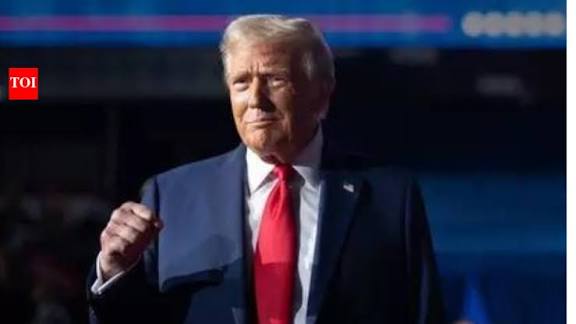
The case revolves around tariffs imposed by Trump in April 2025, when he cited national security concerns for imposing hefty import duties. Today we will discuss about Supreme Court Tariff Ruling : Trump trade power shaken, tariffs under fire, market shock
Supreme Court Tariff Ruling : Trump trade power shaken, tariffs under fire, market shock
The United States Supreme Court is standing at the center of one of the most consequential economic and constitutional battles of the decade. The case, widely described as the Supreme Court Tariff Ruling, has placed former President Donald Trump’s trade strategy under intense judicial scrutiny and sent tremors through global financial markets. At stake is not only the legality of sweeping import tariffs imposed under emergency powers, but also the broader question of how much authority a U.S. president truly has to reshape global trade without Congress.
For years, tariffs have been Trump’s signature weapon in economic diplomacy. From steel and aluminum duties to broad-based import taxes justified under national emergency laws, his approach rewrote the rules of engagement for global commerce. Now, the highest court in the land is examining whether those actions crossed constitutional boundaries. The outcome could redefine executive power, disrupt global supply chains, and trigger major market realignments.
The Legal Battle Behind the Tariffs
At the heart of the case is the use of emergency statutes to justify trade restrictions. Traditionally, the power to levy tariffs lies with Congress under the U.S. Constitution. Over time, lawmakers have delegated limited authority to the executive branch to act swiftly during crises, especially when national security or foreign threats are involved.
Trump relied heavily on these delegated powers, arguing that trade imbalances, unfair foreign practices, and even drug trafficking constituted national emergencies requiring immediate economic action. By invoking emergency legislation, his administration imposed broad tariffs without the lengthy process of congressional approval.
Lower courts have already questioned this approach, suggesting that emergency economic laws were never meant to serve as a blank check for permanent trade policy. The Supreme Court’s review now raises fundamental issues:
Can economic threats be treated the same as military or security emergencies?
Does the president have the right to impose taxes in the form of tariffs without explicit congressional authorization?
Where is the line between delegated authority and constitutional overreach?
The answers will shape not just this case, but the future balance of power in U.S. trade governance.
Trump’s Trade Doctrine Under Fire
Trump’s trade philosophy was built on the idea that tariffs are a powerful negotiating tool. He argued that the United States had been exploited by unfair trade deals and that strong unilateral action was necessary to restore balance. Supporters credit his policies with forcing trade partners back to the negotiating table and protecting domestic industries.
Critics, however, say the strategy blurred the separation of powers and weaponized emergency laws for routine economic policy. They argue that if presidents can label almost any economic challenge as a “national emergency,” then Congress’s constitutional role in setting trade and tax policy becomes largely symbolic.
The Supreme Court case directly challenges this doctrine. A ruling against the emergency tariff framework would not only weaken Trump’s legacy but also limit future presidents from using similar tactics.
Markets React: Uncertainty and Volatility
Financial markets dislike uncertainty, and the Supreme Court tariff case has produced plenty of it. Investors are trying to price in multiple scenarios, each with vastly different outcomes for global trade flows and corporate earnings.
Stock Markets
Equities have experienced heightened volatility as traders assess how a ruling might impact multinational corporations. Companies dependent on global supply chains could benefit if tariffs are rolled back, potentially lowering costs and boosting profit margins. Conversely, firms that have invested heavily in domestic production to avoid tariffs could face competitive pressure if imports become cheaper again.
Currency and Bond Markets
Currency markets are also sensitive to the decision. A reduction in tariffs could strengthen the U.S. dollar by improving trade relations and investor confidence. Bond markets, meanwhile, are watching closely because large-scale tariff refunds—if ordered by the courts—could affect government revenue and fiscal projections.
Commodities
Commodities such as steel, aluminum, and agricultural products are directly influenced by trade barriers. A legal rollback of tariffs could trigger price shifts, benefiting exporters while pressuring domestic producers who had been shielded by protectionist policies.
Global Implications: Beyond U.S. Borders
The Supreme Court’s decision will resonate far beyond Washington. Countries across Asia, Europe, and Latin America have structured their trade strategies around the assumption that U.S. tariffs might remain in place or expand.
Supply Chains in Transition
Over the past several years, global companies have reconfigured supply chains to bypass high-tariff routes. Manufacturing has shifted to alternative countries, and logistics networks have been redesigned to minimize exposure. A ruling that weakens tariff authority could encourage firms to reconsider these costly adjustments.
Diplomatic Fallout
Trade partners view the case as a signal of whether U.S. policy will return to a more rules-based, predictable framework or continue to rely on unilateral executive action. A judicial check on presidential power could restore confidence in long-term trade agreements and multilateral negotiations.
Constitutional Stakes: Separation of Powers
Beyond economics, the case is a test of American constitutional design. The Founders placed taxation and trade regulation firmly in the hands of the legislative branch to prevent the concentration of power in a single office. Over time, however, Congress has delegated portions of this authority to the executive for efficiency and flexibility.
The Supreme Court must now determine whether that delegation has gone too far. If the justices rule that emergency statutes cannot be used to impose broad tariffs, it would reaffirm Congress’s central role in trade policy. Such a decision could force lawmakers to be more explicit and accountable when authorizing future economic measures.
On the other hand, if the Court upholds the president’s actions, it could set a precedent for expanded executive control over economic policy, potentially reshaping the balance of power for generations.
Potential Outcomes and Their Impact
1. Tariffs Struck Down
If the Court rules that the emergency-based tariffs are unconstitutional:
Importers may seek refunds for duties already paid.
Global trade costs could fall, easing inflationary pressures.
Congressional authority over trade would be reinforced.
Future presidents would face tighter limits on unilateral economic actions.
This outcome would likely trigger a market rally, particularly in sectors that depend on international sourcing.
2. Tariffs Upheld
If the Court sides with the administration’s interpretation of emergency powers:
Presidential authority in trade policy would be significantly expanded.
Markets might brace for continued or even increased use of tariffs as policy tools.
International partners could face prolonged uncertainty and potential retaliatory measures.
Such a ruling could embolden future leaders to rely more heavily on emergency declarations for economic decision-making.
3. A Narrow or Mixed Decision
The Court could also issue a nuanced ruling, allowing limited use of emergency powers while imposing clearer boundaries. This would provide guidance without fully dismantling existing frameworks, though uncertainty would likely persist as new cases test those limits.
Inflation, Consumers, and the Real Economy
Tariffs function as taxes on imports, and their costs are often passed on to consumers. A rollback could reduce prices for everyday goods, from electronics to clothing, offering some relief at a time when inflation remains a concern in many economies.
However, the impact would not be uniform. Domestic industries that benefited from protection might face stiffer competition, potentially leading to job adjustments and restructuring. Policymakers would need to balance consumer benefits with the economic security of local producers.
Political Ramifications in an Election Era
Trade policy has always been politically charged, and this case is no exception. A Supreme Court ruling that curtails executive authority could become a rallying point for lawmakers seeking to reclaim influence over economic policy. Conversely, a decision favoring broad presidential powers could strengthen arguments for decisive, centralized leadership in an increasingly competitive global economy.
For Trump, the outcome carries symbolic weight. His presidency was defined in part by his willingness to challenge established norms and push the limits of executive authority. The Court’s judgment will either validate that approach or mark a clear boundary that future administrations cannot cross.
A Turning Point for U.S. Trade Governance
The Supreme Court tariff ruling is more than a legal technicality. It is a moment that could redefine how the world’s largest economy makes trade decisions. The case sits at the intersection of law, politics, and global commerce, with consequences that will unfold for years.
Whether the Court reins in presidential power or affirms it, the decision will shape:
The constitutional balance between Congress and the White House.
The stability and predictability of U.S. trade policy.
The confidence of global markets and international partners.
As investors, businesses, and governments await the final word, one reality is clear: the era of using emergency powers as a primary tool of trade policy is now under judicial examination. The Supreme Court’s ruling will determine whether that era continues or comes to a constitutional end, sending shockwaves through markets and rewriting the rules of economic governance in the process.
How useful was this post?
Click on a star to rate it!
Average rating 0 / 5. Vote count: 0
No votes so far! Be the first to rate this post.
About the Author

usa5911.com
Administrator
Hi, I’m Gurdeep Singh, a professional content writer from India with over 3 years of experience in the field. I specialize in covering U.S. politics, delivering timely and engaging content tailored specifically for an American audience. Along with my dedicated team, we track and report on all the latest political trends, news, and in-depth analysis shaping the United States today. Our goal is to provide clear, factual, and compelling content that keeps readers informed and engaged with the ever-changing political landscape.