Scottish Budget Shock : SNP Unveils Tax Hikes, Job Risks, Voter Backlash
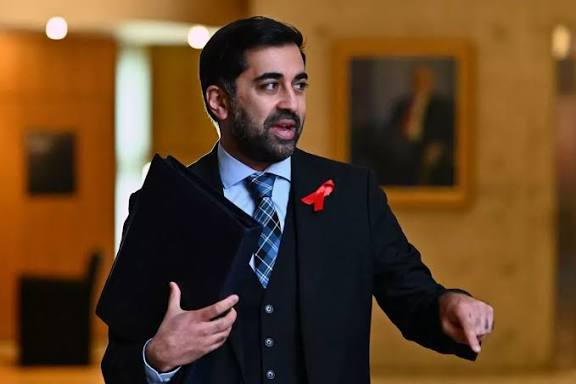
We previously told how an SNP minister had come under fire after withdrawing money from the agriculture budget meant to support farmers. Today we will discuss about Scottish Budget Shock : SNP Unveils Tax Hikes, Job Risks, Voter Backlash
Scottish Budget Shock : SNP Unveils Tax Hikes, Job Risks, Voter Backlash
Scotland’s political and economic landscape has been rocked by a dramatic new budget unveiled by the Scottish National Party (SNP), triggering fierce debate over tax rises, employment risks, and a growing sense of voter discontent. Branded by critics as a “Scottish Budget Shock,” the plan has placed the government under intense scrutiny, with supporters defending it as a necessary step to protect public services, while opponents warn it could damage economic confidence and push voters away ahead of crucial elections.
The budget arrives at a moment of heightened financial pressure. Rising inflation, increased public sector wage demands, stretched health and social care systems, and slowing economic growth have combined to create one of the most challenging fiscal environments in decades. Against this backdrop, the SNP has chosen a path that leans heavily on progressive taxation, placing a greater burden on higher earners while attempting to shield lower-income households from the worst effects of the cost-of-living crisis.
A Turning Point in Scotland’s Fiscal Policy
The new budget represents a significant shift in Scotland’s approach to taxation and spending. While the SNP has long argued for a more progressive system than that of the wider UK, this year’s measures push that philosophy further than ever before. New income tax bands, higher top rates, and frozen thresholds for upper-middle earners mean that a growing share of the population will pay more tax in real terms.
Ministers argue these changes are unavoidable. Public spending demands continue to rise, particularly in healthcare, education, housing, and welfare. At the same time, the Scottish Government faces limits on borrowing and must operate within a fixed block grant framework. With little room to cut essential services, the government has opted to raise revenue instead.
Supporters of the budget claim it reflects Scottish values: asking those with the broadest shoulders to contribute more while preserving investment in schools, hospitals, and social protection. They say the alternative would be deep cuts to frontline services that would hurt the most vulnerable communities.
Tax Hikes and the Middle-Class Squeeze
The most controversial element of the budget is the expansion of higher income tax rates. A new upper-middle tax band and an increase in the top rate have widened the gap between what Scots pay and what workers in the rest of the UK face. While the highest earners are the most visibly affected, many professionals, small business owners, and senior public servants now find themselves paying substantially more than their counterparts south of the border.
Economists warn that while such measures may raise short-term revenue, they also carry long-term risks. Highly skilled workers may consider relocating, businesses may struggle to attract top talent, and investment decisions could be influenced by Scotland’s growing reputation as a high-tax environment.
For the SNP, this is a calculated gamble. The party believes most voters support progressive taxation in principle. However, the definition of “high earner” has gradually expanded due to frozen thresholds and inflation, drawing more middle-income households into higher tax brackets. This has fuelled claims of a stealth tax on the middle class and intensified concerns about disposable incomes being squeezed further.
Job Risks in the Public and Private Sectors
Beyond personal taxation, the budget has raised alarms about potential job losses. Local authorities and public bodies face rising costs and limited funding growth, forcing them to consider efficiency savings, restructuring, and in some cases, workforce reductions. Trade unions have warned that cuts to council budgets could translate into fewer teachers, care workers, and frontline staff, undermining service quality.
In the private sector, business groups argue that higher personal taxes, combined with rising wage costs and reduced consumer spending power, could slow hiring and investment. Sectors such as hospitality, retail, tourism, and small manufacturing are particularly exposed, as they operate on tight margins and are highly sensitive to changes in household spending.
Entrepreneurs and start-ups have also expressed concern that the overall tax climate may deter innovation and risk-taking. While Scotland continues to promote itself as a hub for technology, green energy, and life sciences, critics say fiscal policy must align with growth ambitions if the country is to remain competitive in a global market.
Protecting Public Services: Promise or Illusion?
A central justification for the budget is the need to safeguard public services. The government has pledged to prioritise funding for the NHS, social care, education, and measures to tackle child poverty. In political terms, these commitments resonate strongly with voters who value a robust welfare state and universal access to essential services.
However, opposition parties question whether the promised protections are realistic. They point to ongoing pressures in hospitals, rising waiting times, staffing shortages, and under-resourced local services as evidence that higher taxes do not automatically translate into better outcomes. Critics argue that structural reform, efficiency improvements, and economic growth are just as important as revenue raising.
The tension between funding and reform lies at the heart of the budget debate. While the SNP emphasises social justice and redistribution, its opponents contend that without a stronger growth strategy, Scotland risks entering a cycle of higher taxes and stagnant productivity.
Political Shockwaves and Voter Backlash
Politically, the budget has triggered one of the fiercest reactions in recent years. Opposition parties have seized on the tax rises and job concerns as proof that the SNP’s economic model is faltering. They accuse the government of relying too heavily on taxation while failing to deliver sustained growth or meaningful reform of public services.
Polling suggests that while many voters support progressive taxation in principle, there is growing unease about personal finances, living standards, and the long-term direction of the economy. Middle-income families, in particular, are feeling the pressure from higher mortgage rates, energy bills, and everyday costs, making them more sensitive to any additional tax burden.
The timing of the budget is also politically significant. With national elections on the horizon, parties are positioning themselves to capture the mood of an electorate increasingly focused on economic security. For the SNP, maintaining its image as the party of fairness and competence is crucial. Any perception that its policies are driving jobs away or discouraging investment could weaken its hold on key voter groups.
The Independence Question and Fiscal Credibility
The budget debate cannot be separated from the broader constitutional context. The SNP’s long-term goal of independence places a premium on demonstrating fiscal responsibility and economic credibility. Supporters argue that the budget shows Scotland is willing to make tough choices and build a fairer tax system tailored to its own priorities.
Sceptics counter that widening the tax gap with the rest of the UK could make the case for independence more difficult, not easier. They warn that businesses and skilled workers may view Scotland as a higher-risk environment, complicating efforts to present the country as a viable, competitive independent state.
This tension between political ambition and economic pragmatism runs through every line of the budget. It raises fundamental questions about how Scotland balances social justice, growth, and international competitiveness in an increasingly uncertain global economy.
A Divided Public Response
Public reaction has been mixed and, in many cases, emotionally charged. Supporters praise the government for standing by its principles and protecting the most vulnerable. They argue that those who can afford to pay more should do so, especially when public services are under strain.
Critics, however, fear a gradual erosion of living standards and opportunities. They worry that Scotland could become less attractive to young professionals, entrepreneurs, and investors, leading to slower growth and fewer high-quality jobs. For them, the budget symbolises a broader concern that economic policy is being driven more by ideology than by competitiveness.
Social media, business forums, and community groups have become battlegrounds for these opposing views, reflecting a nation grappling with difficult choices about fairness, prosperity, and the role of government.
Conclusion: A Defining Moment for Scotland
The Scottish Budget Shock marks a defining moment in the country’s economic and political journey. By unveiling significant tax hikes and committing to ambitious spending priorities, the SNP has set out a clear vision of a more redistributive, state-led model of development. Whether this approach will deliver stronger public services and reduced inequality, or instead trigger job losses, slower growth, and voter backlash, remains an open question.
What is certain is that the budget has reshaped the national conversation. It has forced voters, businesses, and policymakers to confront the trade-offs inherent in funding a modern welfare state within tight fiscal constraints. As Scotland moves toward its next electoral test, the impact of these decisions will be judged not only by balance sheets, but by the lived experience of households, workers, and communities across the country.
The coming months will reveal whether the SNP’s gamble pays off — or whether the “Scottish Budget Shock” becomes a turning point that reshapes the political and economic future of the nation.
How useful was this post?
Click on a star to rate it!
Average rating 0 / 5. Vote count: 0
No votes so far! Be the first to rate this post.
About the Author

usa5911.com
Administrator
Hi, I’m Gurdeep Singh, a professional content writer from India with over 3 years of experience in the field. I specialize in covering U.S. politics, delivering timely and engaging content tailored specifically for an American audience. Along with my dedicated team, we track and report on all the latest political trends, news, and in-depth analysis shaping the United States today. Our goal is to provide clear, factual, and compelling content that keeps readers informed and engaged with the ever-changing political landscape.