President Trump : Venezuela strike halt, war powers clash, Senate pushback
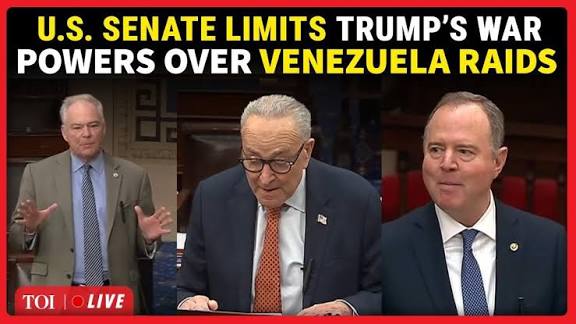
The US Senate will vote on limiting Trump’s military actions in Venezuela amid rising tensions and partisan divisions. Today we will discuss about President Trump : Venezuela strike halt, war powers clash, Senate pushback
President Trump : Venezuela strike halt, war powers clash, Senate pushback
In one of the most consequential foreign policy confrontations of his presidency, President Donald Trump’s military action in Venezuela has ignited a fierce constitutional dispute in Washington, D.C., exposing deep fractures within both political parties over presidential authority, congressional oversight, and the future of U.S. engagement in Latin America.
The turmoil follows a dramatic U.S. military raid in Caracas on January 3, 2026, culminating in the capture of Venezuelan President Nicolás Maduro and his wife, accusations of unconstitutional warfare, and a rare bipartisan push in the U.S. Senate to check the president’s war powers.
A Stunning Military Operation: Maduro Captured
The story that shocked the world began with a forceful U.S. raid in Venezuela’s capital. According to official accounts, U.S. special forces launched an operation that resulted in the capture of President Nicolás Maduro, who was subsequently flown to New York to face U.S. federal charges including drug trafficking and weapons offenses.
Administration officials described the mission as part of a broader effort to target transnational criminal networks and “narco‑terrorist” organizations. Critics, however, decried it as an unauthorized military action that risked plunging the region into chaos and violated international law.
The raid marked a significant escalation in U.S. involvement in Latin America. It was accompanied by reports of military strikes in and around Venezuelan territory, with the Pentagon deploying warships and advanced aircraft to the region in recent months.
A Presidential Pivot: Halting Further Strikes
Within days of the Venezuelan operation, President Trump moved to halt a planned “second wave” of attacks. According to some reports, the president cited new cooperation from Venezuela’s interim leadership — including the release of political prisoners and negotiations on energy and investment deals — as reasons for the pause.
Trump’s decision to call off further strikes was framed domestically as an act of prudence and diplomatic engagement, hinting at potential economic cooperation such as U.S. oil purchases from Venezuela worth billions of dollars.
Supporters of the administration touted this shift as vindication of Trump’s strategy — blending military pressure with economic incentives — while opponents argued the initial raid itself set a dangerous precedent of executive overreach.
The War Powers Clash: Congress Reacts
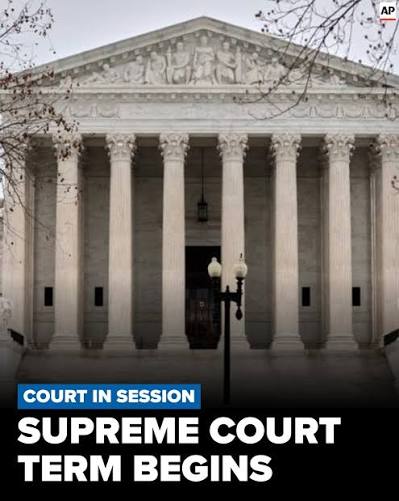
Almost immediately after the military operation, Congress shifted into crisis mode. Under the U.S. Constitution, the power to declare war rests with Congress, and lawmakers from both parties expressed alarm that the White House had acted without explicit congressional authorization.
Senate Advances War Powers Resolution
On January 8, 2026, the U.S. Senate took the extraordinary step of advancing a war powers resolution aimed at curbing President Trump’s authority to undertake further military action against Venezuela without congressional approval. The procedural motion passed narrowly by 52 votes to 47, with five Republicans joining all Senate Democrats in support.
This bipartisan alliance — unusual in today’s polarized political climate — reflected growing unease even within Trump’s own party. Senators including Rand Paul, Lisa Murkowski, Susan Collins, Todd Young, and Josh Hawley broke ranks to support future oversight of military engagements.
Under the measure, the president would be required to seek congressional authorization before engaging in additional military strikes “within or against Venezuela.”
Trump’s Response: Unconstitutional and Dangerous
President Trump immediately condemned the Senate action on his social media platform, calling the war powers vote “unconstitutional” and claiming it would “greatly hamper American self‑defense and national security.”
He specifically targeted the Republican senators who supported the resolution, declaring that they “should never be elected to office again” for what he characterized as a betrayal of GOP principles and national security.
In doing so, Trump invoked the classic executive argument that, as Commander‑in‑Chief, he has broad authority to use military force in defense of U.S. interests without prior approval from Congress.
Constitutional Debate: War Powers vs. Executive Authority
At the heart of the crisis is a constitutional clash over the 1973 War Powers Resolution, a law designed to limit the president’s ability to engage U.S. forces in hostilities without congressional consent.
Supporters of the Senate resolution argue that the Trump administration has exceeded its authority by launching strikes and operations in a sovereign nation without a formal declaration of war.
Opponents, including many in the Trump administration and allied Republicans, counter that the Venezuelan operation was a law enforcement action against criminal actors, not an act of war, and therefore outside the bounds of the War Powers Resolution.
The president’s allies also argue that the Commander‑in‑Chief Clause grants the executive branch discretion to act swiftly in defense of U.S. citizens and interests.
The result is a profound legal and political battle over where the boundary lies between executive initiative and legislative oversight — a question that has vexed Washington for decades.
Republican Party Divisions Exposed
The war powers vote laid bare deep fissures within the Republican Party. While many GOP senators backed the president’s actions, a notable minority joined Democrats in asserting congressional authority.
Republican leaders critical of the resolution argued it would weaken national defense and embolden adversaries. Others, however, expressed unease about unilateral executive action, especially in a context as sensitive as a foreign capital assault resulting in regime change.
Some Republicans who supported the resolution insisted they were not opposed to Trump’s policy goals, but rather wanted greater legislative input before any future escalation that could extend to a sustained military presence or ground troops.
International and Domestic Repercussions
International reaction to the U.S. operation and ensuing political fallout has been swift.
Allies and adversaries alike are watching the constitutional confrontation in Washington. Critics abroad have condemned the Maduro capture as a violation of Venezuela’s sovereign rights, demanding international investigations and legal accountability. Protests erupted in Caracas and other Venezuelan cities, with calls for Maduro’s release. Civil rights and human‑rights organizations in the U.S. have decried the action as unlawful.
On the domestic front, public opinion remains sharply divided along partisan lines. Supporters of Trump applaud his decisive action against what they label a criminal regime, while critics argue it represents an unfettered use of military force that could drag the United States into a prolonged foreign entanglement — the very scenario Trump once criticized in past campaigns.
Future Battles: House, Vetoes, and Legal Challenges
While the Senate’s war powers resolution represents a symbolic assertion of congressional authority, practical obstacles remain.
The measure still faces a full Senate vote and would then need to pass the Republican‑led House of Representatives. Given the House’s political composition and Trump’s vehement opposition, passage into law appears unlikely.
Even if it were to pass both chambers, the president is expected to veto the resolution, setting up a potential override fight that would require a two‑thirds majority in both houses — a steep uphill battle in today’s closely divided Congress.
Legal experts also anticipate court challenges over the scope of executive war powers, the constitutionality of the War Powers Resolution, and the definition of “hostilities.” Scholars on both sides of the aisle are now preparing arguments that could shape future litigation.
What Comes Next? The United States at a Crossroads
As of January 2026, the United States finds itself at a constitutional crossroads. The saga over Trump’s Venezuela operation has reopened a longstanding debate about the proper balance of power in U.S. foreign policy — one that stretches back to the founding era and has only grown more contentious in modern times.
Whether Congress succeeds in reigning in presidential authority over military engagements, or whether the executive branch maintains its broad unilateral powers, could define American governance for decades.
What is clear is that the war in Washington over war powers is just beginning — and its outcome will resonate far beyond the Capitol.
How useful was this post?
Click on a star to rate it!
Average rating 0 / 5. Vote count: 0
No votes so far! Be the first to rate this post.
About the Author

usa5911.com
Administrator
Hi, I’m Gurdeep Singh, a professional content writer from India with over 3 years of experience in the field. I specialize in covering U.S. politics, delivering timely and engaging content tailored specifically for an American audience. Along with my dedicated team, we track and report on all the latest political trends, news, and in-depth analysis shaping the United States today. Our goal is to provide clear, factual, and compelling content that keeps readers informed and engaged with the ever-changing political landscape.