Europe War Alert: Ukraine Strikes, NATO Moves, Red Lines
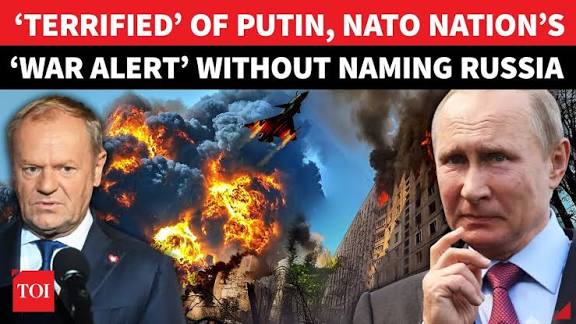
Under these stated rules, if Russia attacks a NATO country it will cross the red line, and if NATO sends troops then NATO will cross the self-imposed red line. Today we will discuss about Europe War Alert: Ukraine Strikes, NATO Moves, Red Lines
Europe War Alert: Ukraine Strikes, NATO Moves, Red Lines
Europe is facing one of its most serious security crises in decades. What began as a regional conflict between Russia and Ukraine has evolved into a broader confrontation that directly affects NATO, the European Union, and the global balance of power. With intensified military strikes, shifting alliance strategies, and increasingly rigid red lines, the continent is now living under a growing Europe war alert.
This moment is defined by three critical forces: Ukraine’s expanding military operations, NATO’s strategic recalibration, and the danger of escalation if red lines are crossed. Together, they form a volatile equation that could determine Europe’s future stability.
Escalation on the Battlefield
Renewed Russian Strikes
Russia has increased the intensity of its air and drone campaigns across Ukraine, targeting energy facilities, transportation hubs, and urban centers. These attacks are designed not only to weaken Ukraine’s military capabilities but also to strain civilian morale, particularly during harsh winter conditions.
Missile barrages and large-scale drone swarms have caused blackouts, damaged hospitals, and disrupted critical infrastructure. European leaders interpret these strikes as a signal that Moscow intends to maintain pressure regardless of diplomatic efforts.
Ukraine’s Expanding Counter-Strikes
Ukraine has responded by extending its reach beyond traditional front lines. Using drones and long-range systems, Ukrainian forces have struck logistics centers, fuel depots, and military assets inside Russian territory. These operations demonstrate Ukraine’s evolving technological capacity and its determination to challenge Russian operational depth.
However, these strikes also raise concerns across Europe. Cross-border attacks increase the risk of miscalculation, accidental escalation, and retaliation that could affect neighboring NATO states.
NATO’s Strategic Shift
From Support to Structured Presence
NATO and key European powers are moving beyond arms deliveries toward more structured military involvement. Discussions now include long-term training missions, security guarantees, and potential multinational forces to support Ukraine after any ceasefire.
France and the United Kingdom have taken a leading role in shaping these proposals, emphasizing deterrence and post-war stability rather than direct combat participation.
Security Guarantees Without Membership
While Ukraine is not yet a NATO member, its allies are working on defense guarantees that closely resemble alliance protection. These include commitments to supply advanced weapons, rebuild Ukraine’s armed forces, and ensure rapid response mechanisms against future aggression.
For Europe, this approach balances two priorities: strengthening Ukraine’s security while avoiding a formal NATO expansion that could provoke direct confrontation.
Reaffirming Collective Defense
NATO has reiterated its commitment to collective defense, reinforcing its eastern flank with troops, air defenses, and joint exercises. Countries such as Poland, Romania, and the Baltic states have become central to NATO’s deterrence posture.
The message is clear: any attack on NATO territory will trigger a unified response. This stance is intended to deter Russia from expanding the conflict beyond Ukraine.
Red Lines and the Risk of Escalation
Russia’s Red Lines
Russia has consistently warned that deeper Western involvement could provoke a severe response. Moscow views foreign troop deployments, advanced weapons systems, and long-range strikes as direct threats to its security.
Russian officials have explicitly stated that foreign forces operating in Ukraine would be considered legitimate targets. This rhetoric is meant to deter NATO from crossing thresholds that could bring the alliance directly into the war.
NATO’s Red Lines
NATO’s red lines are equally firm. Violations of allied airspace, attacks on NATO infrastructure, or harm to alliance personnel would trigger immediate consultations and potentially collective defense actions.
Incidents involving drones or missiles straying into NATO territory have already tested these boundaries, highlighting how quickly a localized conflict could widen.
The Escalation Dilemma
The challenge lies in the blurred space between deterrence and provocation. Measures intended to prevent war can sometimes increase tensions if misinterpreted. Both sides are operating under intense pressure, where a single miscalculation could have far-reaching consequences.
Hybrid Warfare and Internal Threats
Sabotage and Cyber Operations
Beyond conventional warfare, Europe is facing a rise in hybrid threats. Cyberattacks, sabotage of infrastructure, and disinformation campaigns have become tools of influence aimed at destabilizing societies without open conflict.
Energy networks, transport systems, and communication channels are particularly vulnerable. European governments now treat cybersecurity and counter-disinformation as core components of national defense.
Psychological and Political Pressure
Disinformation campaigns seek to exploit divisions within European societies, targeting public opinion, elections, and trust in institutions. These efforts aim to weaken political will and undermine support for Ukraine.
As a result, Europe’s war alert extends beyond the battlefield into media, cyberspace, and domestic politics.
Airspace Violations and Border Tensions
NATO countries along the eastern flank have reported increased airspace activity near their borders. Fighter jet interceptions and air defense alerts have become more frequent.
Although most incidents do not escalate, they underscore how fragile the security environment has become. A single accident or misjudgment could trigger a crisis involving multiple countries.
Public Opinion and Political Challenges
European governments face growing pressure to balance security commitments with domestic concerns. While many citizens support Ukraine, rising defense budgets, energy costs, and inflation have fueled debates over long-term involvement.
Political leaders must maintain public support while preparing societies for prolonged uncertainty. This balance is essential to sustaining unity across Europe.
Global Implications
A Test of the International Order
The conflict in Ukraine has become a test case for the global security order. How Europe and NATO respond will influence perceptions of deterrence, alliance credibility, and the use of force worldwide.
Other regions are closely watching, drawing lessons that may shape future conflicts beyond Europe.
Diplomacy Under Fire
Peace talks continue, but they are overshadowed by ongoing military operations. Both sides are attempting to strengthen their positions before any negotiated settlement, making progress slow and fragile.
The coexistence of diplomacy and intensified warfare reflects deep mistrust and competing strategic objectives.
Economic and Energy Security
The war continues to affect European economies, particularly through energy markets. Infrastructure damage, supply disruptions, and geopolitical uncertainty contribute to volatility and long-term planning challenges.
Europe’s push for energy diversification has become inseparable from its security strategy.
Conclusion: A Defining Moment for Europe
The Europe war alert is more than a warning—it is a reality shaping policy, defense planning, and public consciousness across the continent. Ukraine’s strikes, NATO’s evolving role, and the rigid enforcement of red lines have created a tense equilibrium that could either preserve stability or unravel rapidly.
Europe stands at a crossroads. The decisions made now—on deterrence, diplomacy, and unity—will define the continent’s security for years to come. Vigilance, coordination, and restraint are essential to prevent escalation while safeguarding peace.
The stakes could not be higher. Europe’s future depends on navigating this moment without crossing the lines that lead to a wider war.
How useful was this post?
Click on a star to rate it!
Average rating 0 / 5. Vote count: 0
No votes so far! Be the first to rate this post.
About the Author

usa5911.com
Administrator
Hi, I’m Gurdeep Singh, a professional content writer from India with over 3 years of experience in the field. I specialize in covering U.S. politics, delivering timely and engaging content tailored specifically for an American audience. Along with my dedicated team, we track and report on all the latest political trends, news, and in-depth analysis shaping the United States today. Our goal is to provide clear, factual, and compelling content that keeps readers informed and engaged with the ever-changing political landscape.