Bela Fleck : Cancels Kennedy Center Show Over Trump Politicization

Flake isn’t the only artist to cancel in the wake of the center’s board voting to add President Trump’s name to the venue. Today we will discuss about Bela Fleck : Cancels Kennedy Center Show Over Trump Politicization
Bela Fleck : Cancels Kennedy Center Show Over Trump Politicization
In January 2026, legendary banjo virtuoso Béla Fleck made headlines across the music and cultural world by canceling his scheduled performances at the John F. Kennedy Center for the Performing Arts. His decision was not due to illness, scheduling conflicts, or artistic disagreements, but rather a principled stand against what he described as the growing politicization of the Kennedy Center.
Fleck’s withdrawal immediately sparked widespread debate, raising urgent questions about the intersection of politics and art, the responsibility of national cultural institutions, and the role artists should play when those institutions become politically charged. The controversy has since evolved into one of the most significant arts-related debates in recent American history.
Who Is Béla Fleck and Why His Decision Matters
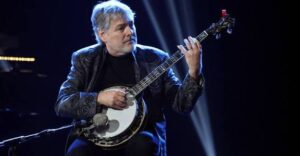
Béla Fleck is widely regarded as one of the most innovative musicians of his generation. Over a career spanning more than four decades, he has transformed the banjo from a traditional bluegrass instrument into a vehicle for jazz, classical, world music, and experimental fusion. Fleck has won numerous Grammy Awards across multiple genres, a rare achievement that underscores his artistic range and influence.
Because of his reputation for artistic integrity and creative independence, Fleck’s decision to cancel performances carries significant weight. He is not known for impulsive political statements or publicity-driven controversies. Instead, his career reflects a consistent commitment to collaboration, exploration, and respect for musical traditions.
That is precisely why his withdrawal from the Kennedy Center resonated so strongly. To many observers, it signaled that something fundamental had shifted within the institution — enough to compel a musician of Fleck’s stature to step away.
The Cancelled Performances
Fleck had been scheduled to perform three concerts with the National Symphony Orchestra as part of a program celebrating American music. The performances were intended to showcase the banjo’s role in the nation’s cultural history, aligning with preparations for the United States’ upcoming 250th anniversary.
The concerts were highly anticipated by audiences and critics alike. Fleck’s collaboration with a major symphony orchestra symbolized the blending of traditional American roots music with classical performance — exactly the type of artistic exchange the Kennedy Center has historically championed.
Instead, Fleck announced his withdrawal in a public statement, explaining that performing at the Kennedy Center had become “charged and political” and that the focus had shifted away from music itself.
A Statement Rooted in Artistic Principle
In his message, Fleck emphasized that his decision was not an attack on fellow musicians, the National Symphony Orchestra, or the audience. Rather, it was an expression of discomfort with the broader environment surrounding the institution.
He explained that the Kennedy Center, once a place dedicated to celebrating creativity across ideological lines, now felt deeply entangled in political identity. Fleck stated that art should bring people together, not serve as a backdrop for partisan battles.
Importantly, Fleck left open the possibility of returning in the future, expressing hope that there would come a time when artists could perform there free from political tension and controversy.
The Kennedy Center’s Political Transformation
To understand the controversy, it is essential to examine the recent changes at the Kennedy Center.
Established as a living memorial to President John F. Kennedy, the Kennedy Center has long been viewed as a nonpartisan national institution. Its mission has been to promote artistic excellence, cultural diversity, and public access to the arts.
That perception began to shift following changes in leadership and governance after the 2024 presidential election. New board appointments aligned closely with President Donald Trump’s administration. Trump himself assumed a direct leadership role, marking an unprecedented level of presidential involvement in the institution’s operations.
The most controversial move came when the board announced plans to rename the Kennedy Center to include Donald Trump’s name. Critics argued that this fundamentally altered the institution’s identity and violated long-standing norms regarding memorial institutions.
For many artists, this was the moment when the Kennedy Center crossed a line — from being influenced by politics to being defined by it.
A Wave of Artist Withdrawals
Béla Fleck was not alone in his response.
Following the announcement of the name change and leadership restructuring, a growing number of artists and arts organizations began withdrawing from scheduled performances. Composers, jazz musicians, theater producers, and dance companies canceled appearances, citing concerns about artistic independence and institutional neutrality.
Several high-profile figures publicly stated that they could not perform at a venue they believed had become a political symbol rather than a cultural space. Others expressed solidarity with fellow artists, even if they had not personally canceled shows.
This wave of cancellations disrupted programming across multiple genres, leaving gaps in the Kennedy Center’s schedule and sparking conversations throughout the arts community.
Kennedy Center Leadership Responds
Kennedy Center leadership pushed back strongly against the withdrawals.
Administrators argued that the institution remained open to artists of all political beliefs and that refusing to perform was itself a political act. Some officials accused withdrawing artists of bowing to ideological pressure or engaging in performative activism.
In some cases, the institution threatened legal action against performers who canceled close to performance dates, citing breach of contract and financial damages. These threats further intensified tensions between artists and administrators.
Rather than calming the situation, the responses from leadership reinforced perceptions that the Kennedy Center had become embroiled in political confrontation.
Public Reaction and Cultural Division
Public reaction to Fleck’s decision and the broader controversy has been deeply divided.
Supporters praised Fleck for standing by his principles and refusing to separate artistic performance from institutional values. Many argued that artists have a right — and sometimes an obligation — to decide where their work is presented.
Critics, however, contended that national institutions should not be boycotted based on leadership changes. They argued that canceling performances harms audiences and fellow musicians more than administrators.
Social media platforms quickly filled with debates about whether art can ever truly be apolitical, and whether cultural spaces should reflect national leadership or remain insulated from it.
The Broader Question: Can Art Stay Separate from Politics?
The Béla Fleck controversy highlights a long-standing philosophical debate: Is art ever truly separate from politics?
Throughout history, artists have responded to political power in varied ways — some choosing resistance, others accommodation, and many attempting neutrality. National institutions, in particular, exist at the intersection of government support and artistic independence.
What makes the Kennedy Center situation unique is the visibility and symbolism involved. As a federally supported institution bearing the name of a former president associated with ideals of unity and cultural openness, changes to its governance carry profound symbolic weight.
For Fleck and others, the issue is not simply who leads the institution, but whether its mission still aligns with their understanding of artistic freedom.
Impact on the Arts Community
The controversy has had immediate and long-term consequences for the arts community.
Audiences have faced canceled performances and altered programming. Musicians and performers have been forced to navigate difficult decisions involving contracts, finances, and public perception. Emerging artists, in particular, face uncertainty when institutions they once viewed as neutral platforms become politically contested spaces.
At the same time, the situation has sparked renewed discussion about alternative venues, independent arts organizations, and the importance of protecting creative spaces from partisan influence.
What Lies Ahead for Béla Fleck
Despite the controversy, Béla Fleck’s career remains firmly grounded in artistic exploration rather than political activism.
He continues to tour, collaborate, and record, maintaining his focus on music that transcends genre and ideology. His decision to cancel the Kennedy Center performances appears less about confrontation and more about alignment — ensuring that the spaces where he performs reflect his values as an artist.
By leaving the door open to future collaboration, Fleck has positioned himself not as an opponent of the Kennedy Center, but as a guardian of what he believes it should represent.
The Future of the Kennedy Center
As the debate continues, the Kennedy Center faces a critical crossroads.
Will it reaffirm its commitment to artistic neutrality and broad cultural inclusion? Or will it embrace its new identity as a politically defined institution, accepting the loss of certain artists and audiences?
The answers to these questions will shape the institution’s reputation for years to come — not only in Washington, but across the global arts community.
Conclusion
Béla Fleck’s decision to cancel his Kennedy Center performances is more than a scheduling change — it is a reflection of a deeper cultural conflict over the role of politics in the arts.
At a time when divisions run deep, the question of whether art can still serve as common ground has never been more urgent. Fleck’s stance underscores the belief that music should unite rather than divide, inspire rather than provoke, and exist beyond partisan identity.
Whether the Kennedy Center can reclaim that ideal remains uncertain. But the conversation sparked by Fleck’s decision has already reshaped how artists, institutions, and audiences think about the fragile balance between culture and power.
How useful was this post?
Click on a star to rate it!
Average rating 0 / 5. Vote count: 0
No votes so far! Be the first to rate this post.
About the Author

usa5911.com
Administrator
Hi, I’m Gurdeep Singh, a professional content writer from India with over 3 years of experience in the field. I specialize in covering U.S. politics, delivering timely and engaging content tailored specifically for an American audience. Along with my dedicated team, we track and report on all the latest political trends, news, and in-depth analysis shaping the United States today. Our goal is to provide clear, factual, and compelling content that keeps readers informed and engaged with the ever-changing political landscape.