Daniel Lurie : Reparations push, budget crisis
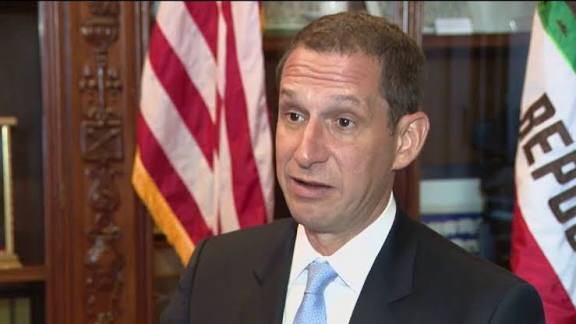
San Francisco Mayor Daniel Lurie is facing both praise and criticism after signing a measure to create a reparations fund for the city’s blacks. Today we will discuss about Daniel Lurie : Reparations push, budget crisis
Daniel Lurie : Reparations push, budget crisis
San Francisco is once again at the center of a national political conversation, and this time the focus is firmly on its mayor, Daniel Lurie. As the city grapples with a deepening budget crisis, Lurie has also stepped into one of the most complex and emotionally charged policy debates in modern American politics: reparations.
The convergence of these two issues—historic racial justice and fiscal survival—has defined Lurie’s early tenure. Supporters describe his leadership as pragmatic and forward-thinking. Critics argue it reflects conflicting priorities in a city already stretched to its financial limits. Together, the reparations push and the budget shortfall illustrate the broader challenges facing progressive urban governance in the 21st century.
Daniel Lurie’s Background: From Philanthropy to City Hall
Before becoming mayor, Daniel Lurie was best known as a philanthropic leader rather than a career politician. He founded and led a prominent anti-poverty organization that focused on homelessness, economic instability, and social inequality in the Bay Area. His work connected him with business leaders, nonprofits, and civic institutions, giving him a reputation as a results-oriented problem solver.
When Lurie entered politics, he positioned himself as an outsider capable of cutting through bureaucracy and addressing long-standing dysfunction at City Hall. His campaign emphasized accountability, public safety, homelessness reform, and fiscal responsibility—messages that resonated with voters frustrated by rising crime, visible street disorder, and declining economic confidence.
However, his lack of prior elected experience also made him a target. Opponents questioned whether a nonprofit executive could handle the political realities of running a city as complex as San Francisco.
The Reparations Ordinance: What Lurie Approved
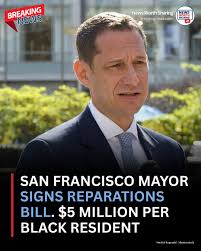
One of the most consequential decisions of Lurie’s administration was his approval of a reparations ordinance passed by the San Francisco Board of Supervisors. The measure formally establishes a reparations fund intended to benefit Black residents who can demonstrate historic harm caused by discriminatory policies.
What the Ordinance Does
Creates a legal framework for reparations
Allows the city to accept private donations and future funding
Acknowledges historic injustices tied to housing, policing, and economic exclusion
Keeps open the possibility of future financial compensation
What the Ordinance Does NOT Do
It does not allocate current city funds
It does not guarantee payments
It does not commit the city to a specific compensation amount
This distinction is critical. While previous reparations proposals discussed payments potentially reaching millions of dollars per eligible resident, Lurie’s signed ordinance stops short of any immediate financial obligation.
Why Reparations Matter to Supporters
For many supporters, the ordinance represents a moral milestone rather than a budgetary one. San Francisco has a long and painful history of policies that displaced Black communities, particularly through urban renewal projects, redlining, and discriminatory zoning.
Neighborhoods that once thrived culturally and economically were dismantled, and generations of wealth were lost. Advocates argue that acknowledging this history through a formal reparations framework is essential, even if funding comes later.
Supporters also contend that symbolic recognition has real value. They believe establishing the legal foundation now allows future administrations to act when financial conditions improve.
Criticism: Symbolism Without Substance?
Despite its symbolic importance, the reparations ordinance has drawn sharp criticism.
Fiscal Concerns
Critics argue that approving a reparations framework during a budget crisis sends mixed signals. They say the city is struggling to fund basic services like public transit, emergency response, and street maintenance—yet is laying groundwork for potentially massive future liabilities.
Political Concerns
Some accuse Lurie of political hedging: approving a popular progressive measure while avoiding the financial consequences by delaying funding. Others argue the move risks inflaming public expectations that cannot realistically be met.
Equity Debates
There is also debate over fairness. Opponents question eligibility rules, long-term cost estimates, and whether reparations should be addressed at the federal or state level rather than by a single city.
San Francisco’s Budget Crisis: The Numbers Behind the Problem
While the reparations debate captures headlines, San Francisco’s budget crisis presents an immediate and unavoidable challenge.
The city faces a structural deficit approaching one billion dollars, driven by several factors:
Declining tax revenue from commercial real estate
Reduced tourism and office occupancy
High labor and pension costs
Heavy reliance on one-time pandemic funding
Expanding social service obligations
Unlike short-term deficits, this crisis is structural, meaning it cannot be solved without long-term spending reductions or revenue reforms.
Lurie’s Budget Strategy: Cuts, Layoffs, and Priorities
Lurie’s proposed budget reflects a philosophy of fiscal realism rather than expansion.
Key Elements of His Budget Approach
Eliminating hundreds of vacant and filled city positions
Reducing funding to some nonprofits and community programs
Preserving funding for public safety departments
Reprioritizing core city services
Avoiding new taxes where possible
The goal, according to Lurie, is to prevent deeper financial instability that could trigger credit downgrades, borrowing challenges, or state intervention.
Public Backlash and Protests
The budget proposal sparked immediate backlash.
Labor unions warned of job losses and service degradation. Social justice groups criticized cuts to housing and community programs. Protesters gathered at City Hall, arguing that fiscal discipline should not come at the expense of vulnerable populations.
For many residents, the contrast between approving a reparations framework and cutting current social services felt contradictory. Critics asked how the city could promise future justice while reducing present-day support.
Reparations vs. Reality: A Political Tightrope
The intersection of reparations and budget cuts places Lurie on a political tightrope.
On one side is a strong progressive base demanding transformative justice. On the other is a growing bloc of voters concerned about taxes, crime, and government inefficiency. Lurie’s approach—acknowledging reparations while postponing funding—appears designed to balance both pressures.
Whether that balance holds remains uncertain.
Beyond Reparations: Lurie’s Broader Agenda
Homelessness and Behavioral Health
Lurie has emphasized coordination over expansion. His administration aims to consolidate outreach programs, improve accountability, and increase shelter effectiveness rather than simply increase spending.
Public-Private Partnerships
Drawing on his nonprofit background, Lurie has leaned on private fundraising and partnerships to support homelessness and mental health initiatives. Supporters say this reduces taxpayer burden; critics worry it undermines democratic oversight.
Administrative Reform
Lurie has appointed experienced policy professionals to key roles, signaling a technocratic approach to governance. This has earned praise from moderates and skepticism from activists who prefer grassroots leadership.
Political Risks and Long-Term Implications
Lurie’s decisions carry long-term consequences.
If the budget stabilizes, he may be credited with averting a fiscal collapse.
If services decline or inequality worsens, critics may blame his austerity approach.
If reparations remain unfunded indefinitely, supporters may feel betrayed.
If funding eventually materializes, future leaders may inherit the financial burden.
His tenure may ultimately be judged on whether San Francisco emerges more stable—or more divided.
Conclusion: A Defining Moment for Daniel Lurie
Daniel Lurie’s leadership reflects the contradictions of modern urban governance. He is attempting to honor historical injustice while managing present-day scarcity. His reparations ordinance acknowledges moral responsibility without immediate financial commitment. His budget cuts prioritize solvency over expansion.
To supporters, this is realism. To critics, it is contradiction.
What is clear is that Daniel Lurie is not avoiding hard decisions. Whether those decisions lead San Francisco toward recovery or deeper conflict will define not only his mayoralty, but the city’s future.
How useful was this post?
Click on a star to rate it!
Average rating 0 / 5. Vote count: 0
No votes so far! Be the first to rate this post.
About the Author

usa5911.com
Administrator
Hi, I’m Gurdeep Singh, a professional content writer from India with over 3 years of experience in the field. I specialize in covering U.S. politics, delivering timely and engaging content tailored specifically for an American audience. Along with my dedicated team, we track and report on all the latest political trends, news, and in-depth analysis shaping the United States today. Our goal is to provide clear, factual, and compelling content that keeps readers informed and engaged with the ever-changing political landscape.