Cigna Stock Alert : Barclays cuts target, Volatility spike, investor angst
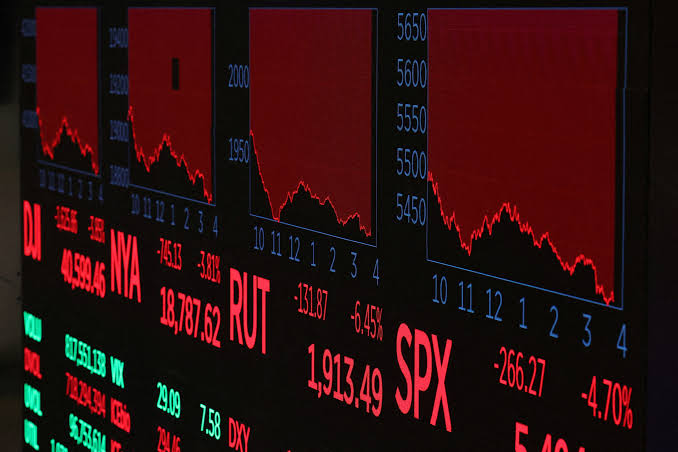
As of October 29, 2025, the average one-year price target for Cigna Group is $368.65/share. Today we will discuss about Cigna Stock Alert : Barclays cuts target, Volatility spike, investor angst
Cigna Stock Alert : Barclays cuts target, Volatility spike, investor angst
Cigna Corporation (NYSE: CI), one of the largest healthcare insurers in the United States, has been under intense market scrutiny in late 2025. A combination of analyst revisions, market volatility, regulatory pressures, and uneven stock performance relative to benchmarks has created a complex narrative for long-term investors and traders alike. Recently, Barclays lowered its price target on Cigna, igniting fresh debate about the stock’s valuation and near-term outlook. Meanwhile, broader market volatility has amplified investor anxiety, even as some analysts argue that recent selloffs may represent an overreaction. This article explores these dynamics in depth — examining the implications of Barclays’ move, the role of volatility spikes, investor sentiment trends, company fundamentals, and what the future may hold for Cigna stock.
1. What Barclays’ Price Target Cut Means

1.1 A Significant Revision
In early November 2025, Barclays analysts maintained an “Overweight” rating on Cigna but lowered the one-year price target from $383 to $300 per share, a reduction of more than 21%.
This adjustment did not change Barclays’ positive fundamental view but reflects more conservative expectations for share price appreciation over the next 12 months. The fact that the rating itself did not change suggests confidence in Cigna’s core business, yet acknowledges growing uncertainties in market performance and sector dynamics.
1.2 Analyst Context
While Cigna’s average analyst price target consensus remains elevated relative to the current share price — with some estimates near $338 — Barclays’ cut illustrates a divergence in sentiment among Wall Street institutions. Despite Barclays’ retained Overweight stance, a lower valuation target typically signals:
Tighter near-term growth expectations
Recognition of heightened market risk
Reduced margin for error in earnings outcomes
Such revisions can weigh on investor psychology and contribute to broader stock pullbacks or increased trading volatility.
2. Stock Performance and Market Volatility
2.1 Share Price Trend Relative to Indices
Cigna’s stock has lagged broader market performance, underperforming the S&P 500 over the past year. The share price is approximately 18.9% below its 52-week high, while the S&P 500 posted comparable gains over the same period.
This underperformance has increased attention among traders, as divergence from major indices often intensifies speculation about whether a stock is oversold or fundamentally weakening.
2.2 Volatility Spike: A Double-Edged Sword
Market volatility — driven by macro uncertainty, regulatory activism, shifting interest rate expectations, and sector rotation — has impacted not only Cigna but many large-cap financial and healthcare stocks. While volatility can create short-term trading opportunities, it also increases the risk profile for risk-averse, long-term holders.
Participants citing sharp intra-month swings in equity prices connect these spikes to broader nervousness over tech valuations, interest rate timing, and sector mismatches — indicating that volatility is not isolated to healthcare insurers alone.
3. Investor Angst and Sentiment Dynamics
3.1 Regulatory Overhang and PBM Concerns
One of the largest drivers of investor uncertainty has been regulatory discourse around Pharmacy Benefit Managers (PBMs) and market structures. PBMs — central to Cigna’s Evernorth division — faced aggressive rhetoric and federal lawsuits regarding alleged anticompetitive practices, particularly around rebates and pricing transparency.
Such regulatory pressure historically weighed on Cigna’s valuation multiple, triggering fear-driven selling. However, many analysts now argue that much of the worst potential regulatory impact is already priced in, making recent declines somewhat overblown.
3.2 Wall Street’s Mixed Messages
As the year closed, major brokerages and boutiques delivered buy upgrades and discounted the idea that regulatory noise would destroy margins. Firms highlighted a potential “PBM discount” on Cigna equities as an overreaction — suggesting renewed confidence among some segments of the analyst community.
Despite this, sentiment remains mixed, with some institutional investors still cautious due to macro concerns and uneven cash flows, creating a tug-of-war in overall investor psyche. This bifurcation contributes to ongoing volatility and uncertainty.
4. Company Fundamentals: Strengths vs. Risks
4.1 Strong Financial and Operating Metrics
Cigna has delivered solid revenue growth and earnings performance in recent quarters, beating expectations and underscoring fundamental resilience. Its diversified revenue streams, notably from Evernorth and international operations, provide long-term growth levers that many analysts view favorably.
Moreover, Cigna’s pre-tax adjusted operating income expectations remain robust, indicating that profitability is intact despite sector pressures.
4.2 Rising Costs and Expense Pressures
Not all fundamentals are rosy. Rising medical costs, benefit expenditures, and heightened service expenses continue to pressure margins and weigh on some growth metrics. Operational efficiency remains a core area of scrutiny for equity analysts evaluating Cigna’s mid-term performance trajectory.
4.3 Debt and Interest Expense Profile
Another notable risk is escalating debt and higher interest expenses. While debt levels are manageable relative to peers, elevated leverage — especially with rising costs — adds caution flags for certain investors. Such conditions tend to amplify stock price sensitivity during market downturns.
5. Short-Term Market Drivers
5.1 Earnings Seasons and Catalysts
Upcoming earnings announcements remain catalysts for price action. Should Cigna continue to exceed consensus estimates — especially on EPS and revenue — this could quickly shift sentiment in a more bullish direction.
Likewise, any upward revision from major firms or positive operational developments, such as new partnerships or product expansions in Evernorth, could provide short-term stock lift.
5.2 Economic Indicators and Broader Market Movements
Beyond Cigna’s company-specific drivers, broader economic indicators — including interest rates, inflation data, and healthcare policy direction — directly affect investor risk appetite. In times of market-wide risk aversion, even strong companies may see their stocks pulled lower as asset managers favor perceived safer havens. Continued volatility in macro fundamentals therefore remains a key driver of market sentiment towards Cigna.
6. Long-Term Outlook: Growth vs. Caution
6.1 Bullish Case
From a long-term perspective, many institutional analysts still view Cigna as a fundamentally strong healthcare insurer with durable competitive advantages and expanding services. Public policy shifts that enhance transparency, regulatory clarity around PBMs, and healthcare demand growth all support strong fundamental positioning.
Moreover, strategic investments and a diversified model reduce reliance on any single revenue stream, making Cigna potentially better insulated than rivals during sector transitions.
6.2 Bearish or Cautious Viewpoints
Conversely, persistent volatility — coupled with near-term macro and regulatory uncertainty — merits caution. Analysts and traders who prioritize technical indicators may interpret recent price weakness and underperformance relative to the S&P 500 as signals of extended downside risk. Market psychology — especially when driven by volatility spikes — can prolong bearish trends beyond fundamental recovery points.
7. Investor Strategies: Navigating the Current Environment
7.1 For Long-Term Investors
Long-term holders may view recent weakness as a valuation reset within a structurally growing sector. Investors with multi-year horizons often emphasize company fundamentals over short-term noise — focusing on earnings growth, competitive positioning, and healthcare demand drivers.
In this context, a disciplined dollar-cost-averaging approach may reduce exposure risk while capturing potential upside over time.
7.2 For Traders and Volatility-Sensitive Investors
Given current volatility spikes, investors with shorter timeframes should carefully monitor technical support and resistance levels. Margin and derivative positions require strict risk management to avoid rapid drawdowns.
Diversification into other less cyclic portions of the healthcare sector, or combining Cigna exposure with hedges, may also mitigate abrupt price swings. Market volatility metrics — especially broader index indicators like the VIX — can offer insights into optimal entry and exit windows within fast-moving conditions.
8. Conclusion
The recent Cigna stock alert triggered by Barclays’ price target cut and broader volatility spikes underscores the complex interplay between corporate fundamentals, analyst sentiment, regulatory context, and investor psychology. While some analysts maintain confidence in Cigna’s long-term trajectory, others temper expectations amid heightened market risk and sector churn.
For investors and traders alike, understanding these dynamics — and calibrating strategies accordingly — is essential. Whether approaching Cigna as a value buy, a speculative trade, or a core long-term holding, prudent risk management and a deep grasp of both macro and micro drivers will remain critical in navigating an increasingly uncertain yet opportunity-rich market landscape.
How useful was this post?
Click on a star to rate it!
Average rating 0 / 5. Vote count: 0
No votes so far! Be the first to rate this post.
About the Author

usa5911.com
Administrator
Hi, I’m Gurdeep Singh, a professional content writer from India with over 3 years of experience in the field. I specialize in covering U.S. politics, delivering timely and engaging content tailored specifically for an American audience. Along with my dedicated team, we track and report on all the latest political trends, news, and in-depth analysis shaping the United States today. Our goal is to provide clear, factual, and compelling content that keeps readers informed and engaged with the ever-changing political landscape.