Mamdani Power Shift : IHRA scrapped, Israel criticism lens, backlash
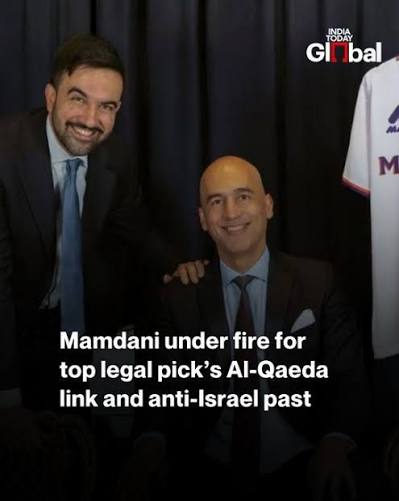
The political rise of Zoharan Mamdani signals a regime change, challenging pro-Israel narratives by criticizing Israel’s actions. Today we will discuss about Mamdani Power Shift : IHRA scrapped, Israel criticism lens, backlash
Mamdani Power Shift : IHRA scrapped, Israel criticism lens, backlash
On January 1, 2026, New York City woke to a dramatic shift in political direction as newly sworn‑in Mayor Zohran Mamdani used his first day in office to dismantle key policies adopted under his predecessor, including the city’s formal adoption of the International Holocaust Remembrance Alliance (IHRA) definition of antisemitism and other Israel‑related directives. These moves instantly reshaped the discourse on how the city defines antisemitism, the boundaries between criticism of Israel and hate speech, and how municipal power is wielded in a deeply polarized environment.
This article explores the Mamdani Power Shift — what happened, why it matters, how stakeholders reacted, and the broader implications for public policy, community safety, free speech, and contemporary political conflict.
1. A New Administration, A New Direction
Zohran Mamdani, a 34‑year‑old Democratic Socialist and outspoken progressive, was inaugurated as mayor of NYC on January 1, 2026. Within hours of taking office, he issued an executive action that revoked several executive orders issued by former mayor Eric Adams, including:
The executive order formally adopting the IHRA working definition of antisemitism.
An order restricting city officials and agencies from participating in or endorsing boycott, divestment, and sanctions (BDS) activities targeting Israel.
An executive order that established protest‑free buffer zones around religious sites, including synagogues, aimed at strengthening protection of religious communities.
City Hall described the effort as a “fresh start for the incoming administration,” arguing that the new leadership should reassess prior directives — particularly those that, in Mamdani’s view, blurred lines between political discourse and intolerance.
2. What Is IHRA and Why It Matters
The IHRA definition of antisemitism — developed by the International Holocaust Remembrance Alliance — is a non‑binding working definition used widely by governments, educational institutions, and civil rights agencies across the globe to identify and understand contemporary antisemitism. It was adopted in 2016, and later embraced by many jurisdictions to guide hate-crime reporting, training, and policy responses.
The IHRA document includes eleven illustrative examples, several of which pertain to speech or conduct related to Israel — such as language that denies the Jewish people’s right to self‑determination or characterizes the existence of Israel as inherently racist. Critics of the definition point out that some of these examples may cast legitimate political speech about Israel into the realm of antisemitism; supporters emphasize that it provides clarity in distinguishing hateful conduct from political criticism.
By dismantling the city’s use of the IHRA framework, Mamdani signaled a different approach to defining and combating antisemitism — one that seeks to distinguish more sharply between condemnation of prejudice and legitimate criticism of state actions.
3. The Israel Criticism Lens: Free Speech vs Hate Speech
A central theme in Mamdani’s reasoning for scrapping IHRA was the argument that the definition conflated political criticism of Israeli government policies with hostility toward Jewish people as a group. His communications team argued that protecting free expression and political debate — especially on contentious issues like Israel-Palestine — required new guidelines that do not automatically categorize anti-Zionist rhetoric as antisemitic.
Supporters of this perspective — including some civil liberties advocates — contend that the IHRA definition is sometimes used to chill political speech, especially protests and activism related to Palestinian rights. They argue that without a careful distinction, advocacy for Palestinian rights can be unfairly suppressed as discriminatory or hateful.
However, opponents say this view undermines efforts to clearly identify antisemitism, especially as incidents targeting Jewish individuals and institutions have risen in New York and elsewhere. They maintain that without IHRA’s illustrative examples, it becomes harder for law enforcement, schools, and community groups to identify and respond effectively to hate speech and bias‑motivated incidents.
4. The Backlash: Local, National, and International
A. Israeli Government and Foreign Officials
The government of Israel swiftly condemned Mamdani’s actions. Israeli officials described the changes as weakening global and local tools to combat antisemitism, particularly at a time of heightened global tensions in the Middle East.
B. U.S. Political Response
Domestically, lawmakers from both political parties criticized the move, arguing that abandoning the IHRA definition sends the wrong message amid rising antisemitic crimes and fears. Some called the decision “reckless,” “dangerous,” and harmful to the safety and confidence of Jewish communities.
C. Jewish Community Leaders and Organizations
Numerous Jewish community leaders in New York and nationwide expressed alarm. Groups that helped advocate for the original adoption of IHRA argue that it provides essential clarity for identifying and preventing antisemitic harassment and violence, and that removing it may leave institutions and law enforcement without a consistent framework.
Some Jewish leaders emphasized that certain forms of anti‑Zionist rhetoric have historically served as cover for outright antisemitism, and a standardized definition helps protect vulnerable communities.
D. Local Republicans and Other Critics
Some local politicians criticized Mamdani’s broader policy changes, including repealing protections around religious sites. They argued that removing buffer zones around synagogues, churches, and mosques could make these communities more susceptible to harassment.
5. Support and Defense: Progressive and Civil Liberties Perspectives
In contrast to the backlash, many progressives, civil liberties activists, and free speech proponents applauded Mamdani’s moves or defended the rationale behind them.
A. Protecting Political Expression
Advocates for robust political debate argue that equating criticism of Israel’s government with antisemitism undermines democratic discourse. They claim that definitions like IHRA have, in some contexts, been used too broadly to label dissent or activism as hateful — particularly in academic environments and public demonstrations.
B. Reframing Anti‑Hate Strategies
Some civil rights organizations emphasized the need for new tools and criteria to define and address antisemitism that respect both protections against hate speech and freedom of political expression. They suggest that alternative or more nuanced approaches could emerge in place of IHRA. This could involve focusing on intent, context, and impact rather than fixed illustrative examples.
C. Responding to Rising Antisemitism
While Mamdani’s critics highlight rising antisemitism, proponents of his approach argue that the correlation between IHRA and effective antisemitism prevention is not well‑established, and that contextual nuance is crucial. They maintain that new frameworks should protect minorities without limiting speech on controversial geopolitical issues.
6. Broader Implications and Future Debates
A. Municipal Power and Identity Politics
The Mamdani power shift highlights how municipal leadership can influence national and international discourse on identity, hate speech, and public safety. Cities like New York — home to the largest Jewish population outside Israel and vast immigrant, Muslim, and progressive communities — serve as flashpoints for broader cultural conflicts.
B. Redefining Public Policy on Hate and Free Expression
The clash between definitions like IHRA and alternative views raises fundamental questions about how democracies balance protection from discrimination with the preservation of free speech. Critics argue that rigid definitions might be weaponized to suppress speech; advocates counter that without clear lines, communities at risk may lose essential protections.
C. Potential Legal and Institutional Shifts
The policy shift in NYC could embolden other cities or institutions to reconsider reliance on IHRA or to adopt modified frameworks for addressing antisemitism and related forms of hate. Conversely, it may also prompt state or federal legislation aimed at standardizing hate speech definitions to avoid fragmentation, as seen in calls for broader antisemitism awareness laws at the national level.
7. Conclusion: A Turning Point in Public Discourse
The Mamdani Power Shift — characterized by the scrapping of the IHRA definition, the reframing of how criticism of Israel is perceived, and the ensuing backlash — is more than a series of policy reversals. It reflects a broader moment in American politics where questions about identity, free speech, hate speech, and geopolitical solidarity collide.
As NYC navigates these changes, the debate over how to define and respond to antisemitism will continue to resonate far beyond municipal boundaries. Whether new frameworks emerge, or whether this moment galvanizes defenders of IHRA and similar definitions, remains an evolving and pivotal aspect of contemporary civic life.
How useful was this post?
Click on a star to rate it!
Average rating 0 / 5. Vote count: 0
No votes so far! Be the first to rate this post.
About the Author

usa5911.com
Administrator
Hi, I’m Gurdeep Singh, a professional content writer from India with over 3 years of experience in the field. I specialize in covering U.S. politics, delivering timely and engaging content tailored specifically for an American audience. Along with my dedicated team, we track and report on all the latest political trends, news, and in-depth analysis shaping the United States today. Our goal is to provide clear, factual, and compelling content that keeps readers informed and engaged with the ever-changing political landscape.