NYC Antisemitism Clash : IHRA revoked, Mamdani shock, global reaction
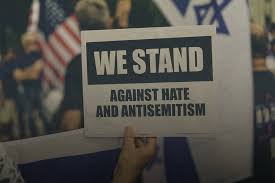
New York City Mayor Zohran Mamdani rescinded an executive order adopting the IHRA definition of anti-Semitism, including provisions related to it. Today we will discuss about NYC Antisemitism Clash : IHRA revoked, Mamdani shock, global reaction
NYC Antisemitism Clash : IHRA revoked, Mamdani shock, global reaction
New York City entered a new political era on January 1, 2026, with the swearing-in of Zohran Mamdani as mayor. Young, outspoken, and ideologically distinct from his predecessors, Mamdani’s ascent marked a historic first: the city’s first Muslim mayor and one of its most openly progressive leaders. Yet within hours of taking office, his initial executive actions ignited a fierce controversy that quickly escalated into a national and global debate.
At the center of the storm was Mamdani’s decision to revoke New York City’s adoption of the International Holocaust Remembrance Alliance (IHRA) working definition of antisemitism — a framework that had been implemented under former mayor Eric Adams. The move triggered outrage among Jewish organizations, political leaders, and international observers, while simultaneously drawing praise from civil liberties advocates and pro-Palestinian activists.
The resulting clash has become one of the most consequential debates in recent New York City history, raising profound questions about antisemitism, free speech, political ideology, and the responsibilities of government in an era of heightened polarization.
The Context: Rising Antisemitism and the Adams Era
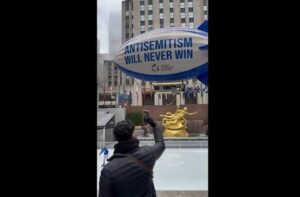
Under former mayor Eric Adams, combating antisemitism became a central priority of city governance. Adams, a former police officer, consistently emphasized public safety and the protection of minority communities — particularly as New York experienced a noticeable increase in antisemitic incidents following global geopolitical tensions in the Middle East.
In mid-2025, Adams formally adopted the IHRA working definition of antisemitism for use across city agencies. While non-binding, the definition served as a guiding framework for recognizing antisemitic behavior, shaping training programs, and informing responses to hate incidents.
The IHRA definition includes both traditional forms of antisemitism — such as Holocaust denial and conspiracy theories about Jewish control — and contemporary manifestations, including certain forms of rhetoric directed at Israel when they cross into demonization of Jewish people or denial of Jewish self-determination.
For many Jewish leaders, the adoption of IHRA provided long-needed clarity. They argued that modern antisemitism often disguises itself as political critique and that a clear definition helps institutions recognize and address such behavior effectively.
However, the definition was controversial from the outset.
Criticism of IHRA: Free Speech Concerns
Civil liberties organizations and progressive activists warned that the IHRA definition could blur the line between antisemitism and legitimate criticism of Israeli government policy. They argued that vague language risked chilling protected political speech, especially on college campuses and in public discourse.
Opponents contended that while antisemitism must be confronted forcefully, the state should not adopt frameworks that could be used to suppress dissent or penalize activists advocating for Palestinian rights.
These concerns laid the groundwork for what would become a dramatic policy reversal under the next administration.
Mamdani’s First Day Shock: Revoking the Definition
Within hours of assuming office, Mayor Zohran Mamdani signed an executive order rescinding all executive actions taken by Eric Adams after a specified date late in his tenure. Among the policies swept away was the city’s adoption of the IHRA definition of antisemitism.
The revocation also nullified related measures, including restrictions on city-funded boycotts involving Israel and certain protest regulations near religious institutions.
Mamdani framed the move as a reset — an effort to dismantle what he described as politicized governance and restore constitutional protections. Supporters applauded the decision as a defense of free speech and a rejection of what they saw as conflating criticism of Israel with hatred of Jews.
Critics, however, viewed the timing and scope of the revocation as deeply troubling.
Mamdani’s Record and the Source of the Backlash
The backlash was intensified by Mamdani’s long-standing political positions. A vocal supporter of Palestinian causes, Mamdani has previously endorsed the Boycott, Divestment, and Sanctions (BDS) movement and defended controversial slogans associated with anti-Israel activism.
While Mamdani has repeatedly stated that he opposes antisemitism and supports the safety of Jewish New Yorkers, his past rhetoric has led many to question whether his administration can credibly distinguish between political critique and ethnic hatred.
In his inaugural speech, Mamdani sought to reassure all communities, emphasizing unity and inclusion. Yet for many Jewish residents, the immediate rollback of antisemitism protections overshadowed those words.
Reaction from Jewish Communities in New York
Jewish organizations across the city reacted with alarm and anger. Community leaders warned that removing the IHRA definition could weaken the city’s ability to identify and respond to antisemitic incidents at a time when Jewish residents already feel increasingly vulnerable.
Some described the decision as symbolic — signaling a deprioritization of Jewish safety — while others worried about practical consequences, such as reduced clarity for city agencies and law enforcement.
Protests were organized, statements were issued, and pressure mounted on City Hall to explain how antisemitism would be addressed going forward without a recognized framework.
Political Fallout Inside City Hall
The political response within New York City was sharply divided. Several City Council members accused Mamdani of undermining protections against hate, arguing that the IHRA definition was never intended to silence speech but to help identify discrimination.
Others defended the mayor, claiming that the previous administration had weaponized antisemitism to shield a foreign government from criticism.
This split reflected a broader ideological divide within the Democratic Party — one that has grown increasingly pronounced in recent years.
National Response: A Warning Signal
The controversy quickly spread beyond New York. National Jewish organizations expressed concern that the city’s actions could set a dangerous precedent, encouraging other municipalities to roll back antisemitism protections.
Political figures at the federal level weighed in, with some warning that the decision risked normalizing rhetoric that contributes to real-world violence.
At the same time, civil rights advocates framed New York’s move as a test case for balancing minority protections with constitutional freedoms.
International Reaction and Diplomatic Implications
The global response was swift. Israeli officials condemned the revocation, arguing that removing the IHRA definition undermines international efforts to combat antisemitism and emboldens extremists.
Jewish communities abroad expressed concern that New York — long regarded as a global center of Jewish life — appeared to be retreating from established safeguards.
International human rights groups, meanwhile, debated whether the IHRA definition itself has become too politically charged to serve as a universal standard.
The Core Debate: Definition vs. Discretion
At the heart of the NYC antisemitism clash lies a fundamental question: should governments adopt formal definitions of hate, or should they rely on case-by-case judgment?
Supporters of IHRA argue that without a shared definition, antisemitism becomes harder to identify, quantify, and address — especially in its modern forms.
Opponents counter that definitions can be misused, and that protecting speech must remain paramount even when that speech is controversial or offensive.
New York City has become the battleground where these competing philosophies collide.
What Comes Next for NYC
Mayor Mamdani has pledged to maintain offices dedicated to combating hate and protecting minority communities, including Jewish residents. However, his administration has yet to clarify what framework, if any, will replace IHRA.
Some advocates hope for a new definition that explicitly separates antisemitism from criticism of Israel. Others fear that any dilution will leave Jewish communities exposed.
Public hearings, legal challenges, and political pressure are all likely in the months ahead.
A Broader Cultural Moment
The NYC antisemitism clash reflects a broader cultural reckoning across Western democracies. As global conflicts spill into domestic politics, societies are struggling to reconcile free expression with the need to protect vulnerable groups.
New York’s decision will likely influence debates far beyond city limits — shaping how governments, universities, and institutions approach antisemitism in an increasingly polarized world.
Conclusion: A City at a Crossroads
New York City now stands at a crossroads. The revocation of the IHRA definition has transformed a technical policy decision into a symbol of deeper ideological conflict.
For some, Mamdani’s actions represent progress — a rejection of political constraints on speech. For others, they represent a dangerous step backward at a time when antisemitism remains a persistent and evolving threat.
What happens next will not only define Mamdani’s mayoralty, but also help determine how one of the world’s most influential cities navigates hate, identity, and freedom in the 21st century.
How useful was this post?
Click on a star to rate it!
Average rating 0 / 5. Vote count: 0
No votes so far! Be the first to rate this post.
About the Author

usa5911.com
Administrator
Hi, I’m Gurdeep Singh, a professional content writer from India with over 3 years of experience in the field. I specialize in covering U.S. politics, delivering timely and engaging content tailored specifically for an American audience. Along with my dedicated team, we track and report on all the latest political trends, news, and in-depth analysis shaping the United States today. Our goal is to provide clear, factual, and compelling content that keeps readers informed and engaged with the ever-changing political landscape.