Somalia screams betrayal : Israel’s move could trigger war-scale fallout

The government of Somalia has reacted with anger to Israel’s recent decision to formally recognize the self-proclaimed Republic of Somaliland as an independent state. Today we will discuss about Somalia screams betrayal : Israel’s move could trigger war-scale fallout
Somalia screams betrayal : Israel’s move could trigger war-scale fallout
The Horn of Africa has been thrust into a new geopolitical storm after Israel made a historic and controversial move that has shaken Somalia to its core. By formally recognising Somaliland as an independent state, Israel crossed a red line for Mogadishu — igniting outrage, regional backlash, and fears of war-scale consequences.
For Somalia, this was not a routine diplomatic disagreement. It was perceived as an open betrayal of sovereignty, unity, and international law. The decision has already begun reshaping alliances, provoking regional condemnations, and raising alarms about long-term instability in one of the world’s most fragile regions.
A Shockwave Across the Horn of Africa
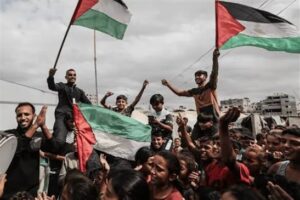
Somaliland, a self-declared republic in northern Somalia, has existed as a de facto state since 1991. Despite maintaining its own government, currency, elections, and security forces, it has never been officially recognised by any United Nations member — until now.
Israel’s recognition shattered that decades-long diplomatic status quo.
The announcement immediately sparked fury in Somalia’s capital. Government officials described the move as reckless, illegal, and deliberately destabilising. Streets buzzed with anger, political leaders issued stern warnings, and Somalia’s allies rallied behind its territorial integrity.
What might have seemed like a symbolic diplomatic gesture elsewhere was interpreted in Somalia as a direct assault on national unity.
Why Somaliland Matters So Much to Somalia
Somaliland’s quest for independence has always been one of the most sensitive and emotional issues in Somali politics.
Somalia’s modern borders were shaped by colonial history, and since independence, preserving territorial unity has been central to national identity. While Somaliland has remained relatively peaceful compared to southern Somalia, Mogadishu has consistently rejected any attempt to formalise its separation.
From Somalia’s perspective, recognising Somaliland is not about acknowledging stability — it is about dismantling the Somali state piece by piece.
The fear is that once one region gains recognition, others could follow, accelerating fragmentation in a country still recovering from decades of conflict.
Somalia’s Furious Reaction: “A Violation of Sovereignty”
Somalia’s federal government responded with unambiguous condemnation.
Officials declared Israel’s recognition null and void, insisting it has no legal standing under international law. They argued that only Somalia has the authority to determine its internal political arrangements, including discussions over federalism or regional autonomy.
The language used by Somali leaders was unusually strong, reflecting the seriousness of the perceived threat. The move was described as:
An attack on national sovereignty
A breach of international norms
A dangerous precedent for Africa
An act that risks plunging the region into chaos
Somalia also recalled diplomatic principles that protect existing borders, warning that ignoring these norms could ignite conflicts far beyond its own territory.
Regional and International Backlash Builds
Somalia was not alone in its outrage.
Across Africa and the Arab world, governments and regional organisations swiftly voiced opposition to Israel’s decision.
The African Union reaffirmed its long-standing position that Somaliland remains part of Somalia. Leaders warned that recognising breakaway regions without continental consensus could unravel Africa’s fragile post-colonial order.
Arab and Islamic nations echoed similar concerns, framing the move as interference in internal affairs and a violation of sovereignty. Many also linked the decision to broader frustrations with Israel’s foreign policy, reinforcing diplomatic resistance.
This unified backlash signaled that Israel’s move was not merely bilateral — it had regional consequences.
Why Somalia Feels Betrayed, Not Just Angry
The sense of betrayal runs deeper than politics.
Somalia has long positioned itself as a supporter of Palestinian rights and a defender of territorial integrity worldwide. From Mogadishu’s viewpoint, Israel’s recognition of Somaliland contradicts principles Israel itself demands in other contexts.
Somali officials argue that selectively recognising breakaway regions undermines international consistency. Today it is Somaliland, they warn — tomorrow it could be any disputed territory across Africa or the Middle East.
This perceived hypocrisy has intensified Somalia’s emotional and diplomatic response.
Israel’s Strategic Calculations
Israel’s decision did not emerge in a vacuum.
Analysts point to several strategic motivations behind the move.
1. Strategic Location
Somaliland sits along the Gulf of Aden, near one of the world’s most critical maritime chokepoints. Establishing relations there provides strategic depth in a region vital to global trade and security.
2. Expanding Diplomatic Reach
Israel has been actively broadening its international partnerships beyond traditional allies. Recognising Somaliland may be part of a broader effort to cultivate new diplomatic footholds in Africa.
3. Economic and Security Cooperation
Somaliland offers opportunities in agriculture, water management, technology, and port development — sectors where Israel has expertise and strategic interest.
Yet critics argue that these gains come at the cost of regional stability.
Could This Trigger Wider Conflict?
The biggest fear surrounding the recognition is escalation.
Somalia already faces severe internal security challenges, including extremist groups that thrive on instability. Political shocks like this risk creating openings for militancy, propaganda, and recruitment.
There is also concern that the Horn of Africa could become a new arena for proxy competition. As global and regional powers seek influence along strategic waterways, Somalia fears being dragged into conflicts far beyond its control.
Once borders become negotiable through unilateral recognition, the entire region becomes more volatile.
A Dangerous Precedent for Africa
African leaders are especially alarmed by the precedent this sets.
The continent is home to numerous regions with separatist aspirations. From West Africa to the Horn, unresolved identity and autonomy disputes remain.
If international recognition can be granted without consensus, African states fear a domino effect — one that could reignite long-frozen conflicts and weaken already fragile governments.
This is why the backlash has been so swift and unified.
Somaliland’s Perspective: A Long-Awaited Breakthrough
While Somalia protests betrayal, Somaliland celebrates validation.
For decades, Somaliland has argued that it meets all the criteria of statehood: defined territory, functioning institutions, democratic processes, and relative peace.
Israel’s recognition is viewed in Hargeisa as proof that persistence can pay off — and as a potential gateway to wider international acceptance.
However, Somaliland’s jubilation exists alongside growing uncertainty. Recognition by one state does not guarantee broader legitimacy, especially when it provokes fierce opposition.
Somalia’s Options: Diplomacy or Defiance
Somalia now faces difficult choices.
Diplomatic Campaign
Mogadishu is expected to intensify diplomatic efforts through the United Nations, African Union, and allied capitals to isolate the recognition and prevent others from following suit.
Internal Unity
Strengthening domestic cohesion will be critical. Somalia’s leaders know that internal divisions only weaken their case internationally.
Avoiding Escalation
Despite fiery rhetoric, Somalia is unlikely to pursue military action. Instead, it will rely on political pressure, regional solidarity, and international law.
Still, the situation remains fragile.
What Happens Next?
Much depends on whether other nations follow Israel’s lead.
If recognition remains isolated, Somalia may succeed in containing the damage. But if additional states recognise Somaliland, the balance could shift dramatically.
Such a scenario would force Somalia into prolonged diplomatic battles while reshaping the Horn of Africa’s political map.
The stakes could not be higher.
Conclusion: A Turning Point with Global Implications
Somalia’s cry of betrayal reflects more than wounded pride — it signals a deep crisis over sovereignty, borders, and global norms.
Israel’s recognition of Somaliland has cracked open long-standing assumptions about statehood and territorial integrity. It has exposed fault lines across Africa and the Middle East, and it has placed Somalia at the center of a geopolitical struggle with unpredictable consequences.
Whether this moment leads to diplomatic realignment or prolonged instability remains uncertain. What is clear, however, is that the Horn of Africa has entered a new and dangerous chapter — one where a single decision could reshape the future of an entire region.
How useful was this post?
Click on a star to rate it!
Average rating 0 / 5. Vote count: 0
No votes so far! Be the first to rate this post.
About the Author

usa5911.com
Administrator
Hi, I’m Gurdeep Singh, a professional content writer from India with over 3 years of experience in the field. I specialize in covering U.S. politics, delivering timely and engaging content tailored specifically for an American audience. Along with my dedicated team, we track and report on all the latest political trends, news, and in-depth analysis shaping the United States today. Our goal is to provide clear, factual, and compelling content that keeps readers informed and engaged with the ever-changing political landscape.