AI boom shakes jobs : Tech fear spreads fast

Fears of job displacement due to AI boom get support from US Federal Reserve report data. Today we will discuss about AI boom shakes jobs : tech fear spreads fast AI boom shakes jobs : Tech fear spreads fast
AI boom shakes jobs : Tech fear spreads fast
The rapid rise of artificial intelligence has become one of the most disruptive forces in modern history. Once viewed as a futuristic concept limited to research labs and science fiction, AI has now entered everyday workplaces with startling speed. From automated customer service to AI-generated content and intelligent decision-making systems, machines are no longer just supporting human workers—they are beginning to replace them.
As companies race to adopt AI for efficiency and profit, anxiety among workers is growing fast. Across industries and continents, employees are questioning the future of their careers. Will machines take over human jobs? Will years of education and experience become obsolete? The AI boom is no longer just a technological story—it is a human one, filled with uncertainty, fear, and transformation.
The Sudden Acceleration of Artificial Intelligence
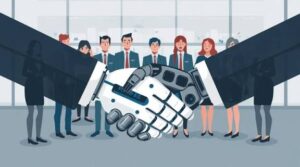
Artificial intelligence has advanced at an unprecedented pace over the past few years. Breakthroughs in machine learning, natural language processing, and generative AI have dramatically expanded what machines can do. Tasks that once required human judgment—writing reports, analyzing data, diagnosing problems, even coding software—are now being performed by AI systems in seconds.
Businesses see AI as a powerful solution to rising costs, labor shortages, and competitive pressure. Automated systems promise faster output, fewer errors, and continuous operation without fatigue. For corporations focused on efficiency, AI adoption feels inevitable.
But for workers, this acceleration feels overwhelming. Unlike past technological changes that unfolded gradually, AI adoption has moved at lightning speed. Many employees feel unprepared and vulnerable, unsure how quickly their roles could change—or disappear entirely.
Job Loss Fears Spread Across Industries
Fear of job displacement is no longer limited to factory workers or low-skill roles. White-collar professionals—once considered safe from automation—are now among the most anxious.
Office workers, analysts, content creators, designers, accountants, and even software developers are watching AI tools perform tasks that closely mirror their own. Entry-level roles are particularly at risk, as companies increasingly rely on AI to handle routine tasks instead of hiring new employees.
Layoffs linked to automation have intensified these concerns. Several major corporations have publicly acknowledged restructuring their workforce due to AI integration. While not every job cut is directly caused by AI, the connection is becoming harder to ignore.
For many employees, the fear is not just about losing a job—it is about losing relevance in a rapidly evolving economy.
Which Jobs Are Most Vulnerable?
AI does not impact all jobs equally. The risk of displacement depends largely on how routine, predictable, and data-driven a role is.
High-Risk Jobs
Jobs involving repetitive tasks, standardized processes, or large volumes of data are the most exposed. These include:
Data entry and clerical work
Customer support and call center roles
Basic accounting and bookkeeping
Routine content creation and reporting
AI systems can perform these tasks faster, cheaper, and around the clock.
Moderate-Risk Jobs
Roles that combine routine tasks with human judgment face partial automation. These include:
Software development
Marketing and advertising
Financial analysis
Middle management
In these jobs, AI may not replace workers entirely but will significantly change how work is done, reducing team sizes and increasing productivity expectations.
Lower-Risk Jobs
Jobs requiring emotional intelligence, creativity, physical presence, or complex human interaction remain more resistant. These include:
Healthcare professionals
Teachers and educators
Skilled trades
Leadership and strategy roles
However, even these positions are not immune to transformation.
The Psychological Impact on Workers
Beyond economic disruption, AI is reshaping how people feel about work itself. Job insecurity leads to stress, anxiety, and declining morale. Employees worried about automation are more likely to experience burnout and less likely to feel loyal to their employers.
Many workers feel trapped between two fears: staying in a role that may disappear or leaving without clear alternatives. This uncertainty affects productivity, workplace relationships, and mental health.
Younger workers fear entering a job market with fewer opportunities, while older workers worry they may not be able to reskill fast enough to stay relevant. The result is a workforce under emotional strain, struggling to adapt to constant change.
AI as a Productivity Booster—and a Job Creator
Despite widespread fear, AI is not solely a destroyer of jobs. History shows that major technological shifts often eliminate some roles while creating entirely new ones. The same pattern is beginning to emerge with artificial intelligence.
AI has created demand for new roles that did not exist a decade ago, such as:
AI engineers and developers
Data scientists and analysts
AI ethics and governance specialists
Human-AI interaction designers
Many organizations are also discovering that AI works best when paired with human oversight. Rather than replacing workers outright, AI often augments human abilities—allowing employees to focus on strategic, creative, or interpersonal tasks while machines handle routine work.
The challenge lies in managing the transition period, where disruption happens faster than job creation.
The Growing Skills Gap
One of the biggest challenges of the AI era is the widening skills gap. As technology evolves, the demand for AI-literate workers is rising rapidly, while traditional skill sets lose value.
Employers increasingly expect workers to understand AI tools, even in non-technical roles. Familiarity with automation, data interpretation, and digital platforms is becoming essential across industries.
At the same time, uniquely human skills are gaining importance:
Critical thinking
Emotional intelligence
Creativity
Adaptability
Ethical judgment
Workers who combine technical awareness with human-centered skills are better positioned to survive and thrive in an AI-driven economy.
Reskilling: The Only Sustainable Solution
Reskilling and upskilling have become urgent priorities. Lifelong learning is no longer optional—it is a survival strategy.
Governments, educational institutions, and companies must invest in training programs that prepare workers for AI-augmented roles. Short-term certifications, online courses, and workplace learning initiatives can help employees transition into new positions.
However, access to reskilling remains uneven. Workers in smaller companies or informal sectors often lack the resources needed to adapt, increasing inequality in the labor market.
Without coordinated efforts, the benefits of AI may concentrate among a small, highly skilled segment of the workforce.
Corporate Responsibility in the AI Era
Companies play a critical role in shaping how AI impacts jobs. Ethical AI adoption requires more than cost-cutting—it demands responsibility toward employees.
Transparent communication about automation plans, fair retraining opportunities, and internal job transitions can reduce fear and resistance. Organizations that treat workers as partners in innovation, rather than disposable resources, are more likely to succeed long-term.
Some companies are experimenting with hybrid models where AI boosts productivity without mass layoffs. These approaches suggest that technology and job security do not have to be mutually exclusive.
Government Policies and Social Safety Nets
As AI reshapes employment, governments face mounting pressure to respond. Policy options include:
Expanded reskilling programs
Stronger unemployment protections
Support for job transitions
Discussions around income support systems
While there is no single solution, ignoring the social impact of AI could lead to widespread economic instability and public backlash.
Proactive policy planning can help ensure that technological progress benefits society as a whole rather than deepening inequality.
A New Definition of Work
The AI boom is forcing society to rethink what work means. Traditional career paths are becoming less linear, and job security is no longer tied to a single employer or role.
Future careers may involve:
Frequent role changes
Continuous skill development
Collaboration between humans and machines
Success will depend less on specific job titles and more on adaptability and learning ability.
This shift is uncomfortable, but it also opens new possibilities for flexible work, creative careers, and improved productivity.
Conclusion: Fear Is Real, but So Is Opportunity
The AI boom is undeniably shaking the global job market. Fear is spreading fast, driven by automation, layoffs, and uncertainty about the future. For millions of workers, the anxiety is real and deeply personal.
Yet history suggests that while technology disrupts, it also transforms. AI will eliminate some jobs, reshape many others, and create entirely new opportunities. The outcome will depend on how society responds—through education, policy, corporate responsibility, and individual adaptability.
The future of work is not predetermined. With thoughtful planning and human-centered innovation, AI can become a force that enhances work rather than erasing it. The challenge now is to move beyond fear and actively shape a future where humans and machines grow together.
How useful was this post?
Click on a star to rate it!
Average rating 0 / 5. Vote count: 0
No votes so far! Be the first to rate this post.
About the Author

usa5911.com
Administrator
Hi, I’m Gurdeep Singh, a professional content writer from India with over 3 years of experience in the field. I specialize in covering U.S. politics, delivering timely and engaging content tailored specifically for an American audience. Along with my dedicated team, we track and report on all the latest political trends, news, and in-depth analysis shaping the United States today. Our goal is to provide clear, factual, and compelling content that keeps readers informed and engaged with the ever-changing political landscape.