America on Edge : Law , Power , Scandal Collide in Washington

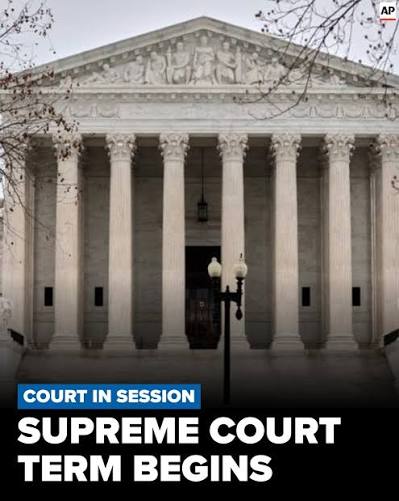
With more than 150 lawsuits unfolding, the nation is witnessing a dramatic clash between presidential ambition and constitutional restraints that marks a turning point. Today we will discuss about America on Edge : Law , Power , Scandal Collide in Washington
America on Edge : Law , Power , Scandal Collide in Washington
The United States of America stands at a pivotal moment, a time where law, power, and scandal converge in the nation’s capital with unprecedented intensity. What once were isolated controversies now form a pattern that many scholars, journalists, and citizens alike describe as a constitutional stress test. From litigations that challenge presidential authority to legal disputes involving federal officials, from entrenched partisan warfare to erosion of public trust, Washington has become the epicenter of forces that could redefine American governance for decades to come.
In this comprehensive analysis, we explore how these forces intertwine, what historical precedents illuminate the current moment, and why this period arguably places America on edge.
I. The Anatomy of an American Crisis
A. Polarization: The Underlying Pressure
At its core, today’s turmoil stems less from isolated scandals and more from deep political polarization—the widening ideological chasm that increasingly shapes American public life. Researchers have shown that polarization isn’t simply about differences in policy, but about divergent worldviews and identities. Americans increasingly see the opposing political party not just as rivals, but as existential threats to the nation’s future. This phenomenon fuels mistrust in institutions, elected officials, and even the legal system itself.
This polarization permeates every layer of governance—from Congress’s legislative gridlock to state-level policy divergence—creating a political ecosystem where consensus is nearly impossible.
II. Law and Legitimacy: When Legal Norms Meet Political Expediency
A. The Justice System in the Crosshairs
The U.S. justice system, long seen as a bulwark of constitutional neutrality, has increasingly become contested terrain. Recent developments illustrate how law enforcement and prosecutorial decisions have become tangled with partisan agendas.
For example, rare prosecutions under the Hatch Act—a law meant to limit political activity by government officials—have gained attention in local controversies, underscoring the politicization of legal norms.
Perhaps even more alarming are reports of political influence within the Department of Justice itself. Several investigations suggest that the DOJ has been repurposing its mandate in ways critics argue resemble political retribution, including efforts to revisit cases like the January 6 Capitol prosecutions and pursue legal action against those who originally enforced them.
Concurrently, federal law enforcement strategies have been publicly expanded to monitor and combat domestic political movements labeled as extremist by the administration—raising First Amendment concerns about political dissent and civil liberties.
These developments reveal how law can be wielded both as a tool of accountability and as a lever of political power, depending on who holds authority and how they choose to exercise it.
III. Scandal as Catalyst: Historical Echoes and Modern Realities
A. From Watergate to Present Turmoil
Scandals are not new in American politics. The 1970s Watergate scandal remains a defining benchmark for political misconduct, where abuse of power led to congressional investigations, resignations, and eventual reforms aimed at preserving democratic norms.
Watergate’s legacy included strengthening ethics laws, enhancing Supreme Court oversight, and cultivating skepticism of political authority. Yet despite these reforms, historical lessons show that scandals often weaken public trust and can deepen societal divisions—effects now mirrored in contemporary politics.
Today, scandals range from high-profile electoral disputes to revelations of political favoritism and ethical violations. Each plays into a broader perception that power can be manipulated, and accountability evaded, threatening the legitimacy of institutions meant to uphold the rule of law.
IV. Institutional Strain: Checks, Balances, and Hardball Politics
A. Constitutional Hardball
A central concept in understanding current tensions is what political scientists call “constitutional hardball”—actions that stretch legal norms and exploit institutional procedures to achieve partisan advantage.
This includes tactics such as extreme partisan use of legislative rules, judicial appointments driven by ideological goals, and campaign strategies that erode long-standing norms of political fairness. Hardball politics, while technically legal, undermines mutual trust in the unwritten conventions that allow democratic systems to function.
Rather than negotiate or compromise, political actors increasingly view legal and institutional systems as arenas to win at all costs. Scholars note that such strategies can erode democratic norms and pave the way for creeping authoritarian tendencies if left unchecked.
V. Trust Deficit: Citizens’ Views of Washington
A. Erosion of Public Confidence
Perhaps the most consequential outcome of these intersecting forces is a crisis of public trust. Surveys reveal that Americans hold dismal views of their political system, seeing it dominated by special interests, marred by gridlock, and unresponsive to public needs.
Trust in government remains near historical lows, with significant skepticism toward Congress, the presidency, and even the Supreme Court. The electorate’s dissatisfaction is bipartisan, indicating a deeper malaise that transcends party loyalty.
This trust deficit fuels social anxiety, encourages disengagement or radicalization, and intensifies the feedback loop of polarization and scandal.
VI. Power Struggles: Inside and Outside the Beltway
A. Executive Power and Legislative Gridlock
Washington’s struggle over power is not just rhetorical; it’s structural. The executive branch has increasingly asserted unilateral authority through executive orders, policy reinterpretations, and administrative actions—often bypassing Congress when legislative solutions prove elusive.
At the same time, Congress remains deeply divided, unable to build majorities for comprehensive reform on pressing issues like immigration, guns, and healthcare—further amplifying executive action in the governance vacuum.
This imbalance not only fuels partisan frustration but raises constitutional questions about the separation of powers itself.
VII. The Stakes: Democracy or Dysfunction?
A. Comparative Democratic Backsliding
Scholars now examine the United States not merely as a functioning democracy in crisis but as a system showing signs of democratic backsliding—a process where democratic norms erode slowly through legal manipulation and concentrated executive power.
By comparing the U.S. trajectory with other nations that have experienced democratic decline, experts highlight concerning parallels—particularly in how power becomes centralized and legal safeguards are weakened.
These comparisons are not deterministic predictions but cautionary insights: systems once considered stable can become fragile under sustained institutional strain.
VIII. Looking Forward: Reform, Renewal, and Risks
A. Pathways to Stabilization
Despite the challenges, there are ways to mitigate the pressures building in Washington and beyond:
Strengthening democratic norms through civic education and bipartisan commitment to ethical governance.
Modernizing institutions to make them more responsive to contemporary social and political realities.
Campaign finance reform to reduce the influence of dark money and restore faith in electoral outcomes.
Judicial independence protections to ensure courts remain fair arbiters above political fray.
Enhanced transparency and accountability mechanisms for public officials at all levels.
In essence, shaping a political culture that values democratic resilience over partisan victories is critical.
B. The Clock Is Ticking
Without purposeful intervention, the collision of law, power, and scandal could push the American political system toward further polarization, institutional dysfunction, and erosion of civic trust. The risks are not theoretical—they are visible in legal disputes, political rhetoric, and public sentiment.
Yet history also offers hope: periods of intense crisis have often preceded renewal and reform. The era of Watergate, for example, triggered deep legislative and ethical reforms that shaped modern governance norms. Similarly, recognizing the depth of current challenges is the first step toward collective action.
Conclusion
The phrase “America on edge” captures more than dramatic headlines—it reflects a complex reality where legal norms, political power, and public scandal intersect to test the resilience of American democracy. From polarized politics and constitutional hardball to ethical controversies within the justice system, these forces converge to create a moment of profound consequence.
Understanding this period requires a balanced view—one that acknowledges the gravity of contemporary tensions while also recognizing the capacity for reform and renewal rooted in democratic values. As the U.S. navigates these turbulent waters, the choices made in Washington will reverberate far beyond its borders, shaping the future of governance in a nation long seen as a global beacon of democratic ideals.
How useful was this post?
Click on a star to rate it!
Average rating 0 / 5. Vote count: 0
No votes so far! Be the first to rate this post.
About the Author

usa5911.com
Administrator
Hi, I’m Gurdeep Singh, a professional content writer from India with over 3 years of experience in the field. I specialize in covering U.S. politics, delivering timely and engaging content tailored specifically for an American audience. Along with my dedicated team, we track and report on all the latest political trends, news, and in-depth analysis shaping the United States today. Our goal is to provide clear, factual, and compelling content that keeps readers informed and engaged with the ever-changing political landscape.