Trump DOJ Shock : Epstein Files Redacted , Bipartisan Anger Explodes
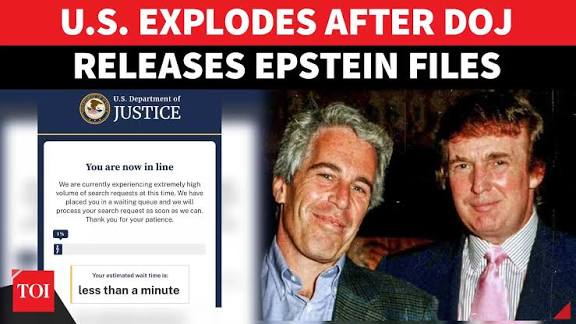
MPs have expressed dismay at the drastic cuts and apparent removal of files from the government website. Today we will discuss about Trump DOJ Shock : Epstein Files Redacted , Bipartisan Anger Explodes
Trump DOJ Shock : Epstein Files Redacted , Bipartisan Anger Explodes
The long-awaited release of government records connected to disgraced financier Jeffrey Epstein has triggered a political firestorm across Washington. What was expected to be a landmark moment of transparency instead became a national controversy after the U.S. Department of Justice, operating under the Trump administration, released files that were heavily redacted, incomplete, and in some cases seemingly missing altogether. The outcome shocked lawmakers, enraged victims’ advocates, and ignited rare bipartisan anger, placing the Justice Department at the center of one of the most explosive accountability debates in recent American history.
The controversy now threatens to reshape public trust in federal institutions, deepen partisan divisions, and reopen unresolved questions about how power, privilege, and justice intersect at the highest levels of government.
The Epstein Shadow Still Looms Large

Jeffrey Epstein’s name continues to haunt American politics years after his death. Convicted of sex crimes involving minors, Epstein’s wealth, influence, and connections to powerful figures fueled widespread suspicion that justice was never fully served. Allegations that prominent politicians, business leaders, and international elites were connected to Epstein have persisted for decades, amplified by secret plea deals, sealed records, and unanswered questions.
For many Americans, the Epstein case became symbolic of a two-tier justice system—one for the powerful and another for everyone else. That perception fueled growing demands for transparency, eventually culminating in congressional action.
Congress Forces Transparency
Earlier this year, lawmakers from both parties united behind legislation compelling the Department of Justice to release all unclassified federal records related to Epstein’s investigations and prosecutions. The law passed with overwhelming support, reflecting public pressure that had become impossible to ignore.
Supporters of the measure framed it as a moral obligation to Epstein’s victims and a necessary step toward restoring public confidence in the justice system. The legislation required the DOJ to make the files publicly accessible by a fixed deadline, with limited exceptions for victim protection and ongoing investigations.
The expectations were enormous. Lawmakers, journalists, victims, and ordinary citizens anticipated long-hidden truths, names, communications, and internal decision-making processes that could finally explain how Epstein managed to evade serious consequences for so long.
Release Day Turns Into a Shockwave
When the deadline arrived, the Justice Department released thousands of pages of documents. At first glance, the volume appeared impressive. But as analysts, reporters, and lawmakers began examining the files, disappointment quickly turned into outrage.
Large portions of the documents were heavily blacked out. Entire pages appeared with almost no readable content. Critical sections were removed, names were concealed, and in some cases entire files appeared to vanish shortly after being posted.
Rather than providing clarity, the release raised new questions. Critics accused the DOJ of technically complying with the law while violating its spirit. The phrase “transparency theater” began circulating widely, capturing the belief that the release was designed to appear open while revealing little of substance.
Bipartisan Anger Erupts
One of the most striking aspects of the backlash was its bipartisan nature. In a deeply polarized political climate, outrage over the Epstein files briefly united lawmakers who otherwise agree on very little.
Democratic Reaction
Democrats accused the Trump administration of deliberately shielding powerful individuals from scrutiny. Several lawmakers argued that the extent of the redactions went far beyond what was necessary to protect victims or sensitive investigations.
Some went further, suggesting the administration may have violated federal law by failing to release materials that were clearly unclassified. Calls for congressional hearings, subpoenas, and even impeachment inquiries targeting senior Justice Department officials quickly followed.
Democratic leaders framed the issue as one of accountability, insisting that transparency is meaningless if the most critical information remains hidden.
Republican Frustration
Republican anger was equally intense, particularly among lawmakers who had championed the transparency legislation. They accused the DOJ of betraying congressional intent and undermining public trust.
Several conservative lawmakers, long skeptical of federal agencies, argued that the redactions reinforced concerns about bureaucratic self-protection and institutional corruption. For them, the Epstein files became further evidence that the federal government shields elites regardless of party affiliation.
This rare convergence of Democratic and Republican criticism significantly escalated the political stakes for the Justice Department.
Victims and Advocates Feel Betrayed
Perhaps the most powerful reactions came not from politicians, but from Epstein’s survivors and advocacy groups. For many victims, the release represented a deeply personal moment—an opportunity for truth, validation, and closure.
Instead, many described the document dump as retraumatizing. Survivors expressed anger that key details about how Epstein was protected, enabled, or ignored remained hidden. Advocacy groups argued that while victim privacy must be protected, it should not be used as a blanket justification for obscuring institutional failures.
For survivors who had waited years for accountability, the redactions felt like another form of silence imposed by the system that failed them in the first place.
Missing Files Raise Alarm Bells
Adding fuel to the controversy were reports that certain files disappeared from the public database shortly after being posted. Observers noted that some materials initially accessible could no longer be found within hours.
This development triggered speculation about political interference and selective disclosure. Lawmakers demanded explanations, questioning whether files were removed due to errors, legal concerns, or pressure from powerful interests.
The Justice Department offered limited clarification, further intensifying suspicion. In an environment already marked by distrust, even administrative explanations failed to reassure critics.
DOJ Defends Its Actions
Facing mounting criticism, the Justice Department defended the redactions, arguing they were legally necessary to protect victims, confidential sources, and sensitive law enforcement techniques. Officials insisted they were complying with the law while balancing privacy and security concerns.
The DOJ also stated that additional materials could be released in the future following further review. However, critics noted that the law required disclosure by a specific deadline and argued that delayed transparency undermines accountability.
For many observers, the DOJ’s response appeared cautious, legalistic, and insufficient given the magnitude of public concern.
Political Fallout Intensifies
The Epstein files controversy quickly expanded beyond document redactions into a broader debate about power, accountability, and institutional trust.
Congressional Action Looms
Several lawmakers have called for formal investigations into the DOJ’s handling of the release. Committees are considering subpoenas, sworn testimony, and potential legal action to compel fuller disclosure.
Some have even suggested appointing an independent special counsel to review the Epstein files and determine whether political considerations influenced what was released or withheld.
Public Trust at Stake
Public reaction has been fierce. Social media platforms erupted with accusations of cover-ups, favoritism, and elite protection. Polls suggest declining trust in federal institutions, particularly regarding their willingness to hold powerful individuals accountable.
The Epstein files have become a lightning rod for broader anxieties about inequality, corruption, and the perception that justice operates differently for those at the top.
The Trump Factor
While Epstein’s case predates the Trump administration, the DOJ’s handling of the files has inevitably been tied to Trump’s political legacy. Critics argue that the controversy reinforces concerns about politicization of the Justice Department during his presidency.
Supporters counter that the administration was placed in an impossible position, forced to balance transparency demands with legal constraints. Nonetheless, the optics of the release have complicated Trump’s claims of supporting transparency and accountability.
As the issue unfolds, it threatens to become a recurring theme in political debates, particularly as Trump remains a dominant figure in national politics.
Why This Matters Beyond Epstein
The significance of this controversy extends far beyond one individual or case. At its core, the Epstein files debate raises fundamental questions about democratic governance:
Can government institutions investigate themselves honestly?
Are laws meaningful if enforcement is selective?
How much secrecy is justified in the name of privacy or security?
And who decides where transparency ends?
These questions resonate deeply in a society already grappling with polarization, mistrust, and institutional fatigue.
What Happens Next
The Epstein files saga is far from over. Several possible developments could shape its future:
Further Releases: The DOJ may publish additional documents, potentially with fewer redactions, though expectations remain cautious.
Legal Challenges: Courts could be asked to determine whether the DOJ complied with the transparency law.
Congressional Hearings: Lawmakers may force testimony from DOJ officials to explain redaction decisions.
Public Pressure: Continued media coverage and public scrutiny could compel greater openness.
Each path carries political risks and implications, particularly as trust in institutions hangs in the balance.
Conclusion: Transparency Promised, Trust Tested
The release of the Epstein files was supposed to mark a turning point—a moment when secrecy gave way to truth. Instead, it has become a symbol of unresolved distrust, political tension, and institutional defensiveness.
By releasing heavily redacted documents, the Trump Justice Department satisfied the technical requirement of the law while igniting a national debate over whether justice can truly be transparent when powerful interests are involved.
For victims, lawmakers, and citizens alike, the message was deeply unsettling: even when transparency is mandated, the full truth may remain just out of reach.
As bipartisan anger continues to grow, one reality is undeniable—this controversy has ensured that the Epstein case, and the questions it raises about power and accountability, will not fade quietly into history.
How useful was this post?
Click on a star to rate it!
Average rating 0 / 5. Vote count: 0
No votes so far! Be the first to rate this post.
About the Author

usa5911.com
Administrator
Hi, I’m Gurdeep Singh, a professional content writer from India with over 3 years of experience in the field. I specialize in covering U.S. politics, delivering timely and engaging content tailored specifically for an American audience. Along with my dedicated team, we track and report on all the latest political trends, news, and in-depth analysis shaping the United States today. Our goal is to provide clear, factual, and compelling content that keeps readers informed and engaged with the ever-changing political landscape.